




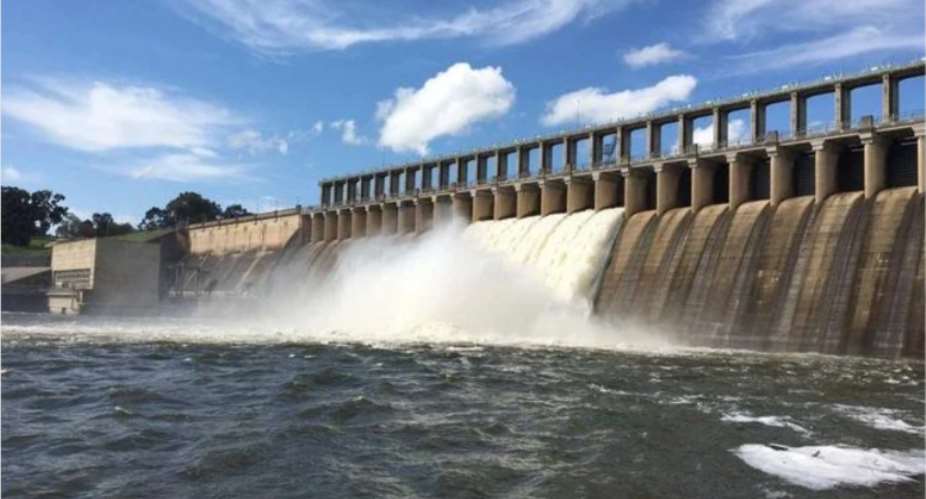
A $350 million flood control project is expected to begin in December this year to address perennial flooding caused by spillage from the Weija Dam and protect communities downstream.
The Dam Spillage Flood Control (DSFC) Project, being implemented by the Weija-Gbawe Municipal Assembly in partnership with Hi-Limit Group, is expected to be completed by December 2028.
The project will involve the construction of a high-level reinforced concrete levee canal stretching from the Weija Dam site to the Atlantic Ocean, with a permanent estuary to safely discharge excess water.
It will also include the construction of inner-town roads in Tetegu.
Speaking to GNA Chief Executive Officer of Hi-Limit Group, Emmanuel Larbi, said the project is intended to provide a permanent solution to flooding triggered by the periodic release of excess water from the Weija Dam.
He explained that the canal would direct excess water from the dam into the Atlantic Ocean, reducing the risk of flooding in downstream communities.
“We will make sure that the canal will follow the pattern of the natural waterways into the sea, so that it doesn’t affect the residents in any way,” he said.
Larbi said project developers had already engaged residents in beneficiary communities and undertaken community entry activities, with residents expressing support for the initiative.
He also assured residents that the project would not involve demolitions, stressing that its primary purpose is to protect communities from recurrent flooding.
The beneficiary communities include Tetegu, Oblogo, Weija Old Town, New Weija, Sampah Valley, Bortianor, Ashalaja, Ada Kope, Glefe, White Cross, Choice, Ash Bread, Tsokomey, Pambros, Weija-Away, Faana and Amelipo.
Hi-Limit Group has secured $325 million from financial partners in the United States, while the Weija-Gbawe Municipal Assembly is expected to mobilise $25 million in counterpart funding through internally generated funds and a proposed canal levy.
Larbi said the counterpart funding would represent the government's contribution to the project, while the private-sector financing would cover the larger portion of the project cost.
United Bank for Africa Ghana (UBA) has been engaged as the project banker to facilitate the collection of the counterpart funds and administer project funds for payments to contractors and service providers.
Feasibility studies, detailed design work, an Environmental and Social Impact Assessment (ESIA), and a housing census are currently underway.
The China Railway Construction Engineering Group has been selected as the General Engineering, Procurement and Construction (EPC) contractor for the project.
Source: GNA

 NCA clears MTN, Telecel and Goal Telecom for next stage of 5G spectrum licensing
 ICT accounts for 41.5% of Ghana’s 6% Q2 2026 economic growth – GSS
 Ghana Highway Authority to correct defects on portions of Eastern Corridor Road
 ECG private sector participation to be determined after transaction advisor's re...
 Over 70% of Ghanaians walking with hypertension unaware – Cardiothoracic Centre ...
 Weija Dam spillage: $350million flood control project to begin by December
 Ghanaians should be grateful for voting Mahama back to power for saving Ghana’s ...
 I remain committed to NPP despite withdrawal from National Organiser race — Sala...
 John Boadu, Sammy Crabbe, Paul Afoko, Boakye Agyarko secure 1st to 4th spots in ...
 Auditor-General report exposes financial rot at 18 assemblies in Volta Region; C...

