




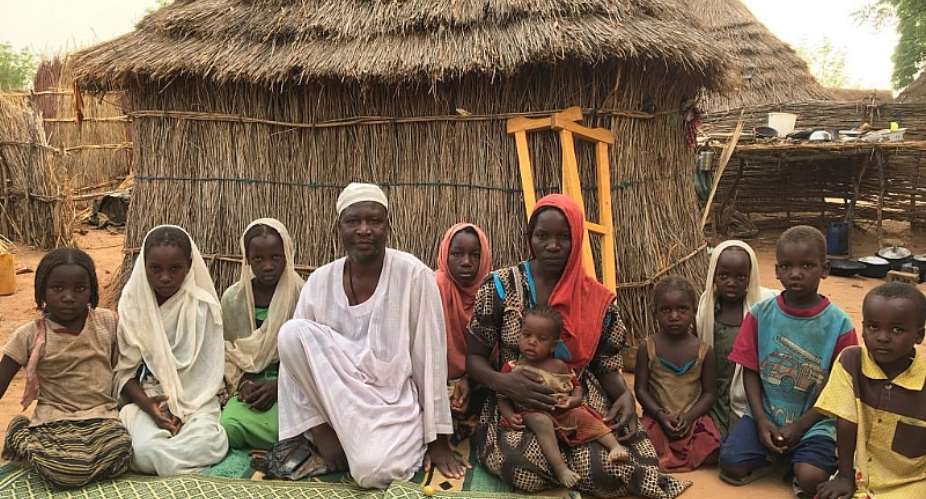
A group of non-governmental organizations hailed the United Nations General Assembly signing of the Global Compact on Refugees on Monday, in the hopes that the non-binding voluntary plan will have an impact on the world refugee crisis.
Some 181 countries voted in favor of the Global Compact on Refugees, put forward by the UN Refugee Agency, UNHCR, while the United States and Hungary voted against the resolution. Three other countries abstained.
The US said it went against its sovereign interests, saying that the global approach to refugees and migrants was not a US approach. The resolution had been approved by consensus for more than 60 years.
“America's abdication of leadership is due in part to the incorrect belief that signing such an accord is attempting to change international legal obligations. This is simply not the case,” said International Rescue Committee (IRC) President David Miliband in a strongly-worded op-ed piece in the Washington Post .
He added that the vote shows how difficult it is to reach international agreement, “especially when wealthier nations are focused primarily on themselves.”
In the report from UNHCR out earlier this month, the UN agency stresses that this new compact adds to the efficacy of the 1951 Refugee Convention and other texts, it does not replace the existing legal system for refugees.
While the Convention outlines state responsibilities and refugee rights, “the Global Compact reaffirms those standards and principles, and focuses on increasing international cooperation for a fairer, more systematic and comprehensive response so refugees and those hosting them can rely on robust support.”
Support is needed for countries – poor and lower middle-income countries, like Bangladesh, Uganda and Jordan- who host 85 per cent of the world's 25.4 million refugees.
“In fact, if the United States hosted refugees in the same proportion as Uganda, it would house 8.5 million refugees instead of the three million resettled since 1980,” said Miliband.
The US Trump administration announced last September it would take no more than 30,000 refugees in 2019, down from 45,000 refugees this year.
Part of the solution is to ensure greater accountability, according to a joint statement signed by IRC, Oxfam, Save the Children, Danish Refugee Council and Norwegian Refugee Council. They said that part of the issue was that there was no way to assess progress on refugees, but have welcomed the World Bank-UNHCR Joint Data Centre project as a positive first step.
Long-term solutions are also essential, especially for those in placements that have lasted more than a decade .
“The Compact sets a standard keeping us all accountable to increased settlement, to ensure that all returns are safe and dignified, and to include, empower and engage refugees where ever they are,” said Danish Refugee Council Secretary General Christian Friis Bach.


 'I will die with integrity than be corrupted by galamsey' – Lands Minister
 'The people who benefit never die' – Kwesi Pratt on Gomoa, New Winneba land disp...
 Otumfuo returns to Kumasi to rapturous welcome after 10-day US visit
 Cement price hike looms as manufacturers introduce GH¢12 clinker demurrage surch...
 BOGISS defilement case: Security guard allegedly lured 14-year-old student with ...
 Police recover AK-47, 28 rounds of ammunition; suspect killed in Binduri operati...
 Your conduct is undeserving of a leader of the bench - John Boadu slams Chief Ju...
 Port inspection delays is increasing cost of doing business – ICC Ghana
 Works Minister pushes for shorter timeline for Kaneshie–First Light Road Project
 Driving must be studied from primary to university – Ada West DCE proposes

