





By Collins R. Nunyonameh, PhD
Introduction
In fulfilment of a major campaign pledge in the 2012 presidential elections, President John Mahama, in his State of the Nation Address to Parliament on February 25, 2016, announced his government's decision to convert six (now possibly 8) of Ghana's ten polytechnics from higher diploma awarding institutions into degree awarding institutions, with a name change from polytechnics to “technical universities”. On April 5, 2016, the President followed up with what was described as an official launch of the conversion at the Takoradi Polytechnic.
While the relevance and processes of the conversion (including the selection of polytechnics) have remained a subject of intense debate among social commentators, education experts, alumni and students of the various polytechnics, and even political activists, there has been very little interest shown in understanding the substance of the conversion and its potential implications.
Questions on substance

Similarly, the Ghana Union of Polytechnic Students (GNUPS) has, for several years, demanded job placements for polytechnic graduates at similar levels as those offered graduates from the traditional public universities without success. In fact, until recently, in an apparent demonstration of condescension towards polytechnics, some public universities refused to allow graduates from the polytechnics transfer credits from their HND programmes towards their bachelor's degree programmes. In practice, this has meant that polytechnic graduates (depending on whether they were SSCE or A Level holders), for some time, had to do 4 or 3 full years in order to earn a degree in the same programmes completed at the HND level.
In this context, the conversion of polytechnics into Technical Universities is generally expected to be widely celebrated across the polytechnics, as it purportedly brings to closure the debate on their status, vis-à-vis, the traditional universities. Indeed, there is some evidence of celebration among some of the polytechnics. Koforidua Polytechnic, for example, has already changed its name (on the website) to Koforidua University of Technology, prior to the completion of the legal processes required for the conversion.
While the celebration is warranted, in some sense, some important questions remain to be answered regarding the substance of the conversion, i.e. precisely what it means to be a technical university rather than a polytechnic, and how a technical university, in that sense, compares with the other universities, especially the public universities in Ghana. Does the conversion really bring the Polytechnics at par with the other chartered Public universities? Does it matter that the polytechnics are called technical universities rather than universities of technology or just universities? For example, will Koforidua be asked to change its name from Koforidua University of Technology to Koforidua Technical University? If so, what will be the difference?
While these questions arouse genuine curiosity and underscore the need for a more concerted effort at public education on the conversion, broadly speaking, the more important question, perhaps, concerns the status of the new proposed technical universities, vis-à-vis, the traditional public universities. For example, will Koforidua University of Technology be truly equivalent to the University of Ghana or the Kwame Nkrumah University of Science and Technology (KNUST) in the technical sense of a university?
Will the technical universities be allowed to run degrees run by the traditional public universities in Ghana? In other words, will the technical universities be allowed to run Bachelor of Science (BSc) Degrees or full professional degrees such as Bachelor of Architecture or Bachelor of Engineering as is done by other universities?
Or will they be limited to only Bachelor/Master of Technology (B.Tech/M.Tech) Degrees? How will degrees offered by technical universities compare with degrees offered by the traditional universities? Will they be equivalent or inferior? For example, will M.Tech degrees from technical universities meet entry requirements for PhD admission in the University of Ghana or the KNUST?
Technical Universities as second-class universities?
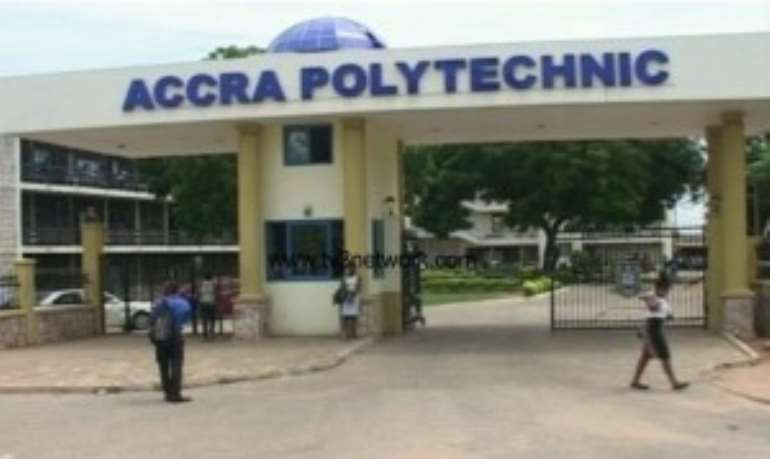
In fact, anecdotal evidence suggests that the government may not be thinking about the technical universities as equivalents, in terms of status, to the traditional public universities, or universities in the general sense. There is some evidence to suggest, indeed, that the government is conceptualising the technical universities essentially as second-class universities, universities in name, but polytechnics in substance.
Two seemingly insignificant facts lend credibility to this view. The first lies in the fact that rather than individual Bills, the government is presenting a composite Bill to Parliament on the technical universities. And this may, in fact, not be so insignificant; it represents a serious deviation from the process of creating public universities in Ghana.
The approach, historically, is to present separate Bills on each proposed university. The government is yet to ever present a “universities bill” in the creation of universities in Ghana. In fact, this is why even though the Universities of Health and Allied Sciences and the Energy and Natural Resources were created just about the same time, they each had their separate Bills in Parliament, and eventually, their separate Acts and Charters.
In this sense, presenting a composite Bill for all the technical universities means that unlike the other public universities, which have individual, separate charters to operate as independent universities and award their own degrees, the technical universities will have a collective charter; and none of the them will be independent enough to grant its own degrees without recourse to an external, supervisory body.
In fact, a comparison of the wording in the Technical Universities Bill and the University of Ghana Act 2010, for example, is extremely revealing in this regard. Article 2 (1) of the University of Ghana Act 2010 (Act 806) states: “Without limiting its other powers, the University [of Ghana] shall have power to award its own degrees, including honorary degrees, diplomas and certificates.”
Contrast this with Article 4 (1a) of the Technical Universities Bill: “Without limiting its powers, a technical university may award degrees, diplomas, certificates and others as may be agreed upon by the Council of that technical University established under Section 4 of this Act, and approved by the national body responsible for accreditation.
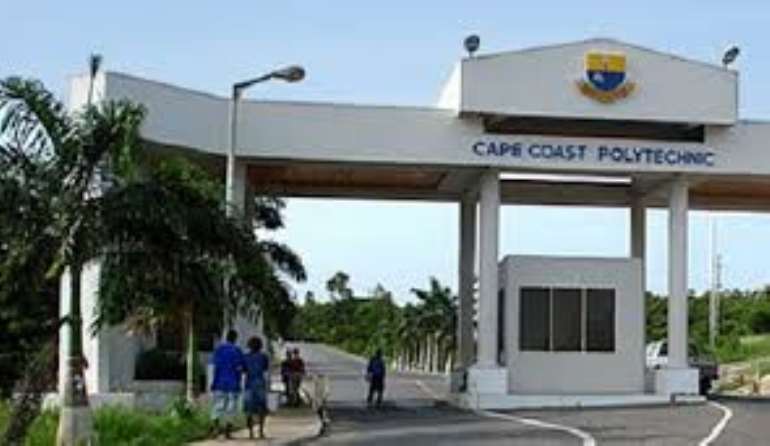
The second evidence lies in the fact that the titles for the administrative heads in the technical universities will be different from the title of the administrative heads of the other public universities. According to the Technical Universities Bill, administrative heads of the technical universities cannot call themselves Vice-Chancellors, as is the norm with other public universities (new or old) in Ghana. This may sound trite to some, but it may not be by accident that heads of the technical universities will not be called Vice-Chancellors.
In fact, when the polytechnics were converted from technical institutes to polytechnics, the title of their administrative heads changed from Principal to Rector. Changes in titles convey ideas about new roles and status. Thus, by consciously avoiding the introduction of the title “Vice-Chancellor” for the heads of the technical universities, and in combination with the earlier points, it is hard to argue that the government is thinking of the technical universities as full-fledged universities at par with their traditional counterparts.
Not only these, but what exact pathways exist to grant the technical universities full-fledged university status, and what are the government's plans regarding this eventual transition? It may be important for the government to clarify its positions on these key questions.
Conversion to Polytechnic University Colleges (PUCs) may be a better option
Rather than creating second-class universities out of the polytechnics, it may be important to evaluate alternative pathways for the elevation of the polytechnics. The first is to consider making the polytechnics full-fledged, independent degree awarding universities with their own separate charters.
The idea is to make each polytechnic a separate university, equivalent, in status, to all other public and private universities. This will mean, of course, that the government must replace the composite Technical Universities Bill with separate Bills for each of the 6 or 8 proposed polytechnics to be upgraded. This will effectively answer most of, if not all, the questions raised in this article.
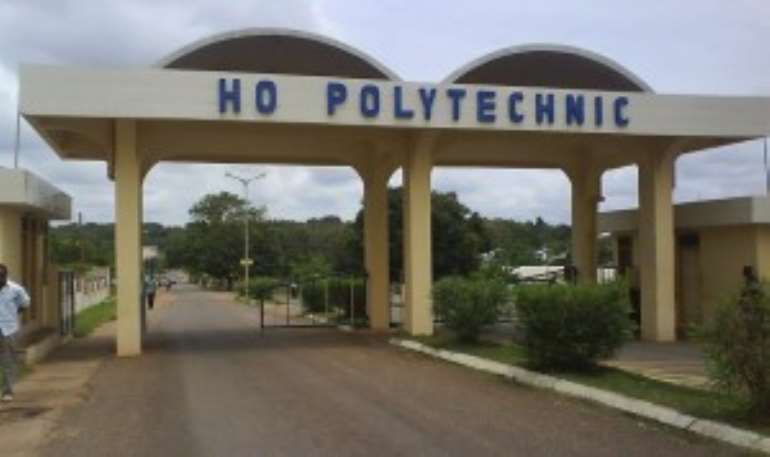
In fact, Kenya provides very useful lessons in this respect. For example, the history of the Technical University of Mombasa and the Kenya Technical University shows that both institutions (and I am sure others) were initially converted from technical institutes into polytechnics (just as was the case in Ghana); they were subsequently elevated from polytechnics to polytechnic university colleges, and then eventually (individually) to full-fledged technical universities, with their own separate charters.
As full-fledged universities, both institutions enjoy broad acceptance and respect and offer a range of degrees – B.Tech, Bachelor of Engineering (B.Eng), Bachelor of Architecture (B.Arch.) and Bachelor of Commerce (B.Com) Degrees – just as other universities in Kenya and the world. They are not limited to offering just the B.Tech Degree, which at the Kenya Technical University is lower than the “full professional” degrees such as the B.Com, B. Arch., etc.
In view of the above example, a better path to the conversion may be to elevate the polytechnics first to the status of polytechnic university colleges (PUC), rather than making them second-class universities, as the present conceptualisation of the technical universities seems to suggest. Making the polytechnics polytechnic university colleges holds four distinct advantages.

Conclusion
Proceeding on the present trajectory of converting the polytechnics into technical universities without a clear definition of the status of these technical universities relative to their traditional counterparts, especially, in terms of the degrees they offer, is likely to introduce a lot of challenges within the educational sector, and even the labour front, once the celebrations stop.
It may thus be important for the government to rethink its approach to the conversion. It may also be important for the various associations in the polytechnics – POTAG, PAAG [Polytechnic Administrators Association of Ghana); GNUPS; CORP [Conference of Rectors of Polytechnics]; GAPA [Ghana Association of Polytechnic Administrators] and importantly, alumni associations – to be fully engaged in the discussions on the substance issues of the conversion into technical universities.
 Gov't to invest GH₵2.5bn into second-cycle education infrastructure
 NDC to rename national headquarters after Rawlings, unveil bust on 79th birthday
 V/R: Two dead, farmlands destroyed as floods ravage Ketu North
 V/R: Flood waters submerge acres of farmland in Anloga
 Al-Qaeda-linked jihadists attack Niger airport, 11 soldiers killed
 Ghana pushes for concrete slavery reparations
 Fire destroys five-bedroom house; family, tenants rendered homeless
 Timber Millers accuse, demand arrest of trade association members behind attack ...
 Two Christ the King SHS students injured in machete attack by suspected gang in ...
 Controller plans salary deductions of 4,000 public sector workers who still owe ...


