




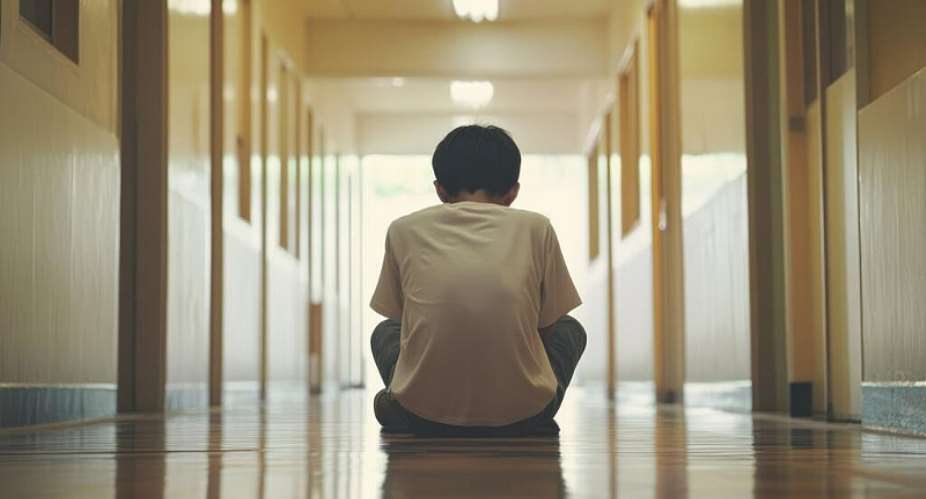
French charity e-Enfance, dedicated to protecting young people online, found in its latest study that one in three young people have experienced bullying – including cyberbullying – and that a quarter of them have turned to artificial intelligence (AI) chatbots for advice and support.
"What we're seeing is that young people use artificial intelligence and immediately feel as though they've been helped... It brings them immediate relief," said Samuel Comblez, psychologist and deputy director-general of the charity. "But just because they feel relief, does that mean they're being protected?"
The use of AI as therapy has been linked to several teenagers taking their own lives. In 2025, a 16-year-old American died by suicide after spending several months chatting with ChatGPT about his problems.
His parents filed a complaint, accusing ChatGPT of having provided their son with the means to take his own life.
One in six young teenagers a victim of cyberbullying, WHO warns
“It isn't necessarily a bad thing that artificial intelligence is used initially to help address these situations,” says Comblez.
"[However], young people mustn't become trapped in this relationship and end up relying solely on artificial intelligence to cope. To escape situations of bullying and cyberbullying, you still need the help of an adult. Artificial intelligence obviously cannot do everything.”
However, the study – which surveyed children aged between six and 18 – also found young people often turn to AI first as a sort of practice run, to prepare themselves before talking to their parents.
The number of young people who talk to their loved ones about bullying has in fact increased since 2025, rising from six to seven out of 10 cases.
Regaining trust
The study, published on 29 October, found that cyberbullying is becoming a persistent problem, fuelled by social media, video games and the widespread use of AI.
Its effects include loss of self-confidence and anxiety, with victims constantly worrying about the next incident after they've been subjected to an initial attack.
"Nearly one in two victims say they have lost self-confidence, and four in 10 have withdrawn into themselves as a result of feeling humiliated," notes Comblez.
France seeks EU backing for revised social media ban for under-15s
He added that children "may end up believing that the problem lies with them".
"This is something we often hear on our helpline. Beyond stopping the bullying, we must also help young victims find their place again and regain their trust in others, and that often takes a little longer."
The charity's 2026 report highlights an urgent need to strengthen existing prevention and support tools – and to raise public awareness of them.
It found that seven in 10 young people and six in 10 parents were unaware of the existence of its national support services.
The findings were based on interviews with 1,612 families comprised of children aged between six and 18 and their parents, carried out in September.
This article has been adapted from the original version in French by Arame Mbengue.


 Edwin Nii Lantey Vanderpuye declares bid for NDC national chairmanship
 'Don't take metaphorical NPP serious, they should be apologising to Ghanaians' –...
 IMF says Ghana’s economic recovery is strengthening, projects 5.7% growth in 202...
 Only 61% of Ghanaian children have birth certificates – UNICEF reveals
 Contraflow: “No Aayalolo bus has been involved in any accident" — Ayariga
 Queen Máxima urges Ghana to prioritise financial health in next inclusion strate...
 Navy intercepts 4.7 tonnes of suspected Indian hemp at Ada Estuary
 Assafuah runs away from invitation to appear with evidence before Mahama's commi...
 Kenyan starvation cult leader faces death sentence over child murders


