




The European Union (EU) has cautioned that illegal mining, popularly known as galamsey, is threatening its development investments in Ghana, particularly in sustainable agriculture, water and sanitation, security and forest protection.
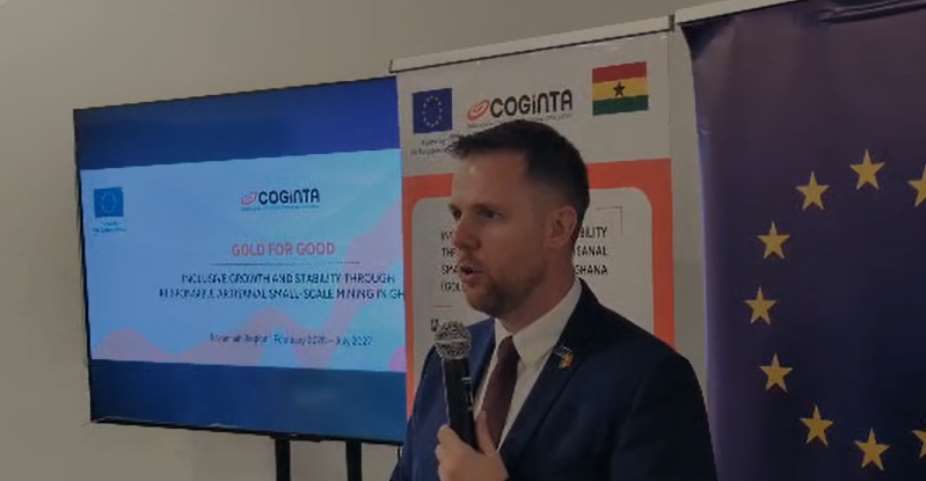
The Deputy Head of the EU Delegation to Ghana, Jonas Claes, said the environmental destruction caused by illegal mining was weakening efforts by the bloc to support development in these key sectors.
Speaking at the launch of 3 Gold for Good baseline studies, Mr Claes disclosed that the EU had intensified its involvement in tackling illegal mining after initially regarding the issue as politically sensitive and difficult to address.
“Three to four years ago, the European Union did not have any engagement in this field. It was considered politically risky, too complex a problem. However, illegal mining is not only detrimental to the people of Ghana, but it also directly undermines EU interests and the EU-Ghana partnership,” he said.
He noted that the bloc commits significant resources to programmes covering sustainable agriculture, water and sanitation, security and reforestation, but warned that illegal mining activities were jeopardising the impact of those investments.
“The EU spends sizeable programming funds towards sustainable agriculture, water sanitation, security and reforestation, all of which are gravely undermined by illegal mining practices,” he added.
Mr Claes said the EU and some of its member states were now supporting initiatives to confront the menace, including the €3 million Gold for Good project, funded by the bloc and implemented by Coginta.
He described the project as part of a wider partnership with Ghana aimed at addressing the environmental, economic and social challenges associated with illegal mining.
The EU also stressed the need for stronger public education on the long-term effects of galamsey, observing that the immediate financial and social benefits associated with the activity continued to attract some people in mining communities.
It said efforts to discourage illegal mining must take into account the short-term incentives available to those involved, including financial assistance, educational opportunities and access to other services.
Meanwhile, the Country Director of Coginta Ghana, Rev. Fr. Dr Clement Aapengnuo, called on the government to improve natural resource governance and address security threats associated with artisanal and small-scale mining.
He urged authorities to pay particular attention to security concerns linked to mining activities in northern Ghana, stressing that responsible management of natural resources was critical to maintaining sustainable peace.
Rev. Fr. Dr Aapengnuo said decisions regarding the management of natural resources had significant consequences for local development, livelihoods and social cohesion.

 NPA boss cautions public against approaching overturned fuel tankers
 NAIMOS arrests four over suspected illegal sand-winning at Afienya
 Questions raised over impartiality of committee investigating passport scandal
 'Pedestrian may not survive speeding beyond 50' — NRSA boss defends 50km/h speed...
 Edwin Nii Lantey Vanderpuye declares bid for NDC national chairmanship
 'Don't take metaphorical NPP serious, they should be apologising to Ghanaians' –...
 IMF says Ghana’s economic recovery is strengthening, projects 5.7% growth in 202...
 Only 61% of Ghanaian children have birth certificates – UNICEF reveals
 Contraflow: “No Aayalolo bus has been involved in any accident" — Ayariga
 Queen Máxima urges Ghana to prioritise financial health in next inclusion strate...


