




Important Note from the Author
This article is written against the backdrop of a holistic panorama of every nation, space, and walk of life that sees these woes as a pestilential plight in its land. The country is imaginary and has no name. Reader/listener, may the article take place in the country of your choice. It has no fixed location where these occurrences exist. Here or there... this or that country... this or that region. Reader/listener, may you place the actions in the space of your choice.
Chapter I: The Land and Its People
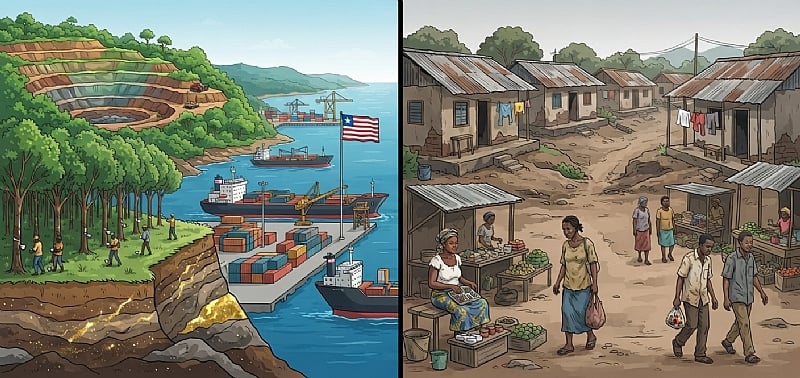
It is a land blessed with natural wealth but burdened by a poverty that refuses to go away. A land where gold, diamonds, timber, and iron ore lie beneath the soil, yet the people above that same soil continue to struggle for their daily bread.
Its people profess love and peace but live with frustration, confusion, and a growing anger whose real causes many have yet to understand. Everybody is angry. The market woman is angry, the student is angry, the motorcyclist is angry, and the civil servant is angry. Even the man who cannot explain what is troubling him is angry.
But the question is: how much of this anger is directed at the real problem?
The land is rich, but the people are poor. The economy may record growth, and officials may celebrate impressive figures, but the ordinary man still wants to know when that growth will reach his pocket. GDP cannot be used to buy rice at the market, and a beautiful economic report cannot pay a child's school fees. The figures may be smiling, but the people are not always smiling with them. That is where the real contradiction lies.
For generations, the people have lived on promises of a better tomorrow. Every new political season comes with fresh grammar and fresh assurances that things will soon change. Politicians speak as though development is already at the doorstep, but native man Tamba Yakpawulo keeps waiting for the visitor to arrive. Sometimes, one wonders whether the promised better tomorrow has lost its way or whether it is deliberately avoiding the address of the ordinary citizen.
The people must not pretend that the problem started yesterday. There are political elders whose records deserve serious examination, just as there are present leaders who must answer for their own decisions. Some people have been placed on such high pedestals that questioning their political records is treated as disrespect. But since when did age become a certificate of innocence, or political history become immunity from accountability?
Respect is one thing; blind loyalty is another. People can respect their elders without pretending that every decision they made was correct.
The question, therefore, is not simply whether their ancestors and political leaders deserve blame. The real question is whether their decisions, omissions, and failures helped create the conditions in which the people continue to live. They must examine the past honestly, judge the present fairly, and refuse to allow political loyalty to blind them to the truth.
A leader should not become a saint because he belongs to Party A, just as another should not become the devil simply because he belongs to the opposition. If people condemn wrongdoing only when their opponents commit it, then they are not fighting injustice; they are protecting their own side in the drama.
Maybe the greatest tragedy of their land is that its people have gradually become accustomed to conditions they should be questioning. They celebrate basic public services as though they were gifts from generous politicians instead of responsibilities of public office.
A road is constructed, and the entire nation is expected to clap. A school is opened, and the people are told to remain grateful. But should citizens be made to feel indebted to leaders for performing the very duties for which public office exists?
The deeper problem is not the absence of wealth but the failure to turn that wealth into a better life for the people. Natural resources cannot develop a country by themselves. Gold will not build a hospital simply because it is gold. Iron ore will not educate a child simply because it lies beneath the ground. Timber will not put food on the table simply because its commercial value is high.
Resources must be responsibly managed, public institutions must function, and the benefits of national wealth must reach beyond the privileged few.
For decades, this contradiction has remained with the people, passing from one generation to another. The names of political parties may change, the faces in government may change, and the speeches may sound different, but the ordinary citizen continues to ask the same question: When will the wealth of their land begin to be reflected in the lives of its people?
It is easy to blame leaders, and sometimes the blame is justified. But citizens must also develop the consciousness to examine the system, understand their own circumstances, and demand accountability consistently. They cannot spend the whole day cursing politicians and then defend the same wrongdoing when it is committed by somebody they admire.
That is not national patriotism but confusion wearing the mask of patriotism.
Rich soil, poor people. Abundant resources, scarce opportunities. Endless promises, and a population still waiting for the benefits of its own inheritance.
This is the paradox of the land and its people.
The way forward demands more than anger and political arguments. It requires an informed population and a society willing to confront uncomfortable truths. The people must learn to question those who govern them without worshipping those they admire. They must also understand that genuine change cannot be built on just "MAYIBUYE!!" and "Amandla!!"
Until the people understand why their land is rich while their lives remain difficult, they may continue to celebrate the treasures beneath their feet while struggling with the poverty above them. And until national wealth is measured by the well-being of the people, the promise of development will remain a beautiful speech delivered to an audience still waiting for results.
A land may be rich in minerals, but its true wealth is found in the living conditions of its people. Anything less is a national contradiction that no amount of political grammar can explain away.
Chapter II: The Illusion
The illusion of the land is a strange one. It is not the absence of wealth, nor is it the absence of people who can think, work, and build. It is the belief that a nation can continue in the same direction and somehow arrive at a different destination.
The people have become accustomed to expecting miracles from a system they rarely stop to examine. They want change, but sometimes resist the questions that change demands. They want a better country, but too often allow political excitement to take the place of serious national reflection.
One of the greatest illusions is the belief that everything is well simply because the country is at peace.
Peace is necessary, but peace without opportunity can leave a people frustrated. A man may sleep without hearing gunshots and still wake up wondering where his next meal will come from. A student may attend classes peacefully and still graduate into unemployment. A mother may live in a quiet community and still fear the hospital bill when her child becomes sick.
They must therefore understand that the absence of war is not the presence of prosperity. A peaceful land must also be a land where people have a fair chance to live with dignity.
Another illusion is the way success is measured.
Sometimes, a man is considered successful because he occupies a big office, rides an expensive vehicle, or has people surrounding him whenever he appears in public. But the question rarely asked is how that success was achieved and what it has contributed to the common good.
In a society where public office can easily become a symbol of personal importance, the duty to serve may be forgotten in the excitement of being served. Everybody wants to sit in the big chair, but not everybody is prepared to carry the responsibility that comes with it.
The same confusion follows society's understanding of wealth. People point to the minerals beneath their feet and speak as though nature has already completed the work of development. But nature only provides the resources; human beings must decide what to do with them.
Gold does not build a school by itself, and iron ore cannot employ young people simply because it exists. Without responsible management, fair agreements, productive investment, and public accountability, natural wealth can become a source of national frustration rather than collective progress.
And this is where the illusion becomes serious.
The people see the wealth, hear the announcements, and expect their lives to improve. Yet when the improvement fails to come, they are often left with explanations instead of answers. One administration blames the previous one, the previous administration blames its predecessors, and everybody seems to have inherited a problem nobody is responsible for.
Somehow, everyone gets angry.
If blame alone could solve national problems, the land would have been developed several times over by now.
But the illusion is not maintained by government officials alone. It also survives in the minds of ordinary citizens who have learned to judge politics by personal benefits instead of public results.
A politician may distribute a few bags of rice, pay some school fees, or provide transportation for a community event, and suddenly his entire record becomes a subject of praise. Meanwhile, the larger questions of employment, education, healthcare, roads, and national development remain unanswered.
Helping a struggling person is good, but charity cannot replace a functioning system. People need assistance when they are in difficulty, but they also need a country that gives them a better chance of avoiding that difficulty in the first place.
There is also the illusion that political differences are greater than common problems.
People divide themselves into camps, defend their preferred leaders, and treat every criticism as an attack on their political identity. Meanwhile, hunger does not check party membership before entering a home. Unemployment does not ask which candidate a young person supported. The cost of living does not reduce itself because somebody's preferred politician is in power.
The ordinary citizen may be busy defending a leader on the radio today and struggling to pay the same bills tomorrow.
At some point, people must ask themselves whether political loyalty is improving their lives or simply keeping them occupied.
The truth is that a nation cannot develop when its people are more interested in defending personalities than examining policies. A leader should be judged by the work done, the promises fulfilled, the resources accounted for, and the opportunities created.
Good intentions may be welcome, but intentions alone cannot pave roads or equip hospitals. A beautiful speech may inspire a crowd, but the real test begins when the crowd returns home and has to live with the results of the speech.
Perhaps the most painful illusion is the belief that somebody else will eventually rescue the people from their condition.
They wait for the next president, the next minister, the next foreign investor, or the next development partner to come and solve problems that require serious national effort. External assistance can be useful, and responsible leadership is essential, but neither can replace the need for capable institutions and citizens who understand their rights and responsibilities.
No nation can permanently outsource its future.
This does not mean that the people are responsible for every hardship they face. Governments carry public duties, and those entrusted with public resources must answer for how they use them. But citizens must also refuse to surrender their judgment to political personalities. They must ask questions, examine records, reject empty promises, and demand explanations when public resources fail to produce public benefits.
Accountability cannot be a seasonal activity that begins during elections and disappears when the votes are counted.
The illusion must therefore be challenged at its roots. People must stop confusing natural resources with national prosperity. They must also stop treating every promise as evidence of progress before the promised work has been done.
A country is not developed because its leaders say it is developing. It is developed when ordinary people can see and experience meaningful improvements in their daily lives.
The greatest illusion of a wealthy land is that its riches will eventually make its people prosperous without anyone having to question how those riches are managed.
Until that belief is abandoned, the people may continue to live between expectation and disappointment, celebrating the promise of a better tomorrow while struggling with the realities of today.
The land will remain rich, the speeches will remain sweet, and Tamba Yakpawulo will keep waiting for his share of the prosperity everybody says is coming.
The task, then, is not to abandon hope, but to remove the blindfold that prevents hope from becoming understanding. For a people who cannot distinguish between what they possess and what they actually benefit from may spend generations living beside wealth without ever experiencing its true value.
And that is the illusion: to possess the wealth of a nation in abundance, yet continue to live as though the nation has nothing to offer its own people.
Chapter III: The Giveaway Saga
In a wealthy land where many people struggle to afford their daily meal, even a joke about giving away money can turn into a national event.
Just let a government official come on social media, such as Facebook, and say, "Comment your name and number. The first hundred persons..." and watch what happens.
Before Tamba Yakpawulo can finish typing his surname, the comment section has already become a queue for survival.
The elderly will comment. The young will comment. Students, market traders, unemployed graduates, bike riders, and even people who rarely comment on serious national issues will suddenly find their voices. Everybody will be dropping numbers as if the country has opened a new bank and the official is the only cashier on duty.
"Boss, God bless you. My number is 123..."
"Hon., remember your son oooh."
"Please, sir, anything you can give me will help."
"Daddy, I have not eaten since morning."
"My leader and teacher, here is your militant."
Some will even call the official "Papa" before the money reaches their account. Others will promise to pray for him until the end of time. A few may send their numbers repeatedly, hoping the second or third comment will receive the blessing the first one missed.
In that moment, the comment section becomes a mixture of a prayer meeting, an employment office, and an emergency food centre.
But behind the comedy is a painful truth: people should not have to beg online for the little money needed to survive in a land blessed with enormous natural wealth.
The problem is not that a government official wants to help somebody. Helping citizens is a good thing. The problem begins when public office becomes a stage for distributing personal favours while the conditions forcing people to beg remain untouched.
A little giveaway may put food in one person's belly today, but it cannot feed an entire nation tomorrow.
And let us be honest: hunger does not check your age, academic qualification, or political affiliation before it visits your house.
A university student can be hungry. An elderly person can be hungry. A graduate with a certificate in hand can still be searching for the money to buy a cup of rice.
In such a situation, people will pursue any opportunity that promises relief. Nobody can comfortably preach dignity to a hungry person while offering no answer to that hunger.
The real comedy is that some of the same citizens who struggle to find transportation money will spend hours competing for a few dollars online, while those responsible for public policy continue their official business.
The people are busy dropping numbers, but the country is still waiting for jobs, affordable food, better schools, functioning hospitals, and opportunities that do not depend on knowing somebody in power.
Then comes the familiar drama.
Somebody receives the money and posts a screenshot. Others congratulate him. The official receives praise, and the comment section becomes a celebration ground. For a brief moment, everybody is happy.
But when the money finishes, the same person returns to the same hardship. The rice is gone, the transport money is spent, and the next giveaway becomes the next hope.
A giveaway can solve a person's immediate problem, but it cannot replace a government's responsibility to create conditions in which people can live without begging.
This is where serious questions must begin.
Why should a country with valuable natural resources have so many citizens searching social media for money to buy food?
Why should a young person with an education see a Facebook giveaway as a better opportunity than a job advertisement?
Why should elderly citizens who have spent their lives contributing to society be forced to plead publicly for small assistance?
These questions are not insults against any official who gives from his pocket. They are questions about a national condition that has made private generosity look like public progress.
Citizens must also be careful. Not every giveaway is a political trap, and not every person who gives money is seeking votes. But when generosity becomes a political performance, people should know the difference between a kind gesture and responsible leadership.
A politician may give away money today and still owe the public an explanation about tomorrow.
People must also stop allowing small favours to silence big questions.
The tragedy is not that poor people are asking for money. The tragedy is that poverty has made begging look normal in a country where prosperity should be possible.
The old are begging. The young are begging. Sometimes the educated are begging alongside those who never had the opportunity to enter a classroom.
Meanwhile, the national conversation can become more excited about who received a giveaway than about why so many people need one.
Sometimes the only way to expose an absurd situation is to show how absurd it has become.
But after the laughter, let us face the truth.
A nation cannot build lasting dignity through Facebook giveaways, and people cannot eat natural resources simply because those resources appear in official reports.
The real giveaway should be a functioning system that gives citizens a fair chance to earn a living. It should be an economy that creates jobs, schools that prepare young people for meaningful work, hospitals that serve the sick, and institutions that manage national wealth for the benefit of the public.
That is the kind of country people deserve, not one where citizens must wait for an Honourable to become generous on Facebook before they can hope to put something in their belly.
And so, as we close Wealthy Land, Impoverished People, let this be the final lesson:
When a country's people are reduced to competing for giveaways, the greatest question is not who has money to distribute, but why so many citizens are struggling to survive in the first place.
Because a wealthy land should produce more than wealthy officials.
It should produce a better life for its people.
 Edwin Nii Lantey Vanderpuye declares bid for NDC national chairmanship
 'Don't take metaphorical NPP serious, they should be apologising to Ghanaians' –...
 IMF says Ghana’s economic recovery is strengthening, projects 5.7% growth in 202...
 Only 61% of Ghanaian children have birth certificates – UNICEF reveals
 Contraflow: “No Aayalolo bus has been involved in any accident" — Ayariga
 Queen Máxima urges Ghana to prioritise financial health in next inclusion strate...
 Navy intercepts 4.7 tonnes of suspected Indian hemp at Ada Estuary
 Assafuah runs away from invitation to appear with evidence before Mahama's commi...
 Kenyan starvation cult leader faces death sentence over child murders



Comments
My profound appreciation to Modern Ghana for providing a credible platform for the publication of my article. Such an intellectual gesture not only amplifies the written word but also reinforces the indispensable place of public discourse in shaping consciousness and interrogating the realities of our society. Thank you for giving this voice a wider audience. The pen must continue to speak!