




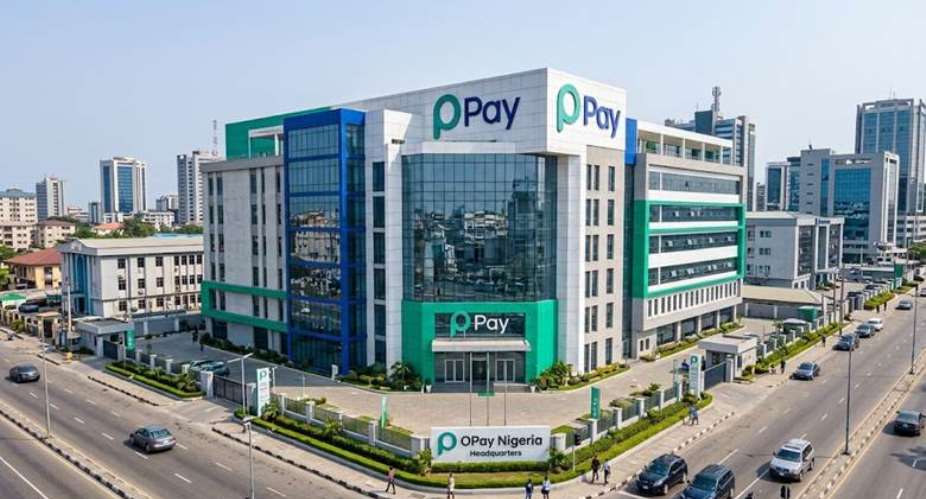
This is how a Nigerian FinTech giant came close to making history on Wall Street, only to withdraw its $304 million share offering at the last minute — and what the drama means for millions of Nigerians who use OPay every day.
For millions of Nigerians, OPay is more than another financial technology company. It is the green application on their mobile phones through which they receive money, transfer funds, pay electricity bills, buy airtime, send money to relatives and, in many cases, run their small businesses. For traders, market women, transport operators, students and online entrepreneurs, OPay has become an important part of everyday financial life. And that is precisely why the company's recent American stock market drama deserves the attention of ordinary Nigerians. It is not simply a story about wealthy investors, Wall Street bankers and millions of dollars changing hands. It is also a story about the future of a financial institution that has become deeply embedded in Nigeria's informal and formal economies.
On October 30, 2026, OPay withdrew its planned $304 million initial public offering (IPO) in the United States, following a regulatory inquiry by an unnamed foreign jurisdiction. The announcement came at a particularly embarrassing moment. The company had already priced its shares, executives had participated in a ceremony at the New York Stock Exchange, and investors were expecting the shares to begin trading. Then, suddenly, the offering was called off.
To understand what happened, it is important to explain what OPay was trying to achieve in America. An initial public offering is the process through which a privately owned company offers shares to members of the public and institutional investors for the first time on a stock exchange. In simple language, a company that has previously been owned by its founders and private investors decides to sell a portion of its ownership to the wider investing public. OPay wanted to do precisely that on the New York Stock Exchange, one of the world's most prestigious financial markets. Its plan was to offer 16 million American depositary shares at $19 each. An American depositary share, or ADS, is a financial instrument that allows investors in the United States to buy and trade shares in a foreign company through the American market.
At $19 per share, the proposed offering was worth $304 million. The price was at the bottom of the company's proposed range of $19 to $21. The transaction implied a total company valuation of approximately $4 billion. In other words, the market was being asked to recognise OPay as a business worth about $4 billion, although that valuation was an estimate based on the proposed share price, not money already sitting in the company's bank account.
Why did OPay want to raise such a substantial amount of money? The answer can be found in the company's ambitions. Since its establishment in 2018, OPay has grown from a relatively unfamiliar FinTech operation into a major provider of digital financial services in emerging markets. Its services include electronic payments, money transfers, savings and loans. And although Nigeria is its most important market, the company also operates in countries like Indonesia, Egypt and Pakistan. According to its IPO prospectus, OPay had approximately 50 million monthly active users as of July 31, 2026. That is an enormous customer base for a company operating in a rapidly expanding digital financial services industry.
Naturally, running a business of this size requires substantial investment. The company would need reliable technology infrastructure, cybersecurity systems, payment-processing capacity, customer support, regulatory compliance teams and a network of agents and merchants. It would also need the financial muscle to compete with banks, telecommunications companies and other FinTech operators. The American flotation was therefore an opportunity to raise fresh capital, strengthen its balance sheet, invest in technology, expand into additional markets, develop new products and potentially acquire or invest in other businesses. Its prospectus also indicated that the company wanted to use the capital markets to support its long-term growth ambitions. Another important consideration is that OPay had previously raised $400 million in 2021 at a valuation of approximately $2 billion. The proposed $4 billion valuation represented a significant increase in the company's assessed worth. A successful flotation would have given early investors an opportunity to realise some of the value of their investment, while also providing the company with a more visible international profile.

For OPay, therefore, a successful American listing would have been more than a fundraising exercise. It would have been a declaration that a financial technology company with deep Nigerian roots could compete on the international stage.
Then came the hitch.
The problem was a regulatory inquiry involving a foreign jurisdiction whose identity OPay has not disclosed. Neither the country nor the regulator involved has been publicly identified, and the company has not explained precisely what the authorities were investigating. This is the most important unanswered question in the entire affair.
OPay described the jurisdiction’s concern as immaterial to its core business operations. It also insisted that the inquiry should not be interpreted as evidence of poor business performance, financial difficulties, operational misconduct or problems with its regulatory standing. Nevertheless, the company and its investment bankers apparently concluded that proceeding with the flotation under those circumstances would be unwise. They mutually agreed to terminate their underwriting agreement, which had been signed on October 29. Consequently, the shares never commenced trading on the New York Stock Exchange as originally planned. And, it is worth correcting one misconception here. Some initial reports suggested that OPay had successfully raised $304 million before trading was suspended. That is not what happened. The company had priced the proposed shares at $19 each, but subsequently withdrew the offering before its completion.
The $304 million was the intended fundraising amount, not money confirmed as having been received from a completed public offering. Why would an inquiry in an unnamed foreign country stop a company from listing in America? The answer is that international financial markets operate under strict regulatory and disclosure requirements. When a company wants to sell shares to American investors, its directors, bankers, lawyers and other advisers must be satisfied that the relevant regulatory and legal requirements have been met.
An unresolved regulatory inquiry can create uncertainty for investors. It can also expose the company and the investment banks organizing the transaction to legal, financial and reputational risks. For example, investors might ask whether the inquiry concerns the company's ownership structure, financial transactions, compliance arrangements or activities in a particular country. These are possible areas of regulatory scrutiny, not established facts about OPay. There is currently no public evidence identifying the subject of the investigation.
Even if a company believes that an investigation is unrelated to its principal business, its advisers may decide that postponing a flotation is preferable to risking a controversial stock market debut. In OPay's case, the decision appears to have been a precautionary one. The company would rather resolve the outstanding questions than enter the American stock market with an unresolved regulatory issue hanging over its head. But what does all this mean for the ordinary Nigerian who has money in an OPay account?
First, Nigerians should understand the distinction between owning shares in a company and keeping money in an account operated by that company. These are two entirely different relationships. If OPay had successfully listed in America, the people buying its shares would have become investors and part-owners of the business. They would have been entitled to participate in the financial fortunes of the company through potential share-price appreciation and dividends, where declared. The ordinary Nigerian using OPay to receive money or pay bills would not automatically have become a shareholder. Nor would the money in an individual's OPay account have been converted into shares.
A successful IPO could nevertheless have benefited Nigerian customers indirectly. The additional capital could have enabled OPay to improve its technology, strengthen its payment infrastructure, expand its agent network and introduce more financial products. More investment in cybersecurity and customer service could also have improved the experience of users. An American listing would have brought greater international visibility and subjected the company to additional public-market reporting and scrutiny. That could have strengthened investor confidence in the business. There would also have been possible disadvantages. Pressure from international shareholders to increase profits could have influenced the company's commercial decisions. It might have sought to increase transaction charges, introduce additional fees or prioritise more profitable products. These are possibilities, not evidence that OPay intended to take such steps. A stock market listing, after all, is not a charitable exercise. Investors put their money into companies because they expect returns.
Now that the flotation has been withdrawn, should Nigerian customers panic? The answer is no. There is no reason for customers to assume that OPay is collapsing or that their money is in immediate danger simply because its American IPO has been cancelled. OPay has expressly stated that the regulatory inquiry will not affect its Nigerian operations, regulatory standing or customer service. It says its services continue normally in Nigeria and its other markets. There has been no announcement in the information currently available that its Nigerian customers should stop using the platform.
However, customers should distinguish between the company's assurances and independently established facts. The identity of the foreign regulator and the nature of the inquiry remain undisclosed. The withdrawal also does not tell us whether the company will attempt another American flotation or pursue alternative fundraising arrangements. The failed IPO is therefore a setback to OPay's international ambitions, but it is not, by itself, proof of a crisis in its Nigerian business. My advice to OPay customers is straightforward. First, continue to use the platform responsibly, but avoid keeping unnecessarily large sums of money in any single digital financial service. This is sensible financial housekeeping, not a prediction that OPay will fail.
Second, retain transaction receipts, payment confirmations and relevant account statements. These records are important whenever there is a dispute involving an electronic transfer or an unsuccessful transaction. Third, make sure your account is properly secured. Use a strong password, protect your transaction PIN, activate available security features and never disclose an OTP to anybody claiming to represent OPay. Fraudsters frequently exploit negative publicity to impersonate financial institutions and trick customers into revealing confidential information.
Fourth, understand the regulatory protections attached to the particular financial service you use. OPay's Nigerian operations are subject to Nigerian financial regulation, but customers should check the specific legal entity holding their deposits and the applicable deposit-insurance arrangements. A New York stock market listing, successful or otherwise, does not itself insure customer deposits.
Fifth, do not respond to rumours by hurriedly withdrawing money or transferring it to unfamiliar platforms. If OPay announces any material change to its Nigerian services, customers should rely on official company communications and announcements from the Central Bank of Nigeria rather than WhatsApp messages and social media speculation.
Finally, OPay itself has some explaining to do. Nigerian customers deserve more than the assurance that the foreign jurisdiction involved is immaterial. The company should provide further information when legally permitted, particularly about the nature of the inquiry, the steps being taken to resolve it and whether the proposed American listing has merely been postponed or abandoned. There is a larger lesson here for Nigerian businesses. International expansion brings international responsibilities. A company can become enormously successful in its home market, attract billions of dollars in investment and build a customer base running into tens of millions, yet discover that international capital markets operate by rules that cannot be ignored.
OPay's proposed $4 billion valuation was an important milestone in the story of African fintech. Its withdrawal is an equally important reminder that corporate ambition must be accompanied by regulatory transparency, sound governance and investor confidence. For Nigeria, the episode is particularly significant because OPay represents the growing ability of African technology companies to challenge established financial institutions and attract international capital. We should want such companies to succeed. But we should also want them to operate transparently and responsibly.
As things stand now, the real test for OPay is not whether it can ring the opening bell at the New York Stock Exchange. It is whether it can resolve the questions that interrupted its flotation, maintain the confidence of its investors and continue providing reliable services to millions of Nigerians. For the ordinary OPay customer, the message is simple: there is no need to panic, but there is every reason to remain financially cautious.
A company can lose an opportunity on Wall Street without losing its customers in Lagos, Aba, Kano or Port Harcourt. But maintaining those customers' trust is something no stock market valuation can buy. And perhaps that is the most important lesson from OPay's American IPO drama.


 'They must be sacked now' – NPP demands dismissal of NACOC, GACL, GPHA, National...
 Meridian Rock dispute: Peace Council urges Tema, Nungua chiefs to pursue dialogu...
 ORC to cancel unrenewed business names from January 17, 2027
 AMA gives traders 48 hours to vacate unauthorised bus stops ahead of enforcement
 Mahama holds bilateral talks with WTO Director-General
 Anaesthetists threaten nationwide strike from December 1 over unresolved concern...
 Ghana to establish 21,000-tonne grain storage facility in Upper West Region
 Fifi Kwetey hints at another reshuffle
 'Some NDC appointees have lost touch with grassroots' – Fifi Kwetey admits


