




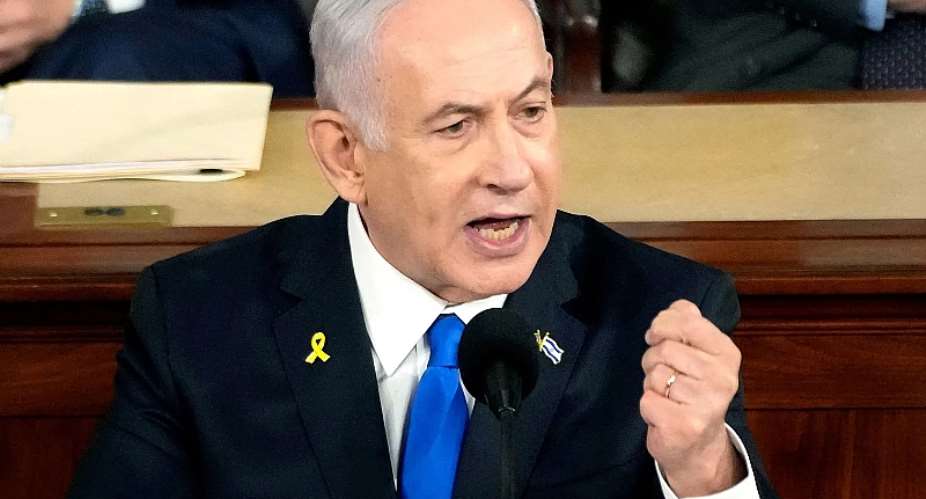
There is perhaps no greater political illusion than the belief that winning an election makes a politician the permanent owner of the office he occupies. Yet, across many democracies, some elected officials conduct themselves as though electoral victory confers an indefinite licence to govern, silence criticism and determine the political destiny of the people. The electoral difficulties confronting Israeli Prime Minister Benjamin Netanyahu offer a timely reminder that political authority is neither permanent nor absolute, and that no matter how entrenched a politician becomes, the electorate retains the constitutional right to determine who governs.
Interestingly, this political reality finds a profound parallel in Christian scriptures. Proverbs 29:2 declares: "When the righteous are in authority, the people rejoice: but when the wicked beareth rule, the people mourn." Beyond its spiritual significance, this passage offers an enduring standard for assessing political leadership: the true measure of governance is not how long a leader remains in office but how much the people benefit from his administration.
Netanyahu is no political novice. Having served as Israel's prime minister across different periods for more than 15 years, he has established himself as one of the most enduring figures in contemporary Israeli politics. His political resilience, ability to navigate complicated coalition arrangements and capacity to return to power after electoral setbacks have distinguished his career.
However, political longevity does not guarantee permanent public support. The outcome of Israel's October 27, 2026 election illustrates how even an established political leader can encounter the limitations of incumbency.
Netanyahu's Likud-led bloc secured 53 seats in the 120-member Knesset, falling short of the 61 seats required for an outright parliamentary majority. The opposition bloc led by Gadi Eisenkot secured 48 seats, while Arab-led parties won 19 seats. With no bloc obtaining the required majority, the formation of the next government became dependent on coalition negotiations.
Although the outcome does not automatically mean that Netanyahu has lost the opportunity to remain prime minister, it represents a setback for his political establishment and exposes the uncertainties surrounding his political future.
Beyond the immediate calculations of Israeli party politics, the development raises an important question about the relationship between elected leaders and the citizens whose votes confer legitimacy on their governments. It challenges the assumption that political influence, control of party structures and years in office should translate into an unquestionable right to remain in power.
Indeed, the Bible offers another perspective on the temporary nature of earthly authority. Daniel 2:21 says that God "removeth kings, and setteth up kings." While this is a declaration of divine sovereignty, it also provides a sobering reminder to those who occupy positions of authority that no earthly political arrangement is beyond change. Leaders should therefore approach public office with humility rather than the arrogance that sometimes accompanies prolonged occupancy of power.
In a democracy, elections are not ceremonial exercises organized to validate the ambitions of politicians. They provide citizens with an opportunity to assess governance, reward performance, reject failure and determine the direction of their country. Consequently, electoral victory should be understood as a responsibility to serve rather than an entitlement to rule indefinitely.
This understanding is consistent with the teaching of Jesus Christ in Mark 10:42-45. When His disciples discussed greatness and authority, Jesus drew a distinction between worldly rulers who exercise authority by lording it over others and the model of leadership He expected from His followers. He taught that whoever desires to be great must become a servant.
That lesson is particularly relevant to political leadership. Public office should not be an instrument for intimidating opponents, rewarding loyalists or enriching a privileged circle. It should be an opportunity to serve, protect and improve the lives of citizens.
Unfortunately, some politicians appear to understand this principle only when they need votes. During election campaigns, they court citizens, visit communities, make elaborate promises and present themselves as servants of the people. Once elected, however, some become increasingly inaccessible, intolerant of criticism and preoccupied with preserving their political positions.
Citizens who were once regarded as indispensable partners in the pursuit of electoral victory suddenly find themselves treated as spectators in the affairs of government. Questions about unemployment, insecurity, infrastructure, public spending and the rising cost of living are sometimes dismissed as political attacks rather than recognized as legitimate demands for accountability.
This attitude is particularly dangerous because democracy cannot thrive on elections alone. It also requires respect for institutions, transparency, freedom of expression and the willingness of public officials to answer questions about their decisions.
Netanyahu's electoral difficulties are instructive in another respect. They demonstrate that political alliances can weaken, voter expectations can change and constituencies that once provided dependable support can reconsider their political choices. No politician should assume that yesterday's electoral victory guarantees tomorrow's support.
The lesson is especially relevant to Nigeria, where the struggle to acquire and retain political office frequently overshadows the responsibility to deliver good governance.
In the Nigerian political environment, the influence of political godfathers, the struggle for control of party structures and the monetization of electoral processes have contributed to a culture in which political office is sometimes treated as a prize to be captured rather than a public trust to be discharged.
The situation is worsened by politicians who regard loyalty to political benefactors as more important than accountability to the electorate. In some instances, elected officials appear more concerned about pleasing their political sponsors, securing the next ticket and consolidating their influence than addressing the concerns of ordinary citizens.
This raises a fundamental question: if politicians owe their electoral mandate to the people, why should their primary political loyalty appear to rest with individuals and interests that are not accountable to the electorate?
The consequences are evident in the disconnect between campaign promises and the everyday experiences of many Nigerians. Citizens are repeatedly assured of better roads, reliable electricity, affordable healthcare, quality education, employment opportunities and improved security. Yet, after elections, the urgency with which these promises were made often gives way to explanations, excuses and political blame games.
The irony is that politicians who desperately seek public support during elections sometimes become uncomfortable with public scrutiny after securing office. They want citizens to applaud their achievements but are less receptive when those same citizens demand explanations for failures.
Such an approach undermines the very essence of representative democracy. Citizens are not expected to surrender their voices after casting their ballots. Their responsibility to hold government accountable continues throughout the tenure of elected officials.
Nigeria's political class must therefore understand that electoral victory is not a personal endorsement of every decision a government may subsequently take. Neither does it amount to a blank cheque for political leaders to govern without regard for public opinion or constitutional obligations.
There is also a lesson in how political actors respond when election results do not favour them. Democracy requires more than the willingness to celebrate victory; it demands the maturity to accept credible outcomes and seek redress through lawful institutions where genuine grievances exist. Political disappointment should not become an excuse to undermine electoral institutions or dismiss the choices of voters.
To be clear, Netanyahu's electoral setback does not automatically establish the superiority of his opposition or prove that every aspect of his administration has failed. Electoral outcomes are influenced by several considerations, including economic conditions, security concerns, ideological differences, party alliances and voters' expectations. His political bloc may also explore coalition arrangements to secure a governing majority.
Nevertheless, the broader democratic lesson remains significant. Political leaders must recognise that public confidence is earned through responsible governance, not demanded as an entitlement. The control of party machinery, access to financial resources and possession of political influence cannot permanently replace the goodwill of the electorate.
For Nigeria, this should be more than an interesting observation about developments in another country. It should provoke a serious reflection on the quality of political leadership, the conduct of elected officials and the need to strengthen citizens' capacity to demand accountability.
Ultimately, public office is not a private estate, and an electoral mandate is not a personal inheritance. Those elected occupy positions of authority for a limited period and are expected to use that authority in the service of the people.
Netanyahu's electoral woes may yet produce another political arrangement that allows him to remain in office. But whatever the eventual outcome, the message for political leaders everywhere, including Nigeria, is unmistakable: no politician is bigger than the electorate, and no electoral victory confers permanent ownership of public authority.
Perhaps the most appropriate closing reminder comes from the teachings of Christ: leadership is measured by service, not domination. Those who occupy positions of authority should never forget that the privilege of leadership comes with the burden of responsibility.
In fact, power is not a personal inheritance. It is a responsibility to serve. And those who mistake the opportunity to lead for the right to dominate should remember that no earthly political throne is permanent.


 Bawumia eyes 3R's Japanese tech that removes mercury, cleans soil and recycles w...
 'Our borders must command respect' – Osahen Afenyo-Markin on cocaine busts
 ‘Govt deeply involved in Beirut cocaine bust’ — Kofi Bentil reveals
 Ablakwa sues Benghazi, Media General over Fantana affair, corruption allegations
 Mahama instructs Finance Ministry to pay striking JUSAG members from November
 Mahama must sign same anti-gay bill NDC backed in opposition – Osahen Afenyo-Mar...
 Romance Scam: Asante Akyem North MP's extradition hearing set for November 18
 JUSAG accuses FWSC CEO of taking unilateral decisions in salary negotiations
 Police arrest three Nigerians over alleged bank customer robberies in Kumasi
 'Next week I will show how the new economy will turn the gains we have made into...


