




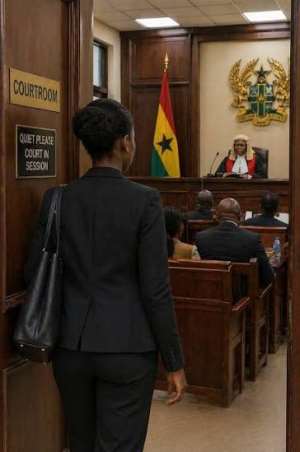
On Monday, 2 November 2026, three significant developments unfolded in Ghana. Judicial Service staff began an indefinite nationwide strike, authorities started enforcing a ban on photocopying the Ghana Card, and police launched a camera-driven traffic enforcement system that sends speeding fines directly to motorists by text message.
Different stories, one underlying question: What does the state owe its citizens, and what do citizens owe the state?
When the Courts Fall Silent
The Judicial Service Staff Association of Ghana (JUSAG) has withdrawn its members from work over unpaid salary adjustments and arrears dating back to January 2026.
While the National Labour Commission has directed fresh negotiations, the dispute goes beyond wages. Judicial staff are the clerks, interpreters and administrators who keep courts functioning. When they stop working, it is ordinary Ghanaians who pay the price through delayed cases, postponed hearings and prolonged detention.
Governments often inherit arrears. The real test is whether those obligations are settled before frustration turns into industrial action.
Ghana Card Enforcement: Good Policy, Difficult Transition
The National Identity Register (Amendment) Regulations, 2026 (L.I. 2523) officially ended the practice of photocopying the Ghana Card and replaced it with biometric verification.
The objective is clear and commendable. Identity theft, fraudulent account openings and SIM registration abuses have become increasingly common. Limiting the circulation of photocopied ID cards should reduce those risks.
The challenge lies in implementation. Large institutions may have the resources to acquire verification devices and train staff. Smaller businesses, clinics and roadside service providers may struggle to meet the requirements immediately.
A good law can quickly become unpopular if compliance proves more difficult than policymakers anticipated.
Traffic Cameras and Public Trust
At the same time, the Motor Traffic and Transport Department rolled out the TraffiTech-GH system, using cameras to detect speeding offences and issue electronic fines.
Road safety is a legitimate priority. Excessive speeding remains a major cause of accidents on Ghana's roads.
Yet the success of the system will depend on public confidence. Citizens must know how to identify genuine notices, challenge incorrect penalties and avoid fraudsters seeking to imitate official messages.
Accountability must apply not only to motorists but also to the institutions enforcing the penalties.
The South Africa Evacuation Debate
The government's evacuation of nearly 2,000 Ghanaians during xenophobic attacks in South Africa was, by any measure, a significant undertaking. Protecting citizens abroad is one of the state's most important responsibilities.
The controversy now centres on expenditure. The Minority has questioned aspects of the reported costs and called for an independent audit, while Foreign Minister Samuel Okudzeto Ablakwa has rejected allegations of wrongdoing and has also supported an independent review.
When both critics and officials agree on the need for an audit, the obvious solution is to conduct one and publish the findings in full. Public confidence depends on transparency.
Cocaine Seizure Raises Airport Security Questions
Lebanese authorities recently announced the largest drug seizure in the history of Beirut's airport, arresting a passenger who arrived from Accra carrying 46.7 kilogrammes of cocaine.
The incident adds to growing concerns about Ghana's role in international narcotics trafficking routes.
The key question is not merely how the drugs were detected abroad, but how such a quantity allegedly departed Ghana in the first place. Serious investigations must focus not only on couriers but also on any networks that may facilitate such operations.
Russia's Promise on Ghanaian Recruitment
Among the week's most consequential developments was Russia's reported commitment to halt the recruitment of Ghanaians for the war in Ukraine following high-level discussions between Presidents John Mahama and Vladimir Putin.
If honoured, the agreement could help prevent further loss of life. Official figures have already highlighted the human cost borne by Ghanaian families whose relatives were drawn into the conflict.
Diplomatic promises, however, are only meaningful when they produce results on the ground. Local recruiters who lure young Ghanaians into foreign wars must also face consequences.
Four Lessons from Beyond Ghana
Events abroad offer reminders that the relationship between citizens and the state is a universal issue.
- The Gulf: Conflict in energy-producing regions affects fuel prices and transport costs worldwide, including in Ghana.
- Israel: Unsubstantiated claims about election fraud can undermine public faith in democratic institutions.
- Bulgaria: Declining voter turnout is a warning sign for any democracy.
- Portugal: Disputes over police conduct during protests highlight the constant tension between public order and civil liberties.
What Ghana Should Do Next
Five priorities stand out:
- Resolve the JUSAG dispute and restore court operations.
- Help small businesses comply with Ghana Card verification requirements.
- Conduct and publish a full audit of the South Africa evacuation programme.
- Ensure investigations into drug trafficking reach any insiders involved.
- Publish the details of agreements reached with Russia and pursue recruiters operating locally.
Final Thought
This week's headlines may appear unrelated, but they point to the same principle.
The strength of a state is not measured by announcements, legislation or press conferences. It is measured by whether workers are paid on time, citizens can comply with the law, public money is properly accounted for, institutions remain trustworthy, and vulnerable people are protected.
That is ultimately what good governance looks like: not promises made, but promises kept.


 Two Techiman SHS teachers arrested over alleged assault of 17-year-old student
 Parliament's committee raises alarm over theft of undocumented DRIP equipment at...
 72-year-old man who killed two relatives at Sakumono deserves death sentence – A...
 November 2: Cedi sells at GHS12.25 on forex market, GHS11.63 on BoG interbank
 'How did 46.7kg of cocaine escape Accra International Airport?' – Sammi Awuku qu...
 Don't allow your certificate to be greater than your competence – Rev. Dr. Adjei...
 Ghanaian Twins, American Woman Plead Guilty in US$9 Million Romance Scam Case
 Syrian arrested in Lebanon with 40kg suspected cocaine from Ghana – NACOC
 ‘Grossly disrespectful’ – Franklin Cudjoe slams Kwakye Ofosu’s claim that Kpebu ...
 GES investigates alleged assault on final-year student by two Techiman SHS teach...


