




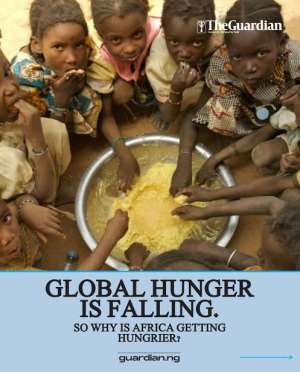
I want you to picture a clinic in a village you will never visit.
The nurse is tired.
The shelves are half empty.
A mother is holding a child whose arms are too thin, and the nurse is explaining that the food programme that once reached the village has run out of money.
Now picture a conference hall in a distant capital.
The air conditioning is perfect.
Men and women in expensive suits are discussing debt sustainability, and the numbers on their presentation slides are neat and orderly.
Nobody in that hall can see the child.
But the child's life is in those numbers.
That is the crisis I am writing about.
In October, the world's finance ministers and central bankers met in Bangkok for the IMF and World Bank Annual Meetings. Civil society groups monitoring the discussions, including the European Network on Debt and Development (Eurodad), argued that the institutions continued to promote familiar solutions while countries across the Global South pleaded for deeper reforms.
I will say it plainly:
The poor of the world are being asked to pay for a crisis they did not create, using food they cannot afford to lose.
Aid Is Being Pulled Away
Foreign aid fell by approximately 23 per cent in 2025, the largest decline ever recorded.
The OECD projects a further reduction of nearly 7 per cent this year, pushing aid levels to their lowest point since 2014.
The cuts are hitting the places that need support most.
Food aid is projected to fall by 44.5 per cent between 2024 and 2026.
Health assistance is expected to decline by nearly a third or more.
Aid directed to the Sahel is projected to fall by more than one-third.
The OECD itself makes an uncomfortable point:
These cuts are policy choices.
Governments chose them.
If wealthy countries had merely maintained aid at the same share of national income provided in 2025, assistance would be increasing rather than shrinking.
Instead, hunger is rising.
And hunger has a face.
The World Food Programme warns that 318 million people could face crisis levels of hunger in 2026, more than double the number recorded in 2019.
Yet available resources are sufficient to prioritise only around 110 million people.
In West and Central Africa, 55 million people are expected to face severe food insecurity during the lean season.
In Nigeria, the WFP was forced to scale down assistance from 1.3 million people to just 72,000.
In Mali, the WFP found that acute hunger increased by 64 per cent among households receiving reduced food rations, while it fell by 34 per cent among those receiving full rations.
That is not an abstract statistic.
It is proof that food assistance works.
And proof that cutting it costs lives.
Debt Is Swallowing What Is Left
The cruelty of this moment is that aid is shrinking while governments are simultaneously being forced to devote more of their own resources to debt repayments.
The World Bank reports that in nearly four-fifths of sub-Saharan African countries, interest payments now exceed public spending on health and/or education.
UNESCO found that in 2025, countries across sub-Saharan Africa spent 3.6 times more servicing debt than investing in education.
Across the wider Global South, 48 countries representing 3.3 billion people now spend more on debt service than on health or education.
The African Development Bank reports that the share of government revenue devoted to external debt service across Africa increased from 23.7 per cent in 2017 to 31 per cent in 2024.
The Bank specifically identifies countries including Nigeria and Ghana as spending more on external debt interest payments than on public health.
Read that again.
We are borrowing from the future to pay yesterday's creditors.
And the future is being starved to make it possible.
This Is a Human Rights Question, Not an Accounting Exercise
Economists call it fiscal consolidation.
I call it a choice about who gets the chance to live well.
Governments that have ratified the International Covenant on Economic, Social and Cultural Rights have committed themselves to protecting the rights to food, health, and education.
No loan agreement can erase a human right.
A creditor's contract does not outrank a child's stomach.
Let me be fair, because truth is always stronger than exaggeration.
African governments carry responsibilities too.
Corruption is real.
Waste is real.
Poorly negotiated loans are real.
Citizens have every right to demand audits, transparency, and accountability.
Domestic revenue must increase.
Africa must build its own economic strength.
No one else will do that for us.
Yet a nation can be responsibly governed and still be crushed by interest rates it did not set, within a financial system it did not design.
Accountability at home and justice abroad are not competing demands.
We need both.
What I Am Demanding
1. Automatic Debt Payment Pauses During Social Emergencies
The IMF, World Bank, and creditor governments should adopt a simple principle:
When a country spends more on debt service than on health and education combined, debt repayments should be automatically paused.
Not delayed with penalties.
Not replaced with lectures.
Paused.
Human survival must come first.
2. Protect Essential Social Spending
Every IMF programme should include protected spending floors for healthcare, education, food security, and social protection.
Waste can be cut.
Corruption can be cut.
The lunch of a schoolchild must never be cut.
Every lending programme should undergo a human rights impact assessment before conditions are imposed, not after communities suffer the consequences.
3. Deliver Faster and Fairer Debt Restructuring
Debt restructuring processes must become faster, deeper, and more equitable.
Official creditors, private bondholders, multilateral lenders, and newer creditors, including China, must all share responsibility.
Delay is not neutral.
Every year of delay carries a human cost.
4. Put Food Security Before Debt Service
Food security must come before creditor repayments.
The funding gap facing the World Food Programme must be closed.
Smallholder farmers, local food production systems, storage infrastructure, and school feeding programmes must receive affordable financing and long-term support.
A country that can feed itself is a country that can build lasting economic resilience.
5. Build African-Led Solutions
The African Development Bank, the African Union, and African finance ministers must stop treating this as someone else's battle.
Africa needs African-led debt solutions.
Africa needs fairer credit ratings.
Africa needs coordinated negotiating positions.
One country negotiating alone can be pressured.
A continent negotiating together can be heard.
6. Restore Global Aid Commitments
Wealthy countries must reverse aid cuts and stop presenting development assistance as charity.
Aid is a commitment.
In an interconnected world, it is also an investment in collective stability.
Hunger, displacement, and economic collapse do not stop at national borders.
7. Demand Accountability From Leaders
To every citizen reading this in Accra, Kumasi, London, Toronto, Berlin, or anywhere else:
Ask your elected representatives how much your country spends servicing debt.
Ask how much it spends on food security.
Ask how much it spends on hospitals.
Ask how much it spends on schools.
Then ask why those priorities exist.
Democracy begins with questions.
The Last Word
Every generation faces a question that history uses to judge it.
Ours is simple:
When the bill came due, did we protect the creditor or the child?
I know my answer.
A society should be measured by how it treats those with the least power to defend themselves.
A debt can be restructured.
A repayment schedule can be renegotiated.
A loan can be forgiven.
But a child who dies from hunger cannot be brought back.
Feed the people first. Everything else can wait.


 Mahama Defends Gold Export Restrictions, Signals Ban on Raw Mineral Exports by 2...
 Judicial Secretary Urges JUSAG to Suspend Planned Strike
 Education Ministry Orders Probe into Alleged Assault at Techiman SHS
 Chief Inspectors’ Amnesty Promotion: Supreme Court grants Police Administration ...
 Police deploy officers and cameras nationwide as TraffiTech-GH enforcement begin...
 Govt to fund travel expenses of mother of murdered Ghanaian teenager to US funer...
 Stop labelling menopausal women as witches – Public told
 Ghana woos investors for US$100million vaccine manufacturing project
 Eight killed, 21 rescued in bus collision on Elubo–Takoradi Highway
 NPP asks US Embassy to suspend recognition of Ghanaian diplomatic and service pa...


