




I write this as a young African, a human rights defender and a citizen of a continent that has contributed the least to the climate crisis yet bears some of its harshest consequences. History shows that progress begins when ordinary people refuse to accept injustice as inevitable. Today, climate change is that injustice, and international law has finally said so in unmistakable terms.
The Law Has Spoken
On 23 July 2025, the International Court of Justice (ICJ) issued a landmark unanimous advisory opinion on climate change. The Court held that states' climate obligations extend beyond the UN climate treaties and arise from human rights law, the law of the sea and customary international law. Failure to prevent significant climate harm, including through fossil fuel production, licensing and subsidies, can constitute an internationally wrongful act, carrying obligations of cessation, non-repetition and reparation.
The ICJ's position echoes other major judicial rulings. The International Tribunal for the Law of the Sea, the Inter-American Court of Human Rights and the European Court of Human Rights have all affirmed that inadequate climate action can violate legal and human rights obligations.
Courts across the world are sending the same message: climate inaction is not merely bad policy. It is a violation of rights.
From Opinion to Accountability
Legal opinions matter, but people must turn legal principles into political action.
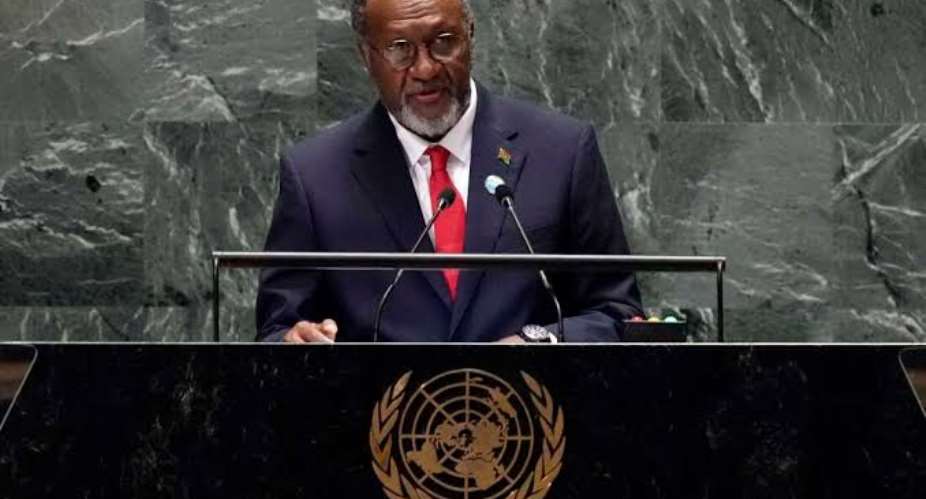
On 20 May 2026, the UN General Assembly adopted Resolution A/80/L.65, welcoming the ICJ opinion as an authoritative clarification of international law. This milestone was achieved largely through the leadership of Vanuatu, its Pacific partners and young climate advocates whose efforts brought the issue before the world's highest court.
Yet the struggle is far from over. Critics warn that efforts to weaken follow-up mechanisms could delay accountability. The UN Secretary-General is expected to report on compliance in 2027, with further discussions scheduled for 2028. For communities already living with climate impacts, that is a long wait.
Why This Matters for Africa and Ghana
Africa is not a bystander. The Pan African Lawyers Union has asked the African Court on Human and Peoples' Rights to clarify African states' obligations under the African Charter in relation to climate change. This presents an opportunity for Africa to define climate justice through its own legal framework and collective rights traditions.
In Ghana, the crisis is already visible. Coastal erosion threatens communities in Keta and Ada. The Akosombo spillage displaced thousands. Illegal mining continues to pollute rivers, while unpredictable rainfall and flooding disrupt livelihoods across the country.
Climate justice means those responsible for the harm must help repair it. It also requires governments to protect their citizens from avoidable environmental damage.
The Decisive Moment
From 9 to 20 November, world leaders will gather in Antalya, Türkiye, for COP31. They will do so with the ICJ's opinion firmly on the table and can no longer claim uncertainty about their legal responsibilities.
A Call to Action
The law has spoken. Silence is no longer neutral. Inaction is a violation.
I call on:
- Governments to align climate policies, licensing decisions and subsidies with the ICJ's findings.
- The UN Secretary-General to provide a robust and independent assessment of state compliance in 2027.
- COP31 negotiators to anchor climate agreements in the Court's findings and strengthen loss-and-damage finance.
- The African Court and African Union member states to advance climate justice through a timely advisory opinion and genuine engagement.
- The Government of Ghana to embed these principles in domestic law, protect natural resources and safeguard environmental defenders.
I write not as an enemy of any nation, but as an advocate for every child's right to a livable future. The courts have done their part. The responsibility now lies with governments, citizens and civil society to turn legal truth into lived justice.


 Mahama Defends Gold Export Restrictions, Signals Ban on Raw Mineral Exports by 2...
 Judicial Secretary Urges JUSAG to Suspend Planned Strike
 Education Ministry Orders Probe into Alleged Assault at Techiman SHS
 Chief Inspectors’ Amnesty Promotion: Supreme Court grants Police Administration ...
 Police deploy officers and cameras nationwide as TraffiTech-GH enforcement begin...
 Govt to fund travel expenses of mother of murdered Ghanaian teenager to US funer...
 Stop labelling menopausal women as witches – Public told
 Ghana woos investors for US$100million vaccine manufacturing project
 Eight killed, 21 rescued in bus collision on Elubo–Takoradi Highway
 NPP asks US Embassy to suspend recognition of Ghanaian diplomatic and service pa...


