




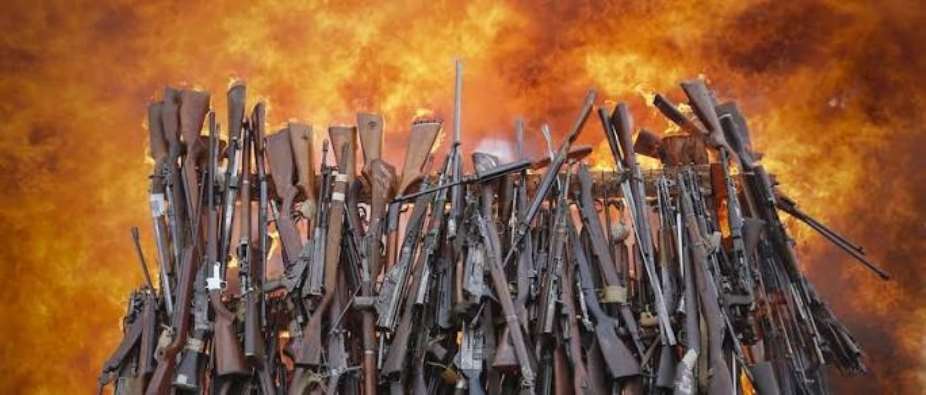
Every great struggle for freedom has had a street. The marches that broke apartheid, the Salt March that challenged an empire, and the school strikes that carried a young girl's demand for education to the world were all public assemblies. When a state silences the street, it silences the people's last remaining way of speaking when every other door has been closed.
I write as a human rights defender who believes that how a government treats its protesters is the truest measure of how it treats its citizens.
The Pattern Is Global, and It Is Documented
Over the past year, the evidence has accumulated across continents.
In August 2026, Amnesty International's Evidence Lab verified, through witness testimony, video, and photographs, that police in India used pellet-firing shotguns, tear gas launchers, grenades, batons, and electric shock devices against protesters. Delhi Police publicly denied any disproportionate use of force and repeated that position before India's Supreme Court, describing its handling of the protest as "professional." Amnesty states that its evidence directly contradicts that account. Amnesty also reports that Indian authorities have made no public commitment to investigate or prosecute any officer involved.
In Africa, the picture is no better.
In Tanzania, Amnesty reports that hundreds of people died and thousands were injured in the violent crackdown that followed the 2025 general election, and that not a single official has been criminally investigated. A UN estimate cited by Columbia University's Global Freedom of Expression project puts the death toll at no fewer than 700, including three journalists, during an internet shutdown between 29 October and 3 November 2025. On 26 June 2026, Tanzania's Home Affairs Minister then banned political rallies and mass gatherings.
In Kenya, a police watchdog counts at least 127 Kenyans killed during protests in June and July of 2024 and 2025, and the Missing Voices Coalition recorded 24 police-related killings in May 2026 alone, noting that crowd-control operations have become the leading source of police-related fatalities in the country this year. On 7 July 2026, police in Nairobi shut down roads and swarmed a tiny group of protesters who had managed to gather in the city centre.
These are not isolated tragedies. They are a pattern, and a pattern demands a systemic response.
The Standard the Law Already Sets
The right to peaceful assembly is not a favour granted by governments.
It is protected by Article 21 of the International Covenant on Civil and Political Rights and, in Ghana, by Article 21(1)(d) of the 1992 Constitution.
The UN Human Rights Committee's General Comment No. 37 of 2020 makes clear that states must facilitate peaceful assemblies, that force must be a last resort and strictly necessary and proportionate, and that firearms may be used only to protect against an imminent threat of death or serious injury.
The UN Human Rights Office's 2020 Guidance on Less-Lethal Weapons in Law Enforcement sets out the same logic for batons, tear gas, rubber bullets, and electric devices.
The standards exist. What is missing is enforcement and evidence.
The New Frontline: Evidence in Every Pocket
For decades, police abuses were denied because victims could not prove them.
That has changed.
Amnesty International's Crisis Evidence Lab and its Digital Verification Corps analysed more than 500 images and videos from protests over five years, verifying more than 100 incidents in which police deployed law enforcement equipment. The method is disciplined: investigators confirm the location, the date, and the authenticity of each piece of footage, identify the weapon, and then assess the lawfulness of its use against international standards. As Amnesty's Evidence Lab found in its tear gas investigations, open-source investigators verified the location and date of each instance and assessed its lawfulness.
This is why I am calling on citizens, journalists, students, lawyers, and civil society to become disciplined witnesses.
A video filmed safely, with the date, place, and context preserved, and handed to a credible verifier, can contradict an official denial in a way no press statement can answer. In India, the group behind the protests launched a platform for protesters to upload videos and photos from the crackdown.
Evidence collected with care is not only a record. It is a path to accountability.
The Missing Piece: The Trade in the Tools
Behind every canister of tear gas and every pellet round is a supplier and an export licence.
Amnesty's 2023 investigation, The Repression Trade, identified 23 major producers of less-lethal equipment and hunting ammunition whose products have been used unlawfully in protests in 25 countries. The organisation also observed that there are no agreed international regulations on the trade in tear gas and other riot-control agents.
Amnesty is candid about the limits of its findings: it is not always possible to trace precise chains for specific weapons, but the evidence strongly indicates longstanding patterns of irresponsible trade. Better transparency from exporters and states would close that gap.
The diplomatic groundwork already exists.
The Global Alliance for Torture-Free Trade was launched in September 2017 under the leadership of Argentina, the European Union, and Mongolia, and today has more than 60 member states. The UN General Assembly's omnibus torture resolution has repeatedly recognised the importance of all states introducing measures to prohibit the trade in inherently abusive law-enforcement equipment.
In 2026, the UN Special Rapporteur on Torture published a paper setting out her vision for a Torture-Free Trade Treaty, adding the weight of a UN expert to the call from a civil society network of more than 85 organisations.
A binding treaty has not yet been agreed. That is the gap I want us to close.
Ghana Must Lead by Example
I write from Accra, so I must also look at my own country.
Ghana's Public Order Act of 1994 requires organisers to notify the police at least five days before a demonstration. The Act has a legitimate purpose, but its application deserves scrutiny.
As recently as February 2026, the Ghana Police Service said it would enforce a High Court order prohibiting a planned "Stop Galamsey" protest, which had been granted two days earlier on grounds of public safety because the protest coincided with the President's State of the Nation Address.
Legal scholars have noted that police have relied on Section 1(6) of the Public Order Act to seek injunctions against holding protests. Analysts at the Ghana Centre for Democratic Development have warned that certain police actions in how they engage with protesters risk undermining the right to protest under the cover of enforcing public order.
I do not suggest that Ghana resembles the crackdowns I have described. I suggest that a democracy keeps its freedoms by examining its own practice before a crisis arrives.
When injunctions become routine and notification starts to function like permission, the right quietly shrinks. A nation proud of its democratic record should be the first to invite independent scrutiny of how its police manage the street.
What I Am Calling For
I call on governments, including Ghana's, to:
1. Respect and facilitate peaceful assembly as a right, applying the standards of General Comment No. 37 and the UN Guidance on Less-Lethal Weapons in domestic law, policing manuals, and training.
2. Establish or strengthen independent oversight bodies with the power to investigate police conduct on the street, publish findings, and refer officers for prosecution where force was unlawful.
3. Accept digital evidence from citizens and civil society as legitimate material for investigations, and refrain from internet shutdowns during protests.
4. Require public reporting on the procurement and use of crowd-control equipment, including tear gas, batons, pellet weapons, and electric devices.
I call on exporting and importing states to:
5. Adopt export controls that refuse licences where there is a substantial risk that equipment will be used against peaceful protesters, and publish licensing data.
6. Join the Global Alliance for Torture-Free Trade and support the opening of negotiations on a legally binding Torture-Free Trade Treaty at the United Nations.
I call on civil society, the press, and citizens to:
7. Document safely, verify carefully, and share responsibly, so that the truth of what happens on our streets cannot be rewritten by those who have most to hide.
The Last Word
Mandela reminded us that to be free is not merely to cast off …

 Mahama Defends Gold Export Restrictions, Signals Ban on Raw Mineral Exports by 2...
 Judicial Secretary Urges JUSAG to Suspend Planned Strike
 Education Ministry Orders Probe into Alleged Assault at Techiman SHS
 Chief Inspectors’ Amnesty Promotion: Supreme Court grants Police Administration ...
 Police deploy officers and cameras nationwide as TraffiTech-GH enforcement begin...
 Govt to fund travel expenses of mother of murdered Ghanaian teenager to US funer...
 Stop labelling menopausal women as witches – Public told
 Ghana woos investors for US$100million vaccine manufacturing project
 Eight killed, 21 rescued in bus collision on Elubo–Takoradi Highway
 NPP asks US Embassy to suspend recognition of Ghanaian diplomatic and service pa...


