




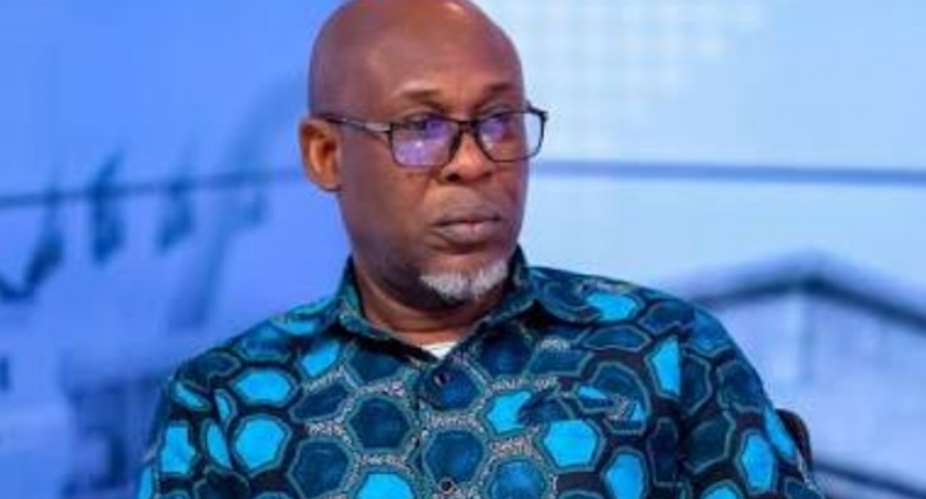
A Senior Vice-President of IMANI Africa, Kofi Bentil, has criticised the government's handling of the Northern Ashanti Mines dispute, saying the actions of state institutions are making Ghana look like a failed state.
He accused the Minerals Commission, the Ministry of Lands and Natural Resources and security agencies of disregarding legal procedures in their handling of mining disputes involving local companies.
Mr Bentil argued that the government was undermining indigenous mining businesses through what he described as questionable interventions and alleged attempts to transfer control of their assets to Chinese interests.
Speaking on TV3's KeyPoints programme on Saturday, October 31, he questioned the Minerals Commission's justification for terminating Northern Ashanti Mines' mining lease, particularly its claims about the company's outstanding debts and mining activities.
The policy analyst said the Commission had failed to provide sufficient evidence to support its claims, while the company had presented documents to demonstrate its financial commitments and investments in the mine.
"Principally, Minerals Commission is making wild statements and shows you zero proof, nothing. We've sent this, we've done that, we've put nothing. Everything the company is saying, they have shown you proof," he said.
Northern Ashanti Mines Limited, formerly Owere Mines, has disputed the Commission's claim that it owes US$8.33 million in outstanding annual mineral right fees and another US$49,928 for prospecting licences.
The company maintains that its outstanding debt is approximately US$2.4 million, citing an audit communication it received from the Commission in May 2026.
It also argues that the US$8.3 million figure relates to legacy debt incurred by the previous operator, Owere Mines, before the company acquired the concession in 2020.
The company further maintains that it has invested more than US$200 million in developing the mine and has undertaken infrastructure projects, including the construction of a gold processing plant.
However, the Minerals Commission insists that the termination of the company's mineral rights followed due process under the Minerals and Mining Act, 2006 (Act 703), and the Minerals and Mining (Licensing) Regulations, 2012 (L.I. 2176).
The Commission says Northern Ashanti Mines failed to pay its statutory fees despite several notices and opportunities to regularise its position. It has also accused the company of failing to undertake meaningful mining operations for more than two years.
The dispute escalated on October 22 when Minerals Commission officials, accompanied by military personnel, entered the Konongo concession to enforce the termination and reportedly directed workers to vacate the premises.
Mr Bentil said the government's approach to the dispute raised serious questions about the rule of law and the protection of investments in Ghana's mining sector.
"The principle I'm trying to put across is that today we have a situation where, by the workings of government institutions like Minerals Commission, the Ministry and the Army, Ghana is looking like a failed state," he stated.


 There's no dumsor in Ghana, everybody has power — Mahama
 Govt pledges support for family, seek justice for Ghanaian teenager killed in Ne...
 9% pay increment means little if workers cannot afford basic goods – Kwasi Kwart...
 Ghana making financial gains but losing environmental battle against galamsey – ...
 Northern Ashanti Mine takeover: 'Ghana looking like a failed state' – Kofi Benti...
 NRSA urges police MTTD to prosecute footbridge offenders
 NACOC, Immigration Service destroy cannabis farms in Nadowli District
 'We are not ready for November 1' — Transport operators threaten nationwide str...
 Keta Municipal Assembly recommends immediate transfer of Works Department Head o...
 "We have never seen this before" - Ho Presiding Member hails MCE's seven complet...


