




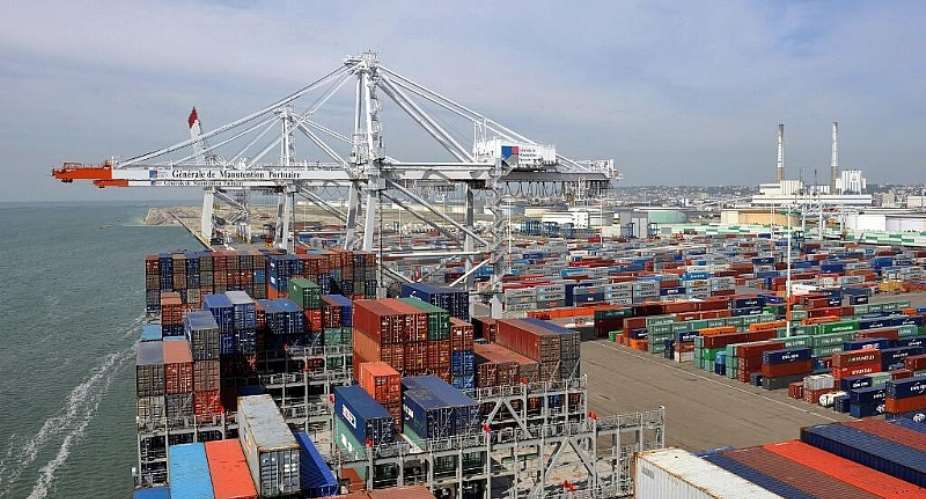
Friday's strike, originally called by dockworkers' unions in France, Italy, Greece, Spain's Basque country, Turkey and Morocco, is now backed by more than 25 unions in 113 ports.
The protest is expected to target major shipping hubs across Europe and beyond, including Le Havre, Dunkirk and Calais in France, Hamburg, Valencia, Algeciras, Piraeus and Genoa, as well as Morocco's Tangier Med and India's Nhava Sheva.
Organisers say it could disrupt over 40 percent of Mediterranean cargo and over $2 billion worth of freight.
In France, ports will be “95 percent shut down” on Friday, said Tony Hautbois, secretary-general of the hardline CGT Ports and Docks union. Workers have been instructed not to load or unload any cargo.
The union represents 95 percent of dockworkers, who load and unload goods, and 87.5 percent of all port-handling workers nationally.
Most terminals in France will not operate for 24 hours on Friday, said Jean-Frédéric Laurent, director-general of the French Ports Association.
Dockers killed, kidnapped and corrupted by drugs mafia
Budget measures under fire
French ports handled 330 million tonnes of goods in 2025, accounting for between 7 and 8 percent of the European total.
Around 14,000 port workers, including 7,500 dockworkers, are affected by the strike call.
The union is protesting against measures in the French government's draft budget, which it says “destroy our solidarity systems”.
In a statement issued on Wednesday, the union said it would also join a nationwide strike on 5 November, called by the CGT and other major trade union confederations representing public- and private-sector workers.
The unions are demanding an increase in the minimum wage and higher salaries rather than bonuses which don't contribute to social security coverage. They say they are also mobilising to defend young people, the future of public education, social security, hospitals and pensioners.
France's main grain port of Rouen adjusts to impacts of war in Ukraine
Opposition to militarisation of ports
Friday's strike was initially called at European level by the European Dockworkers Council (EDC) and internationally by other dockworkers' federations, including in Turkey and India.
In May 2026, dockworkers' unions from over 35 European countries published the so-called Istanbul Declaration refusing that port facilities "become a link in the chain" of wars by transporting weapons destined for war zones.
Italian harbours, with Genoa at the forefront, have played a leading role in protests against arms shipments, frequently blocking cargo shipments bound for Israel and for US military bases.
French dockers refuse to load cargo of machine gun parts bound for Israel
Over the 2021-2025 period, Europe became the world's biggest arms importer, data from the Stockholm International Peace Research Institute (Sipri) showed earlier this year.
"From planes to tanks, guns to bullets, explosives to ammunition, uniforms to boots, our ports have become replenishing and forwarding bases for war and genocide," unions said at a press conference announcing the strike.
(with newswires)


 Police confirm crash involving service vehicles and motorcyclist using opposite ...
 Funding statistics largely with donor resources is going to be a thing of the pa...
 15-year-old Ghanaian boy shot dead in New York’s Bronx
 Talensi Assembly says cash payments of GH¢181,170 was for refreshments
 Criticism helps me govern better — Mahama
 Russia strikes energy facilities in Kyiv as aid convoy heads for besieged town o...
 Binance security breach has $6.3 billion impact in potential record crypto heist
 NPP Denies Reports of Parliamentary Leadership Changes
 NPP Sets November 1-10 Window for Parliamentary Aspirants to Declare Intent
 Government, Labour Agree on Two-Year Pay Rise


