




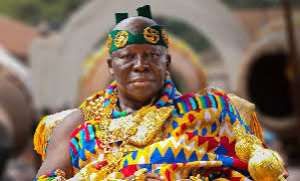
Traditional leadership retains its relevance when it responds to the needs of the people. The reign of Otumfuo Osei Tutu II illustrates how cultural authority, international relationships and a commitment to education can support development beyond the boundaries of a kingdom.
As the 16th Asantehene, Otumfuo has advanced a vision of leadership that connects the preservation of heritage with the pursuit of opportunity. His approach offers a useful lesson for Africa: institutions rooted in history can help address contemporary challenges when their influence serves the public interest.
Education lies at the centre of that vision. At the Otumfuo Osei Tutu II Foundation’s silver jubilee celebration in April 2025, the King explained that the challenges confronting the present generation required a different response from the military struggles of earlier centuries. His priorities were the defeat of ignorance, disease and poverty, alongside the preservation of cultural identity. The Foundation traces its early educational assistance to support for 600 students across Ghana’s then three public universities.
According to accounts presented at the anniversary, initiatives supported by the World Bank had contributed to the construction and renovation of more than 740 school structures and the provision of over 980,000 desks. Scholarships and other assistance have also helped students overcome financial barriers. These reported achievements reflect an understanding that educational access depends on classrooms, equipment and sustained support for individual learners.
His engagement with higher education extends this commitment internationally. In August 2026, Virginia State University formalised a partnership with the Kwame Nkrumah University of Science and Technology at a ceremony attended by Otumfuo in his capacity as KNUST Chancellor. The agreement provides a framework for student and faculty exchanges, joint research and academic cooperation. Its lasting value will depend on translating those commitments into practical opportunities.
The Asantehene’s diplomatic contribution has also received recognition from Ghana’s political leadership. Former President John Agyekum Kufuor credited him with helping resolve an obstacle during Ghana’s progress towards completion of the Highly Indebted Poor Countries initiative. In Kufuor’s account, Otumfuo’s engagement with then World Bank President James Wolfensohn helped protect the country’s access to substantial debt relief. This testimony highlights how trusted personal relationships can complement formal government negotiations.
Cultural diplomacy provides another concrete example. In April 2024, 32 gold and silver objects from the British Museum and the Victoria and Albert Museum arrived in Ghana for display at the Manhyia Palace Museum. The arrangements followed discussions initiated during the Asantehene’s visit to London and negotiations undertaken by his advisers. Many of the objects had been taken during nineteenth-century conflicts.
The distinction between their physical return and permanent restitution remains significant. The British institutions provided the objects under loan agreements, initially for three years with provision for renewal. Nevertheless, their presence in Kumasi restored public access to important expressions of Asante history, craftsmanship and identity. The achievement demonstrates the possibilities of patient negotiation while leaving the wider ownership debate unresolved.
What might be described as the “Asantehene model” therefore rests on a practical principle: inherited influence gains lasting value through service. Its strength depends on public trust, independence from partisan competition and partnerships that produce measurable benefits.
For traditional institutions across Africa, the broader lesson is clear. Cultural legitimacy can help mobilise resources, connect communities with opportunity and strengthen national cooperation. The enduring measure of leadership is the improvement it brings to people’s lives.


 NDC Enforces Strict Verification and Voting Rules as Constituency Elections Begi...
 Protests against cost of living expected in Italy under heavy security
 Lula, Bolsonaro clash on living costs, corruption in final Brazil election debat...
 Ebola vaccine trial begins in DR Congo
 Trump says US may launch ‘another little Epic Fury’ attack on Iran
 ‘Too arrogant, too sure of itself’ France confronts its legacy in Africa
 Nigeria's unwritten power-sharing rule looms over presidential race
 Several killed, dozens wounded in Jordan church shooting
 ‘I killed lots of terrorists, but it didn’t make me feel better’: The trauma hau...
 Casualties feared as multi-storey building collapses in Nairobi


