




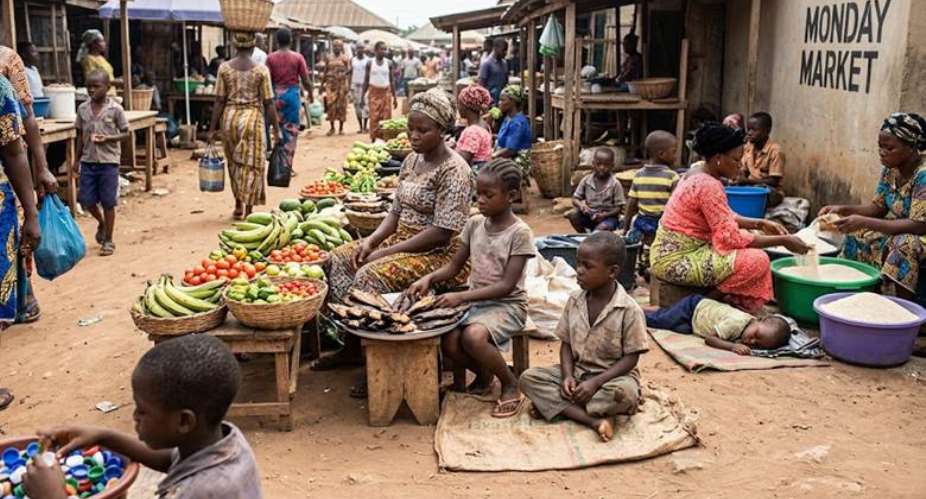
There is something profoundly troubling about communities where children as young as five years old cannot confidently leave their homes on a Monday morning to attend school. Parents must weigh the value of education against the fear of violence. A community where traders are uncertain whether they should open their shops or not, and ordinary citizens organise their lives around the possibility that somebody, somewhere, might gun them down for going about their lawful activities on a Monday.
This is the disturbing reality that the lingering Monday sit-at-home phenomenon presents in Imo State. It is a situation that should trouble every responsible citizen, a situation that should challenge the conscience of those entrusted with public safety, a situation that should demand a more decisive response from the state government.
While on vacation in Nigeria, I recently visited a market in Ikeduru Local Government Area of Imo State on a Monday. What I witnessed was both disturbing and revealing. Among the people in the market were very young children, some of them between the ages of five and twelve, accompanying their mothers instead of sitting in classrooms where they ought to have been learning. I could not help wondering why children of primary-school age were in the market during school hours. They should have been learning to read, write, calculate and develop the foundations upon which their future depends.
When I approached some of the women and asked why their children were not in school, their response was startling. They explained that schools do not operate normally on Mondays because of fears associated with the sit-at-home situation in the state. According to them, sending their children to school on Mondays would possibly expose them to danger.
That response raises a fundamental question: how did Imo State come to a point where parents consider keeping their children away from school every Monday a necessary precaution? Why should a day of the week that ought to be devoted to productive work, education, commerce and public service become a source of anxiety for thousands of families? And for how long should the people of Imo State be expected to live under such uncertain circumstances? These questions deserve serious attention because the consequences extend far beyond a single day of lost schooling or reduced commercial activity. They concern the authority of the state, the protection of citizens, the future of children and ability of communities to live without intimidation.
The Monday sit-at-home phenomenon in the South-East is closely associated with the separatist agitation involving the Indigenous People of Biafra and the detention of its leader, Nnamdi Kanu. What initially emerged as a political protest in 2021 became, in several communities, a recurring disruption of ordinary lifestyles. Although the original weekly directive was subsequently suspended, fear, threats and the memory of violent Monday incidents helped to sustain compliance with the sit-at-home order in some communities.
What the government announced was that all schools, markets, offices and transport services in the state should operate normally, but residents choose to remain indoors because they believe that obeying the government’s instructions could expose them to violent attack by “unknown gunmen”. For the same reason, some school administrators decide to shut their schools temporarily because they consider the security risks unacceptable.
This means that the government’s announcement of a statewide opening of schools does not automatically mean that normal activities resumed everywhere. This is why the government must look beyond official announcements and examine what is happening in such communities as Ikeduru and neighbouring local government areas. As far as it is publicly known, there is no question of government ordering schools to close on Mondays. The issue is whether children can attend school, teachers teach, whether traders can open their businesses and workers can travel without fear of intimidation or violence. As the answer remains ‘no’ in most communities, the state government must accept the fact that the problem has not yet been solved.
A government exists, among other reasons, to protect lives and property, enforce the law and create conditions in which citizens can pursue their legitimate activities.
Security is not an optional favour that government authorities grant when circumstances are convenient. It is one of the most fundamental responsibilities of public administration. The people of Imo State should not have to choose between obeying the law and protecting themselves from those who may threaten them for doing so. A trader who wishes to open a shop on Monday should be able to do so without calculating the risk of an attack. A teacher should not have to wonder whether reporting for duty will place his or her life in danger. A parent should not have to decide that a child must miss school because travelling to the classroom might be unsafe. When fear repeatedly determines the activities of an entire community, the damage is not limited to the immediate victims of violence. Fear gradually becomes part of the social environment. People change their routines, businesses adjust their operating days, schools lose instructional time, and families begin to regard an abnormal situation as an unavoidable feature of everyday life.
That is precisely why the government must be concerned about what can reasonably be described as the weekly hostage-taking of Imo families by fear and intimidation. This does not imply that every resident is physically detained or that every Monday is marked by violence. Rather, it captures the loss of freedom experienced by people who feel compelled to restrict their lawful activities because they cannot trust that their safety will be protected. Freedom means more than having the legal right to leave one's home. It also means having a reasonable assurance that exercising that right will not invite violence.
One of the most disturbing aspects of the Monday sit-at-home situation is the apparent absence of visible police presence on roads that would ordinarily have officers manning checkpoints, regulating traffic or conducting security patrols. In my observation, even on Mondays, policemen who normally man roads are not seen on the roads I encountered. If similar conditions prevail across other communities, the authorities need to investigate why this is the situation.
Visible policing is not a complete solution to insecurity, but it can contribute to public confidence. The presence of officers at strategic locations, the movement of patrol vehicles, prompt responses to distress calls and regular engagement with community members can reassure residents that the state has not abandoned them. Such measures can also improve the chances of detecting suspicious activities and responding quickly when threats emerge. However, the absence of visible officers on particular roads may not, by itself, establish that there are no security operations elsewhere. Police deployments may change according to intelligence, staffing and operational requirements. The proper response is not to assume that every officer has withdrawn from duty, but to demand a clear explanation from the relevant security authorities and to assess whether their deployment arrangements are achieving the intended results.
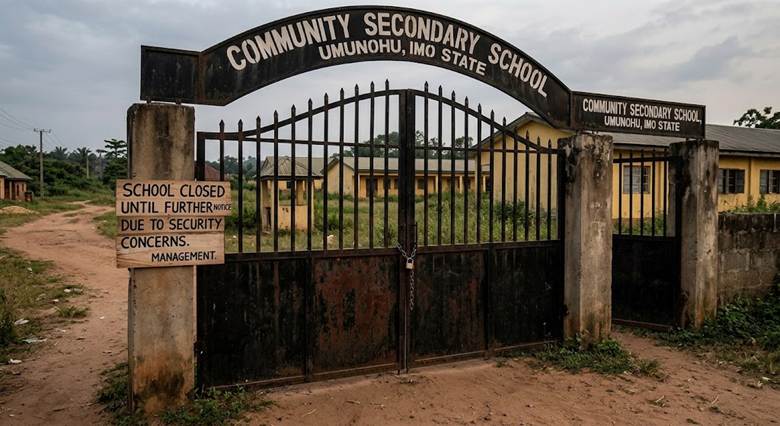
The Imo State Government should obtain detailed information from the police command and other security agencies about patrol coverage, staffing, response times and reported incidents on Mondays. If officers are being deployed but residents cannot see meaningful improvements, the government should examine the effectiveness of those arrangements. If deployments are inadequate in vulnerable communities, the necessary updates should be made. Security must be measured by more than the number of meetings held, statements issued or operations announced. It should be measured by whether children reach school safely, businesses remain open, transport services operate, and residents can move around without being subjected to threats.
The plight of schoolchildren deserves particular urgency. A child between five and twelve years of age is at a critical stage of educational development. These are the years in which basic literacy, numeracy, communication skills and habits of learning are established. Regular attendance matters because learning is cumulative. Children who miss lessons repeatedly will definitely struggle to understand subsequent topics, complete assignments and keep pace with their classmates. We may argue that one missed school day does not automatically destroy a child's educational prospects. But when the same day is repeatedly lost over weeks or months, the cumulative effect can be substantial. The extent of the damage to the state will depend on the number of schools affected, how frequently they close, the availability of make-up lessons and the quality of instruction received on other days.
Those are precisely the facts the education authorities should establish rather than leave the public to speculate. For a child who misses school every Monday throughout a typical 36-week school year, the potential loss would amount to 36 school days, assuming the school closes on every one of those Mondays and no replacement instruction is provided. That is a substantial amount of learning time. It is equivalent to more than seven five-day school weeks. But this is an illustration of the possible educational cost, not a verified statewide figure.
No reliable statewide count has been established here of how many schools in Imo State close every Monday, how many pupils are affected or how many instructional days have been lost. The illustration only demonstrates why the government should urgently collect and publish accurate attendance data. Because, behind every missed lesson is a child whose future would be affected. Behind every frightened parent is a family trying to make a difficult decision with incomplete information. Behind every school that closes because of insecurity is a community whose development is being compromised.
There is also an economic dimension that should not be overlooked. Markets are important sources of livelihood, particularly for households that depend on daily sales to buy food, pay rent, support children's education and meet other basic needs. When traders are afraid to open their businesses on Mondays, they might lose income that cannot easily be recovered on another day. Customers are likely to postpone purchases, transport operators could lose fares, and suppliers might struggle to deliver goods.
However, it is not every market in Imo State that is necessarily shut down every Monday, and the extent of the disruption varies by location and circumstance. Indeed, the fact that children were present in the Ikeduru market I visited suggests that at least some commercial activity was going on. But a market operating under the shadow of insecurity is not necessarily evidence that the underlying problem has disappeared. People may continue trading because they cannot afford to lose a day's income, even while they remain anxious about their safety.
The burden is particularly difficult for mothers who combine childcare with petty trading. A woman who cannot confidently send her child to school may have little choice but to bring the child to the market while she tries to earn a living. It would be unfair to blame such mothers for the circumstances in which they find themselves. Their decision would only reflect their practical response to fear, limited childcare options and financial necessity. The responsibility must therefore extend beyond telling parents to send their children to school. Authorities must work to create conditions in which parents can reasonably believe that doing so is safe. The government's response should begin with an honest assessment of the situation.
The Ministry of Education, local education authorities, school administrators, traditional rulers and community leaders should establish which schools are closing on Mondays, how often this occurs, why the closures are happening and what measures would make normal attendance possible. Such an assessment should cover public and private schools, urban and rural communities, and different local government areas. The findings should be made public in a form that enables residents to understand the scale of the problem. Where schools are operating normally, that should be acknowledged. Where closures persist, the affected communities and the reasons for the disruption should be identified as accurately as security considerations permit.
Reliable information is essential because a problem that is neither measured nor openly acknowledged can easily be neglected. The next priority should be a coordinated security plan for affected communities. The police, the Nigeria Security and Civil Defence Corps and other relevant security agencies should work with education officials and local leaders to identify vulnerable routes, school locations and periods when pupils and teachers could possibly be exposed to danger. Appropriate patrols, rapid-response arrangements and reliable channels for reporting threats should be established. The government should not simply deploy officers for a few days, issue a press release and assume that public confidence will return. Security arrangements must be sustained, regularly reviewed and adapted to changing circumstances. It is also very important that communities should know how to report threats and receive timely responses without exposing themselves unnecessarily to retaliation.
At the same time, law enforcement must remain professional and intelligence-led. Residents should not be collectively blamed for the actions of armed groups, and peaceful political expression must be distinguished from criminal intimidation and violence. Any individual or group that threatens, assaults, kidnaps or kills people for attending school, opening a business or travelling lawfully should face investigation and prosecution in accordance with the law. Such action should be based on credible evidence and due process, not indiscriminate arrests or assumptions about community membership. The government should also strengthen cooperation with local communities. Traditional rulers, town unions, religious leaders, market associations, transport unions, parent-teacher associations and youth representatives often possess valuable knowledge about local conditions.
They can help authorities understand why residents remain afraid, identify recurring threats and communicate accurate safety information. Their involvement must be voluntary, constructive and carefully organised so that community members are not placed at additional risk.
Schools that have experienced repeated disruption would also require practical support. Depending on the circumstances, this could include safer arrival and dismissal arrangements, communication systems for parents, emergency procedures and additional academic support for pupils who have fallen behind. Where temporary closures are genuinely unavoidable because of an immediate threat, the authorities should communicate clearly with parents and provide a plan for restoring lost instructional time. However, emergency arrangements must not become a permanent substitute for safe, normal schooling. A policy that repeatedly keeps children at home without a credible plan to restore attendance would allow insecurity to dictate the education calendar indefinitely.
The objective must be to make schools safe enough to operate, not to normalize their closure. There is an equally important responsibility on political and community leaders to reject intimidation unequivocally. Whatever people's views on Biafra, federalism, self-determination or the wider political questions affecting the South-East, no political cause should require children to lose access to education or families to live under threats. Disagreements about Nigeria's political future should be addressed through lawful and peaceful means. Violence against civilians cannot be justified by attaching it to a political demand.
The federal government also has a role to play. Insecurity in the South-East cannot be addressed effectively through isolated state-level announcements alone. Federal and state authorities need to coordinate intelligence, policing, prosecutions and community engagement while they respect the rights of citizens. Where legitimate grievances contribute to instability, they should be addressed through credible political processes. At the same time, dialogue must not become an excuse for tolerating attacks on innocent people.
Imo State's leaders should recognise that restoring confidence could take time. Residents who have witnessed or heard credible reports of attacks may not immediately return to their normal routines simply because an official says the danger is over. Confidence must be earned through consistent results. When parents repeatedly see children travel safely to school, teachers report for work, traders open their stalls and police respond effectively to threats, the perception of danger can gradually change. That is why the government should establish clear, measurable targets for restoring normal Monday activities in affected communities.
These could include improvements in school attendance, the number of schools operating safely, the continuity of public transport, the reporting and resolution of security incidents, and the responsiveness of law enforcement. Regular public updates would allow residents to assess whether interventions are producing meaningful progress.
The government should not promise that no incident will ever occur. No responsible security authority can guarantee absolute safety. What citizens are entitled to expect is a serious, sustained and transparent effort to reduce risks, prevent violence, investigate wrongdoing and ensure that fear does not become the governing principle of public life.
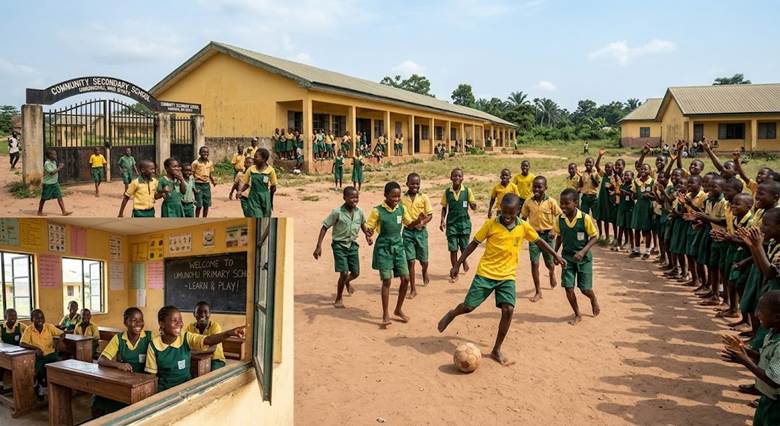
Ultimately, the issue is about the kind of society Imo State wishes to build. A state cannot fulfil its developmental ambitions if children routinely miss lessons, traders organise their livelihoods around fear and families believe that remaining indoors is safer than exercising their basic freedoms. Roads may be constructed, buildings may be erected and economic programmes may be announced, but development remains incomplete when ordinary people cannot confidently conduct their daily affairs. The sight of children aged five to twelve in a market on a school day should therefore be treated as more than an isolated observation. It should prompt serious questions about attendance, public safety, parental confidence and the effectiveness of government intervention.
It should also encourage journalists, education advocates, community leaders and concerned citizens to investigate the situation carefully and insist on practical solutions. The women I met in Ikeduru did not merely describe an inconvenience. Their explanation revealed the difficult choices families could be making in an environment where fear has influenced the ordinary decisions of daily life. Their children deserve better. They deserve to be in classrooms in which they can learn, teachers who can teach without intimidation and a society that does not make their education conditional on the security situation of a particular weekday. The people of Imo State deserve to reclaim their Mondays. They deserve to trade, travel, teach, learn and work without being compelled to surrender a day of their lives every week, to fear. They deserve security arrangements that are visible where appropriate, effective in practice and accountable to the public.
Above all, they deserve a government that treats the recurring disruption of ordinary life as a serious public concern requiring more than assurances. Monday lockdowns should not be happening in Imo State for any reason. If they persist in particular communities despite official declarations that normal activities should resume, the gap between government policy and the lived experience of residents must be confronted honestly. Authorities must investigate the causes, strengthen security where necessary, protect vulnerable schools, prosecute criminal intimidation and engage communities in rebuilding public confidence.
Every Monday that a child misses school unnecessarily is another reminder of what is at stake. Every trader who stays away out of fear represents a household facing an avoidable burden. Every parent who cannot confidently send a child to school represents a failure of public reassurance that demands attention. The time has come for a sustained, evidence-based response that restores normal life rather than merely declares it restored. The government must take this responsibility seriously, work with the relevant security agencies and communities, and demonstrate through measurable results that the people of Imo State are not alone in confronting this problem.
No child should have to exchange a classroom for a market because of fear. No family should have to treat Monday as a day of enforced uncertainty. And no government should be comfortable while a recurring security problem continues to interfere with the education, livelihoods and freedom of the people it is elected to serve.


 Ghana Armed Forces to hold land combat firepower demonstration at Bundase on Oct...
 Gambia to pay victims of Yahya Jammeh’s rule from proceeds of his seized US mans...
 Kolgo Paramount Chief questions 24-hour economy market without security
 'ABFA utilisation data excluded from PIAC's report not withholding of informatio...
 Obuasi SHTS sex scandal: Manasseh never said headmaster is a rapist - Brako-Powe...
 Government targets GH¢15.38bn domestic financing in Q4 to support 2027 bond buyb...
 Obuasi SHTS sex scandal: GES to ban teachers from inviting students to bungalows...
 Adwoa Safo to contest Dome-Kwabenya parliamentary seat again
 UG directs students with CGPA below 1.00 to go home
 Uganda Revenue Authority delegation visits TOR to understudy Ghana’s oil refinin...


