




Ghana does not get to choose which crises arrive in the same week. This week a ruling party began rearranging its power structure, a headmaster's arrest tested our child-protection institutions, and public-sector workers sat at a negotiating table with no agreement in sight. Beyond our borders, the Strait of Hormuz, a US-China sanctions fight, a $25 billion privacy penalty and a United Nations climate verdict all landed together. Taken one at a time, each is a headline. Read together, they pose one question to the Presidency and to the people: are our institutions ready for what is coming?
The NDC's Changing of the Guard
The NDC holds its constituency executive elections on October 24 and 25 at designated centres across the country. The bigger story is at the top. The party confirmed that National Chairman Johnson Asiedu Nketiah did not pick nomination forms before nominations closed, and had not signalled any intention to contest. He has held the chairmanship since December 2022, when he defeated Samuel Ofosu-Ampofo. The race now has five aspirants for chairman, 19 for national vice chairman, two for general secretary and eleven for deputy general secretary. The chairmanship carries the highest filing fee, GH¢100,000, with vetting set for November 12 to 13 and the national congress on December 19.
His former deputy, Koku Anyidoho, wrote that he was the longest-serving General Secretary and the first person to move from that office to National Chairman. His exit has fuelled speculation that he may seek the party's flagbearership. That is speculation, not a declaration. What is not speculation is the scale of what he built. In 2024 the NDC won 184 of 276 parliamentary seats. The question for the party is whether this is a graceful handover or the first move in a long succession contest ahead of 2028.
Adwoa Safo: A Return Still Being Written
Sarah Adwoa Safo represented Dome-Kwabenya from 2013 to January 2025 and lost the NPP primary to Mike Oquaye Jnr in January 2024. A campaign-style graphic carrying the word "Sankofa" and the words "Reclaim, Rebrand, Recapture" has surfaced online, prompting speculation of a 2028 comeback. I found no formal announcement, and she would first need to win the NPP ticket.
Her year has also included a violent episode. A shooting occurred on June 22 at the residence of her brother, Israel Kwadwo Safo Akofena, during his installation as leader of the Kristo Asafo Mission. Her family says she went there to serve court documents in the succession dispute and was fired upon. A lawyer for the church alleges that she fired the first shot. These accounts conflict, and the courts must settle them. Whatever the outcome, a politician's return after a year like this raises a question for the NPP. Does a party reward comeback stories, or does it demand a clean slate?
The Obuasi SHTS Saga: A Test of Institutions
I write this section with care, because these are allegations and not findings. The Interior Minister told Parliament's Public Accounts Committee that the headmaster, Zakaria Abdulai, has been arrested over sexual misconduct allegations involving female students. The minister said the matter reached him on September 7 and that he directed it to be handled at the national level. Investigators are pursuing DNA evidence. The regional Domestic Violence and Victim Support Unit has forwarded the docket to the Attorney General for advice. The number of students reported to have made allegations has risen to 16. An earlier GES inquiry in August did not substantiate the allegations, and the headmaster denies sexually harassing any student. He resigned as secretary of the NDC's Juaben Constituency and withdrew from the race for constituency chairman.
The politics deserve scrutiny too. The NDC's General Secretary, Fifi Kwetey, said the party will not shield the headmaster and that earlier party comments did not represent its position on sexual abuse. The party had first said he should step aside, then said he should be allowed to clear his name. The Minority is demanding an independent parliamentary inquiry. The harder question is not who said what. How did complaints move through the system between July and September, and what must change so that no student's report waits? An expert has already called for a sex offenders register and child protection reforms. Every Ghanaian parent should ask whether our schools are safe places to leave a daughter.
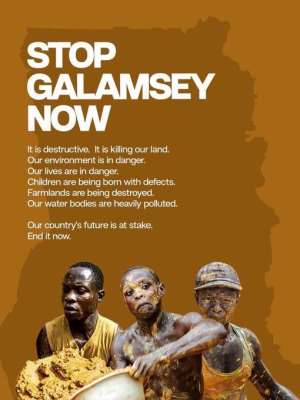
The War on Galamsey: Numbers, Progress and Pushback
The enforcement figures are significant. Between June 13 and September 30, NAIMOS seized more than 100 excavators, recovered 74 firearms and 551 rounds of ammunition, and destroyed about 1,970 changfan machines and 863 makeshift structures. The operations director says the country is gradually winning, and NAIMOS plans to extend river protection to two more major water bodies before year-end. It also plans specially trained forest personnel for the Atewa Forest Reserve and a river unit for the Ankobra.
The obstacles are just as real. The Lands Ministry says some residents and local authorities shield galamsey operators and tip them off about NAIMOS operations, partly because the activity provides income. A recent raid at Esaman was reported to have burned vehicles, and some suspects were reportedly subjected to physical force by officers. Those reports must be investigated. A campaign that wins on destruction but loses on legitimacy cannot last. The President has said a state of emergency was not yet necessary because existing powers had not been exhausted. The debate now is whether seizing machines can succeed without giving mining communities a lawful livelihood.
Mining Wages: Standardisation Before the December Deadline
Ghana has directed miners to transfer operations to local contractors by December or face sanctions, a policy affecting Newmont, AngloGold Ashanti, Zijin and Ghana Manganese Company. Unions feared pay cuts. The Lands Ministry has now instructed the Minerals Commission to ensure no contractor-employed worker suffers lower wages, benefits or conditions, to harmonise pay across the value chain, and to introduce a capacity-based contractor classification, with proposals due November 30. The ministry promises zero tolerance for unfair labour practices, cartelisation, bid-rigging and fronting.
Not everyone is convinced. The Chamber of Mines says contract mining should not be compulsory and warns that contractors undercutting each other can compromise pay, training and safety. Local content is a legitimate national goal. The test is whether Ghanaian ownership of mining contracts translates into Ghanaian workers who are paid at least as well as before.
The 2027 Base Pay: Talks Without a Deal
Negotiations began on October 15 under the Fair Wages and Salaries Commission. The latest session ended without agreement and will resume next week. The Commission has dismissed social media claims of a 6 per cent offer, saying no official offer has been communicated. Organised Labour argues that slowing inflation has not lowered market prices or restored purchasing power, and the current base pay reflects a 9 per cent increase for 2026. One labour consultant has urged mediation through the National Labour Commission or an alternative dispute resolution centre rather than letting talks stall.
The state's side of the ledger is also factual. Ghana lost an estimated GH¢1.47 billion to strikes in 2024 and a further GH¢635 million in 2025. Both sides therefore hold a legitimate claim, and the 2027 Budget will force them to reconcile them.
Seven Fishermen Come Home
One story deserves plain gratitude. The crew of the canoe Second Chance left Sekondi for Axim on October 9, and an engine failure left them drifting. The Navy received a distress alert on October 20 and deployed three ships, with air patrols in support. Beninese and Togolese navies and local Beninese fishermen helped bring all seven home through the Gulf of Guinea. The canoe's owner reported it missing on October 18, nine days after departure. The lesson is not only about regional cooperation. It is about tracking devices, safety gear and how quickly a missing canoe is reported.
Ebola: Vigilance Without Panic
The Health Minister, Kwabena Mintah Akandoh, says Ghana has recorded no Ebola case but is strengthening measures to prevent importation. The trigger is regional. Kenya reported an imported Bundibugyo case on October 6 and six more by October 17, and Nigeria confirmed a case in the Federal Capital Territory on October 20. Measures include enhanced airport screening, simulation exercises at Accra International Airport and the Ghana Infectious Disease Centre, laboratory preparedness, and 21-day health monitoring of travellers from affected areas. The World Health Organization says Ebola spreads through direct contact with the blood or body fluids of an infected person and is not airborne. Preparedness should be checked in practice, and not only announced.
The Strait of Hormuz and a Widening War
The crisis began after US and Israeli military operations against Iran in late February 2026 and the retaliation that followed. The closure became the largest disruption to world energy supply since the 1970s. UK Maritime Trade Operations reported traffic about 70% below pre-conflict levels in the week ending October 17. The International Maritime Organization says around 6,000 seafarers remain trapped and about 24 ships were attacked in roughly two weeks.
The air campaign may widen. On October 22, Iran's Revolutionary Guard said it struck four vessels transferring oil, while Houthi attacks killed people at Saudi targets and Russian drones and missiles hit 12 regions across Ukraine. The New York Times reports that US and Israeli militaries have drawn up plans for renewed strikes on Iran after the US midterms. A distant war touches our fuel, freight and food costs, and I urge the Presidency to ask what buffers Ghana has.
US Sanctions on China
On Monday, the US State Department imposed sanctions under the Protecting American Intellectual Property Act on five Chinese entities, including Shanghai Zhisuan Technology and the venture firm MiraclePlus. China's commerce ministry called the move egregious and vowed necessary measures. MiraclePlus denies investing in Zhisuan. The underlying case is contested, since a judge dismissed the economic espionage charges and the Justice Department is appealing. Africa's rule is simple. When giants trade sanctions, small economies must keep their options open.
The UN Climate Verdict
The UN Environment Programme's Emissions Gap Report 2026, released October 21, finds that global warming is set to exceed 1.5°C. Current policies point to about 2.8°C this century. Returning to the path would take emissions cuts of 18% by 2030 and 45% by 2035, against pledges that deliver only 5% to 8% by 2030. The report also singles out US emissions as an outlier. Ghana contributes little to the problem and bears much of the cost, which makes the galamsey fight an environmental duty as well as a policing one.
Meta's $25 Billion Penalty
A New Mexico judge ordered Meta to pay $25 billion after a jury found it misled Facebook users about privacy, the largest fine ever against the company. The state was originally awarded $219.5 billion before the judge reduced it. Jurors found 26 of 29 statements on privacy and content moderation misleading. Meta has promised to appeal. Its lawyers argued that jurors made no finding that any New Mexican saw the statements or was harmed. Ghanaians use these platforms daily. Our Data Protection Act exists, and the question is how firmly it is enforced against the world's largest platforms.
The Counter-Argument
A fair critic would say I am drawing a pattern where there is only coincidence. The NDC's internal elections are routine party business. NAIMOS reports measurable progress. The wage directive shows a government listening to workers. The Ebola response is sound, and the fishermen's rescue shows state capacity working. The world's crises are not Ghana's to solve, and the Presidency cannot be blamed for a strait it does not control. That view has merit. My answer is that competence in one week does not excuse weakness in the next. The test of a government is the consistency of its institutions.
Author's Note
I do not write this to praise or to condemn. I write because Ghana's problems are rarely single stories. A child's safety, a miner's wage, a fisherman's engine and a nation's fuel bill are one national question: do we build institutions that work before the crisis arrives? Mr. President, if these lines reach you, I ask only that you measure this week not by its headlines but by what changes because of them.
About the Author
Chief Tutu Baffour Asare Brownsy Williams is an author, columnist, filmmaker and digital content creator based in Accra, Ghana. He is the founder of Brownsy Silva Company, a multi-disciplinary creative platform spanning novels, films, columns and engineering content. He writes opinion for Modern Ghana, with readers across the UK, USA, Canada and Germany.


 Ghana Armed Forces to hold land combat firepower demonstration at Bundase on Oct...
 Gambia to pay victims of Yahya Jammeh’s rule from proceeds of his seized US mans...
 Kolgo Paramount Chief questions 24-hour economy market without security
 'ABFA utilisation data excluded from PIAC's report not withholding of informatio...
 Obuasi SHTS sex scandal: Manasseh never said headmaster is a rapist - Brako-Powe...
 Government targets GH¢15.38bn domestic financing in Q4 to support 2027 bond buyb...
 Obuasi SHTS sex scandal: GES to ban teachers from inviting students to bungalows...
 Adwoa Safo to contest Dome-Kwabenya parliamentary seat again
 UG directs students with CGPA below 1.00 to go home
 Uganda Revenue Authority delegation visits TOR to understudy Ghana’s oil refinin...


