




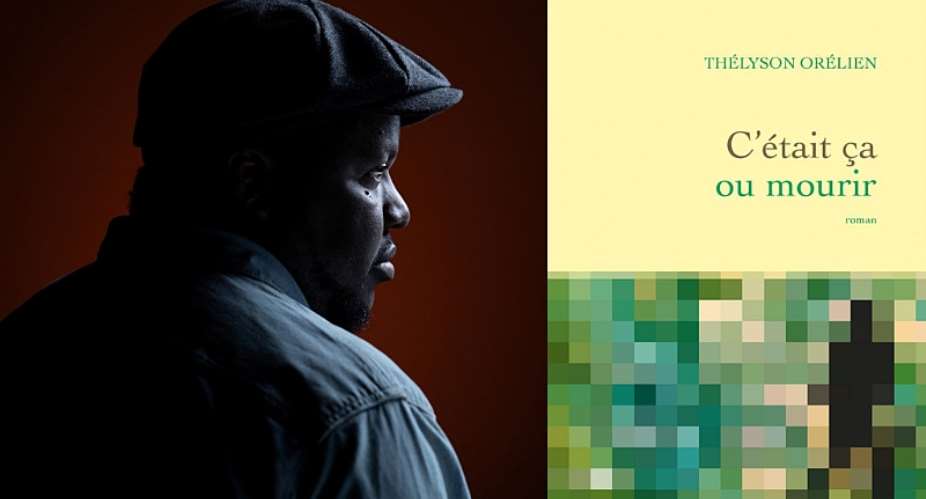
The publisher of acclaimed Haitian-Canadian writer Thélyson Orélien said on Wednesday it had confirmed that he used artificial intelligence to help write his novel “It Was Either That or Die”.
The top-selling author has denied allegations that he used AI on his breakthrough novel and, last week, Canadian publisher Boréal had said it was standing by Orélien.
Read more Novelist Thélyson Orélien rejects AI claims after bestseller pulled from French prize list
But on Wednesday, Boréal said it had conducted a further investigation into the allegations.
“New information, confirmed over the past few days, indicates that artificial intelligence was used in the writing process” of the novel, a Boréal statement said.
The publisher announced it was “ending its professional relationship” with Orélien.
Boréal said it did not know the extent of AI's use in the writing process “and we will likely never have a definitive answer”.
It said it gathered all the working versions of the novel and hired an outside party to analyse the various drafts.
“The results obtained this week revealed traces of AI tags in the metadata of certain documents,” Boréal said.
Read more Could a controversial award-winning short story signal a new era of literary 'AI slop'?
Before conducting this analysis, the publisher said it had tried to work with Orélien to gather the evidence necessary to prove his innocence.
That effort was inconclusive, and Orélien “subsequently announced that he would not provide any further information”, the publisher said.
The novel about migration, known by its original French title “C'etait ca ou mourir”, had been scheduled for translation in more than 20 countries.
The book was shrouded in suspicion and withdrawn from the shortlist for France's top book prize, the Goncourt, after tests with AI detector Pangram indicated a 100-percent probability it contained computer-generated text.
In a statement to AFP earlier this month, Orélien called the allegations “slander and heresy”.
He said he started writing the book in late 2017 “on the corner of a table” and completed a first draft in 2019 of more than 300 pages, several years before the advent of AI services such as ChatGPT.
Orélien fled his native Haiti following a 2010 earthquake that struck the Caribbean island already ravaged by poverty and unrest.
(FRANCE 24 with AFP)


 Abronye loses again as Court of Appeal dismisses bid to halt Samson Anyenini’s d...
 Over 30 women feared trapped in prostitution in Savannah as GIS arrests traffick...
 Govt pays GH¢24.8bn to statutory funds since January — Ato Forson
 Seven missing Axim fishing canoe crew located in Togo’s waters — Western Regiona...
 Health Ministry assures Ghanaians of readiness to manage Ebola cases
 FDA shuts down Arcan Bitters factory again over illegal production in Ashanti Re...
 PAC chair praises NPA CEO Edudzi Tameklo’s performance at committee hearing
 Ghanaian jailed nine months in US for using relative’s social security number to...
 Ukraine war: I'm going to Russia to convince President Putin to ceasefire — Maha...
 'Prof. Jane Naana is Vice President of Ghana; not for women and girls' — Victori...


