




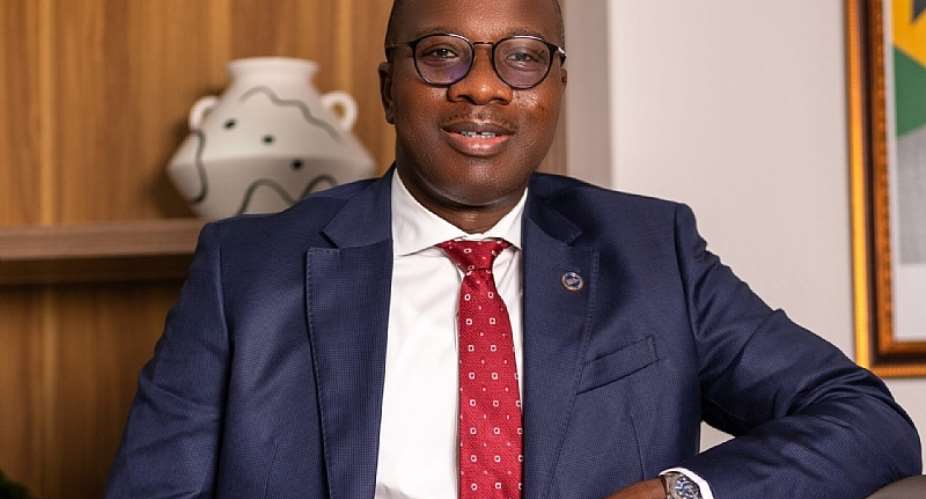
Minister for Local Government, Chieftaincy and Religious Affairs, Mahama Ayariga, has raised concerns about Ghana’s hygiene infrastructure, warning that the country risks celebrating the construction of facilities while failing to ensure they remain functional and accessible.
Speaking at the launch of the 2026 Global Handwashing Day in Accra on October 15, Mr. Ayariga said available data showed significant gaps in access to basic handwashing facilities both globally and in Ghana.
He cited global figures indicating that 2.3 billion people lacked handwashing facilities with water and soap at home, while 646 million children did not have access to such facilities at school in 2023.
The situation in Ghana, he said, was also concerning, with UNICEF data from 2022 showing that only 42 per cent of Ghanaians had basic handwashing facilities with soap and water available on their premises.
The event, held on the theme “I am a Handwashing Hero,” brought together representatives from UNICEF, the World Health Organisation (WHO), the World Bank, WaterAid, World Vision, CONIWAS, the Ghana Health Service, the Ghana Education Service, the Media Coalition Against Open Defecation (M-CODe), the private sector and traditional authorities.
Mr. Ayariga said Ghanaian data also showed that having a designated place for handwashing did not necessarily mean that households had the necessary supplies to use them.
He noted that although more than half of households had a designated handwashing area, only about one in five had water or a cleansing agent available.
“A household may have a tap or water storage tank, but if there is no soap near the facility, or if the water has run out, the household cannot practice proper handwashing. A bucket without water, a tap without soap, or a station that has broken down cannot support handwashing in any way,” Mr. Ayariga stressed.
He cited busy markets in Accra, Kumasi, Tamale and Ho, where food vendors could handle money and food within minutes without convenient access to handwashing points.
He also pointed to lorry stations where hundreds of people pass through despite dry taps, as well as basic schools where pupils share a limited number of handwashing points that are not regularly replenished.
“We cannot blame the child for a service failure created by school authorities. Our duty is to make the healthy choice the easy choice,” he said.
The Minister warned that poor hygiene had consequences beyond medical expenses, noting that parents could miss work, pupils could lose learning time, businesses could suffer income losses and health facilities could face avoidable infection risks.
As part of efforts to address the problem, Mr. Ayariga announced a policy shift under which hygiene would be assessed based on the functionality of facilities rather than simply their existence.
He said Metropolitan, Municipal and District Assemblies (MMDAs) would be assessed on whether handwashing facilities had water and soap, were accessible to children and persons with disabilities, and had adequate maintenance budgets.
“An assembly may install ten handwashing stations at a market and announce the achievement, but if three months later half have no water or soap, the real public health benefit cannot be realized. We must be careful not to reward construction while overlooking service delivery,” he declared.
Mr. Ayariga linked the campaign to Ghana’s Hand Hygiene for All Strategy and Roadmap and the 2030 deadline for achieving Sustainable Development Goal (SDG) 6.2.
He called on Environmental Health Officers to intensify inspections at markets, lorry stations, slaughterhouses, schools and health facilities.
The Minister also reminded Ghanaians that handwashing with soap at critical moments, including after using the toilet or cleaning a child and before preparing food, eating or feeding someone, remained an important defence against diarrhoeal and respiratory infections.
Meanwhile, Deputy Minister of Local Government, Rita Naa Odoley Sowah, said improving handwashing practices required more than providing infrastructure, stressing the need for behavioural and attitudinal change.
“We must make handwashing a habit through attitudinal change.”
She said the provision of handwashing facilities, public toilets, waste bins and improved waste collection systems would have limited impact if people did not change their attitudes and behaviour.
“We can provide Veronica Buckets for hand washing at every corner, construct public toilets, provide waste bins, and improve collection systems, but unless attitudes and behaviours change, our progress will remain limited.
“The long-term solution lies in building a culture of environmentally, health, and sanitation-conscious people, and that culture must be nurtured from an early age. If we want cleaner communities tomorrow, we must invest in sanitation-conscious children today,” she said.
Mrs. Sowah stressed that sanitation was closely linked to civic responsibility and public health.
“Sanitation is not only about cleanliness. It is about responsibility, citizenship, protecting public health, and safeguarding the future.”
She added that the true measure of Ghana’s sanitation efforts would be the conditions future generations inherit rather than the number of conferences or speeches organised.
“History will not judge us by the number of sanitation conferences we organized or speeches we delivered. History will judge us by whether future generations inherit cleaner communities, healthier environments, and a stronger culture of environmental responsibility.”

 Abronye loses again as Court of Appeal dismisses bid to halt Samson Anyenini’s d...
 Over 30 women feared trapped in prostitution in Savannah as GIS arrests traffick...
 Govt pays GH¢24.8bn to statutory funds since January — Ato Forson
 Seven missing Axim fishing canoe crew located in Togo’s waters — Western Regiona...
 Health Ministry assures Ghanaians of readiness to manage Ebola cases
 FDA shuts down Arcan Bitters factory again over illegal production in Ashanti Re...
 PAC chair praises NPA CEO Edudzi Tameklo’s performance at committee hearing
 Ghanaian jailed nine months in US for using relative’s social security number to...
 Ukraine war: I'm going to Russia to convince President Putin to ceasefire — Maha...
 'Prof. Jane Naana is Vice President of Ghana; not for women and girls' — Victori...


