




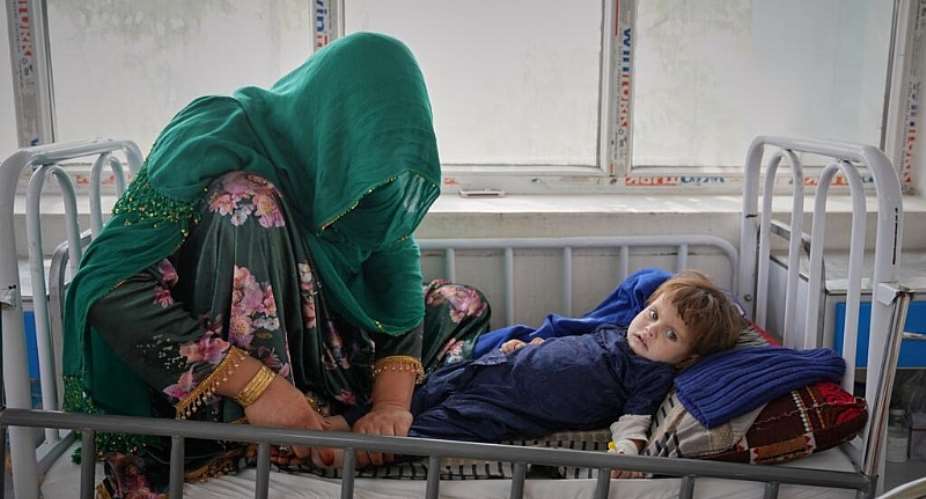
Between September and October, 15.9 million people – nearly one in three Afghans – were facing food insecurity at crisis levels or worse, including 3.4 million in emergency conditions, the UN's humanitarian agency OCHA said.
The outlook is set to deteriorate further over the winter season from November to April.
"The number facing acute food insecurity is projected to rise to 19.2 million, of which 5 million are expected to face emergency levels of hunger... one step away from famine," said the OCHA's Afghanistan spokeswoman Olga Cherevko.
"We must act before winter, not after families have exhausted all the options. That means getting food assistance to people in need, protecting livestock and productive assets, supporting farmers before critical planting windows close, and keeping essential health, nutrition and water services accessible."
The OCHA warned that more than 4 million babies and children under six will need treatment for malnutrition next year.
"Over 1 million of these children are expected to suffer severe acute malnutrition," Cherevko said.
"These numbers represent children whose parents cannot afford nutritious food and families whose ability to cope has been worn down by years of conflict, economic hardship, drought and other shocks."
The Afghan women farmers keeping their village alive
Shrinking aid
In the midst of this hunger crisis, around one third of nutrition sites across the country have closed or have suspended services – "largely due to funding cuts" said Cherevko.
"Once these services disappear, the consequences could be irreversible, particularly for children."
Afghanistan has seen a sharp decline in international aid since 2021, when the Taliban returned to power.
They have imposed a severe version of Islamic law, including a series of rules limiting women's access to education and public life. The Taliban government remains largely excluded from the international community, which criticises its repressive measures.
Five years into Taliban rule, Afghanistan seeks to ease international isolation
International aid to Afghanistan has dropped sharply, with the UN saying it had received less than 30 percent of the funding needed to provide life-saving assistance as of late August.
The humanitarian crisis has been worsened by several natural disasters and the forced return of millions of Afghans from Iran and Pakistan since 2023.
Cherevko said humanitarian aid could save lives, but could not compensate indefinitely for the absence of economic opportunity and public services.
While better rainfall and agricultural production this year have helped improve food stocks, one good harvest, she said, "cannot undo the damage of several years of drought".
(with AFP)


 YEA deploys over 11,700 youth under Community Police Assistant Model – Basintale
 Parliament’s Human Rights Committee demands swift investigations in Obuasi SHTS ...
 'Let the law take its course' – Veep on Obuasi SHTS sexual abuse allegations
 Obuasi SHTS sex scandal: 'The powerful ride the law to trample the weak' – Kofi ...
 19-year-old remanded over alleged fatal stabbing of boyfriend at Ofankor
 Woes of SHTS Headmaster deepen as he resigns as old students’ chairman
 'NPP has 35 NDC scandals to drop from now till 2028 elections' — Sammi Awuku
 'NDC will pay for Obuasi SHTS sex scandal' – Sammi Awuku warns
 Use of hormonal contraceptives linked to increased breast cancer risks – Doctor ...
 ECOWAS deepens EU cooperation to improve disaster response in West Africa


