




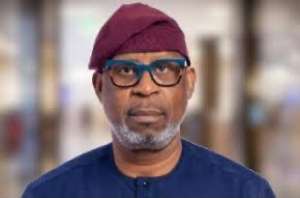
ON October 6, 2026, Dr. Henry Dele Alake quietly crossed the threshold into his seventh decade. In the unfolding saga of modern Nigeria, there exists a rare breed of public figures whose personal lives do not merely run parallel to national history—they actively shape its direction, articulate its language, and engineer its breakthroughs.
Dele Alake belongs to this inner sanctum of deliberate strategists.
He is a man who has consistently operated at the epicenter of historic shifts: first as a fearless journalist and pro-democracy campaigner during the dark nights of military rule, then as the pioneer of state-level strategic communications in Lagos, and today as the Federal Minister who is fundamentally reshaping Nigeria’s solid minerals landscape into a bedrock of post-oil economic independence.
Celebrating a man at 70 is often an exercise in retrospective nostalgia, but in the case of Dele Alake, it represents the recognition of an active statecraft. His life stands as a living narrative of intellect, unyielding loyalty, and systemic reform.
For seven decades, he has demonstrated that true leadership requires both the eloquence to persuade and the courage to execute—a rare combination that has earned him profound respect across political divides, media institutions, and global economic corridors.
The trajectory of Dele Alake’s life was forged in the crucible of intellectual discipline. Born in Ekiti State on October 6, 1956, his early education at Surulere Baptist Primary School and the famed Christ's School Ado-Ekiti instilled in him a relentless work ethic and a deep sense of civic duty.
He further honed his intellectual apparatus at Igbobi College, Lagos, before proceeding to the University of Lagos, where he earned a Bachelor of Science degree in Political Science in 1978 and a Master of Science degree in Mass Communication in 1981.
This academic pairing—the structural science of political power merged with the dynamic mechanics of mass persuasion—became the hallmark of his lifelong philosophy. Alake recognized early on that political ideas are only as potent as the strategic communication behind them.
His early professional years in broadcast journalism at the Ogun State Broadcasting Corporation (OGBC) and the Lagos State Broadcasting Corporation (LSBC) were defined by high productivity. At LSBC, his technical and editorial leadership contributed directly to the conceptualization and establishment of Lagos Television (LTV 8), a landmark project that revolutionized state-owned broadcasting in Nigeria.
Yet, it was his transition to print media within the Concord Press stable that catapulted him into the national consciousness. Serving first as a columnist and subsequently as the Editor of Sunday Concord (1989–1995) and Editor of National Concord (1995–1999), Alake turned the editor's desk into a powerful force for national reflection.
Under his editorial stewardship, the newspapers were not merely chroniclers of daily occurrences; they were energetic defenders of public accountability, democratic ideals, and constitutional rule.
The true test of any strategist lies not during periods of ease, but in moments of profound national crisis. The annulment of the historic June 12, 1993 presidential election—won convincingly by Chief Moshood Kashimawo Olawale (MKO) Abiola—thrust Dele Alake into the center of a historic struggle.
Serving as the chief communications advisor and trusted confidant to Abiola, Alake found himself operating at the core of a democratic campaign that captured the imagination of millions.
When the military junta cracked down on pro-democracy activists, closing media houses and hunting down voices of dissent, Alake faced an existential choice: capitulate to authoritarian force or stand firm on the side of justice. He chose the latter. His refusal to soften his stance in the pages of Concord made him a primary target of state harassment.
Driven into exile alongside key political allies—most notably his long-standing friend and political soulmate, Bola Ahmed Tinubu—Alake joined the National Democratic Coalition (NADECO). In the diaspora, he did not seek quiet refuge; instead, he transformed exile into an active operations center.
He worked tirelessly to rally international opinion, expose human rights abuses, and keep the flame of Nigerian democracy alive. It was during these intense years in the wilderness that the bond between Alake and Tinubu was permanently forged—a partnership anchored in mutual trust, shared political philosophy, and an unwavering belief in Nigeria's democratic potential.
With the restoration of democracy in May 1999, Nigeria faced the monumental challenge of constructing durable governance structures. Appointed by Governor Bola Ahmed Tinubu as the Special Adviser on Information and Strategy, and later as the substantive Lagos State Commissioner for Information and Strategy (1999–2007), Dele Alake executed a fundamental reform in public administration.
Before Alake’s tenure, information ministries across the Nigerian federation were largely reactive clearinghouses—passive organs that issued bland government bulletins while being bundled together with unrelated portfolios like culture and sports.
Alake recognized that a fast-moving modern democracy demanded a specialized, forward-thinking communications engine. He successfully unbundled the ministry, stripping away secondary functions to create a streamlined, strategy-driven organization centered exclusively on Information and Strategy.
This innovation transformed the Lagos State Ministry of Information into a model of statecraft. Alake did not merely report government policies; he framed them. He introduced structured media engagements, data-driven public enlightenment campaigns, and swift crisis-response protocols that enabled the Tinubu administration to execute tough structural reforms—such as urban renewal, tax architecture overhauls, and judicial restructuring—with strong public backing.
The "Lagos Model" of government communication, pioneered by Dele Alake, set a standard that was subsequently adopted by several state governments across the federation.
When President Bola Ahmed Tinubu assumed the presidency in 2023 and subsequently appointed Dr. Dele Alake as the Minister of Solid Minerals Development, political observers recognized the significance of the assignment.
The solid minerals sector had suffered for decades from institutional neglect, pervasive illegal extraction, speculative license hoarding, and a lack of local value addition. It was an economic sector rich in potential but starving for strategic leadership.
Alake approached the portfolio not as an administrative caretaker, but as an agent of structural change. He launched a comprehensive reform blueprint designed to turn Nigeria's subterranean wealth into a primary driver of non-oil national revenue.
To sanitize the sector, Alake spearheaded the creation of the Mining Marshals—a specialized security unit drawn from elite civil defense and security agencies. This force was deployed directly into mining corridors to reclaim illegal sites, protect legitimate investments, and dismantle illegal mining syndicates.
Within a short period, over 90 illegal mining sites were recovered, and hundreds of illegal operators were arrested and prosecuted, restoring investor confidence to the sector.
Alake enforced strict regulatory compliance by targeting speculative license hoarding. Hundreds of dormant licenses were revoked, clearing the path for genuine global and domestic investors.
Furthermore, by modernizing and fully digitalizing the Nigeria Mining Cadastre Office (MCO), transparency was brought to license applications, driving a dramatic increase in government revenue. Sector earnings surged from single-digit billions in previous years to over ₦50 billion, showcasing the direct impact of structured governance.
Refusing to let Nigeria remain a raw material extraction zone for foreign industries, Alake established a firm policy: no raw mineral exports without local processing.
This mandate sparked an industrial push, leading to the establishment of major processing facilities—such as modern lithium processing plants—across the country.
His visionary work extended far beyond national borders. As the elected Chairman of the Africa Minerals Strategy Group (AMSG), Alake became the leading voice for African mineral sovereignty, advocating fiercely on global stages—from London and Riyadh to Washington—that Africa’s critical minerals must be processed on African soil to create local jobs and spur continental industrialization.
Beyond the long list of official accomplishments lies the character of a man whose personal discipline has earned him enduring respect. Dele Alake is recognized for his calm composure, articulate presentation, and methodical approach to complex tasks.
In a political environment where shifting loyalties are common, Alake’s multi-decade alliance with President Bola Ahmed Tinubu stands as a testament to principled consistency.
Whether managing presidential campaign communications—such as his strategic roles in the 2015 Buhari Campaign Organisation and the 2023 Tinubu/Shettima Presidential Campaign—or reforming complex federal ministries, he has always brought analytical clarity and absolute dedication to his work.
President Tinubu reflected these qualities when he commended Alake as a steady hand, a loyal ally, and a leader of profound conviction—praising his exceptional ability to deliver results even in unfamiliar operational terrains.
At 70, Dr. Henry Dele Alake shows no signs of slowing down. He continues to work with the energy of a man on a mission, steering Nigeria’s mineral sector into a new era of global prominence. His life journey demonstrates that when rigorous education, professional mastery, and personal integrity converge, the result is a transformative impact on national life.
To his family, professional colleagues, political associates, and admirers worldwide, Dele Alake at 70 is more than a distinguished minister—he is an example of statesmanship.
As he enters this seventh decade, the tributes celebrating him are united in one single prayer: that he continues to enjoy good health, deep wisdom, and many more years of impactful service to Nigeria, Africa, and the global community.
Erasmus Ikhide contributed this piece via: [email protected]

 Obuasi SHTS alleged sexual abuse: Kwasi Kwarteng criticises Education Minister o...
 ECOWAS’ $250,000 flood relief donation arrives in Ghana – Ablakwa
 Kennedy Agyapong has not resigned from NPP – Kwasi Kwarteng
 State failure, not GoldBod, driving galamsey – Daryl Bosu
 A Rocha Ghana raises alarm over human rights abuses in mining communities
 ECOWAS, AfDB discuss ways to advance West Africa’s development priorities
 October 16: Cedi gains against dollar, sells at GHS12.25 on forex market, GHS11....
 Galamsey: Ghana’s rivers now run chocolate and milk colour — Sam Jonah
 A nation of job-seekers will always be poor — Sir Sam Jonah
 “If you attack us with pepper spray, we’ll fight back” — NDC Yakubu Tony Aidoo w...


