




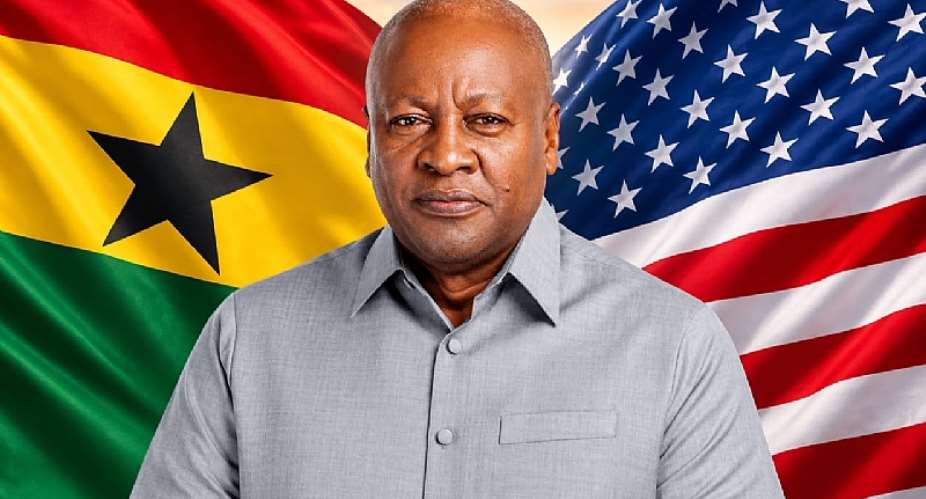
President John Dramani Mahama needs to tread carefully as Ghana engages with the United States over the proposed $109 million health compact. While international collaboration and foreign aid are crucial for enhancing Ghana’s healthcare system, it’s vital that the country never loses sight of a key principle: no financial support should compromise its sovereignty, national interests, or the freedom to shape its own future.
President Mahama has revealed that the U.S. is looking to further discussions aimed at revising, and possibly eliminating, the contentious clauses in the health compact that Ghana previously rejected. While the idea of renegotiating these disputed terms could open the door for fresh talks, it also brings up significant concerns about the long-term effects of such an agreement.
The main question isn’t just whether Ghana will receive $109 million in health aid. It’s about whether the conditions tied to that aid align with Ghana’s independence, whether the agreement could limit future governments, and whether the nation can effectively protect its national interests long after the current administration has moved on.
These are critical issues that warrant serious national consideration.
A key truth in international relations is that powerful nations are relentless in pursuing their national interests. Their foreign policies are influenced by strategic goals, economic needs, geopolitical rivalries, security issues, and the aim to maintain influence across the globe.
The United States is no different. Like any sovereign nation, it has the right to chase its interests through diplomacy, trade, development aid, security alliances, and international agreements.
We need to recognize that international negotiations aren't just acts of goodwill. They're often transactions where both sides aim to achieve specific goals. Even when help is offered for healthcare, education, infrastructure, or economic growth, we must take a closer look at the strings attached to that support.
Ghana should be asking a simple yet crucial question: what does each side hope to gain, and what responsibilities does the other side need to take on?
There's nothing wrong with the United States looking out for its own interests. The real risk comes when Ghana doesn't clearly identify, understand, or safeguard its own interests during these talks.
Accepting foreign assistance doesn't make a country unpatriotic, nor does it mean that its sovereignty is at stake.
The key issue lies in the conditions tied to that assistance and whether they align with the country's laws, priorities, and long-term development goals.
So, Ghana must approach every international agreement with a solid grasp of what it's signing up for, what promises it's making, what benefits it's getting, and what it might be giving up in return.
We should never let the lure of quick financial help blind us to the long-term impacts of our choices.
One of the biggest worries with international agreements is that their effects can linger long after the political leaders who negotiated them have moved on.
Presidents have limited terms. Political parties come and go, winning and losing elections. Ministers are appointed and replaced. Governments shift their priorities as situations change.
Yet, international agreements can impose obligations that outlast all these political shifts.
President Mahama and his team might enter negotiations with a solid grasp of the nation’s needs and a strong dedication to safeguarding them. But what about ten, fifteen, or even twenty years down the line when a different leader takes the helm at flag staff house?
What if Ghana elects a president who prioritizes quick financial relief over the long-term independence of the nation?
What if a future government finds itself in dire economic straits and becomes more inclined to accept terms that today’s administration would deem unacceptable?
What if new documents, amendments, or additional agreements come into play when Ghana’s negotiating power is diminished?
These aren’t just doomsday predictions about a future president acting against Ghana’s best interests. They raise important questions about the need for institutional safeguards, political stability, and the potential risks tied to agreements that could outlive their original signers.
The best way to shield against future political missteps isn’t just to elect leaders who vow to protect the country. It’s about creating legal and institutional frameworks that make it tough for any future administration to compromise essential national interests without thorough examination.
Ghana shouldn’t rely solely on the personal integrity, political acumen, or patriotic motives of whoever is in the presidential office.
A responsible government needs to think beyond its own time in power. It should consider the challenges a future administration might face and put in place protections that secure the nation, even as political leadership shifts.
If the current administration believes that certain aspects of the proposed health compact could jeopardize Ghana’s interests, those worries need to be addressed thoroughly, not just brushed aside for the moment.
The goal shouldn't just be to secure a better deal today. It should be about making sure that Ghana isn't left vulnerable to the same risks in the future, whether that comes from a new document, an amendment, or some other arrangement.
The ongoing effort to amend or remove the controversial clauses in the proposed health compact is a crucial test for Ghana’s negotiating stance.
If the United States is open to revisiting the disputed provisions, Ghana should take a close look at whether a truly acceptable agreement can be reached. However, it’s important for the country not to assume that simply eliminating certain clauses will solve all potential issues.
Legal agreements need to be viewed as complete documents.
Often, the importance of a contractual obligation can’t be fully grasped by looking at one clause in isolation. Other provisions might outline the agreement's scope, set up implementation procedures, define the parties' rights, or clarify how amendments and additional arrangements will function.
Therefore, Ghana’s legal experts need to review the entire compact, including its definitions, obligations, implementation mechanisms, amendment processes, dispute-resolution provisions, termination clauses, and any referenced documents.
The government should also determine if any future supplementary agreements could introduce obligations that weren’t thoroughly considered during the initial talks.
This isn’t to suggest that the United States aims to undermine Ghana’s position. Rather, it’s a recognition that a sovereign nation must be aware of legal and institutional risks before committing to an international agreement.
What Ghana fundamentally opposes shouldn’t resurface in a different guise just because the wording has changed.
If the original concern is about the country’s authority to shape its health policies, that authority must be safeguarded throughout the agreement. If the issue relates to conditions that could impact the management of public health programs, those implications need to be clearly understood. And if there are future obligations at stake, the agreement must set appropriate limits and safeguards.
The government shouldn’t just settle for comforting words during negotiations while leaving crucial questions unanswered in the final legal documents.
Ghana deserves clear language, enforceable protections, transparent obligations, and a solid grasp of the implications of every commitment made.
If the government can’t prove that the revised compact sufficiently safeguards the country’s interests, it should be ready to walk away.
There’s no shame in turning down an agreement that doesn’t fulfill the country’s needs. Sometimes, the wisest diplomatic move is to say no to an offer rather than accept terms that could lead to challenges for future generations.
Healthcare stands as one of the most crucial responsibilities for any government. The availability of medicines, medical equipment, skilled professionals, public health initiatives, and a dependable healthcare infrastructure can significantly influence whether citizens lead healthy and productive lives.
That's why international support aimed at bolstering Ghana’s healthcare system should be embraced, provided the terms are fair and align with the country's interests.
However, it’s essential for Ghana to differentiate between accepting assistance and relinquishing the autonomy to set its own development priorities.
Foreign aid should enhance national goals, not serve as a tool for outside entities to exert undue influence over domestic policies.
This distinction is vital because a nation’s development priorities should genuinely reflect its unique circumstances, democratic choices, public needs, and constitutional obligations.
Ghana’s healthcare issues can’t be fully understood from the perspectives of Washington, London, Beijing, or any other foreign capital. While international partners may offer valuable expertise, technology, funding, and institutional knowledge, it’s crucial that Ghanaian institutions play a key role in shaping how the country’s healthcare system is structured and managed.
Our government needs the ability to evaluate the needs of Ghanaian communities, identify which programs should take precedence, and develop policies that serve the public good.
This doesn’t imply that Ghana should turn away from foreign expertise or shy away from collaborating with international partners. Instead, it means that such cooperation should be built on a foundation of mutual respect.
The same principle holds true for assistance from China, the European Union, the World Bank, the International Monetary Fund, and other development allies.
No nation should be granted a free pass from scrutiny simply because its aid is valuable or its geopolitical clout is significant.
The standard needs to be unwavering: each agreement should have a genuine purpose, clearly outline the responsibilities at play, and ensure that Ghana can continue to govern itself according to its own laws.
Support is most effective when it enhances a nation's ability to be self-sufficient, rather than fostering unnecessary reliance or limiting future options.
The financial allure of the proposed compact is bound to catch the public's eye. For a nation like Ghana, which is juggling various development needs and facing significant demands on its public resources, a $109 million boost in healthcare assistance could be a game-changer.
But let’s be clear: the worth of an international agreement isn’t just about the eye-catching dollar amount.
The government needs to weigh the overall benefits, the commitments tied to the funding, how long those commitments last, the real-world implications of putting the agreement into action, and the potential costs of sticking to the terms.
A financial offer might look appealing at first glance, but it can lose its shine once you dig into the details.
On the flip side, an agreement that comes with fair conditions, solid safeguards, and clear public benefits could turn out to be a valuable partnership.
The key takeaway isn’t that Ghana should outright dismiss the proposed compact just because it involves a foreign government. Instead, Ghana needs to take a step back and assess the whole package rather than letting the size of the financial offer overshadow the conversation.
How much will this agreement truly help Ghana reach its healthcare goals?
What commitments will Ghana need to make in return? Could those commitments limit future policy options?
Are the terms in line with Ghana’s laws and constitutional framework? What if there’s a disagreement about how to implement the agreement?
Can Ghana back out if circumstances shift or if its core interests are at stake?
What financial, administrative, or legal repercussions could come from ending the agreement?
These are crucial questions that need answers before Ghana makes a final call.
Additionally, Ghana should think about whether there are other financing options, ways to boost domestic revenue, collaborations with different development organizations, or a revamped program that could meet the same healthcare goals with less risk.
Turning down a deal that doesn’t fit isn’t the same as turning your back on healthcare progress. It’s about understanding that there are often better paths to reach the same goals without having to agree to terms that just don’t sit right with the country.
A government has the duty to secure funding for development, but it also needs to make sure that in chasing those funds, it doesn’t end up creating bigger issues down the line.
The true test of a successful negotiation isn’t just about how much money a country brings in. It’s about how well that country can transform the resources it has into real benefits for the public while safeguarding its future interests.
Building and maintaining strong diplomatic ties with the United States is crucial. The two nations have a wealth of opportunities to collaborate in areas like healthcare, trade, education, security, technology, investment, and more.
Ghana should actively seek out these opportunities in a constructive manner.
That said, having good diplomatic relations doesn’t mean Ghana has to accept every proposal that comes its way.
Diplomacy isn’t just about agreeing with a more powerful nation at any cost. It’s about managing differences, finding common ground, and reaching agreements that work for both sides.
A smaller nation can maintain respectful relations with a superpower while still standing firm on its own priorities.
In fact, the credibility of a country’s foreign policy hinges on its ability to clearly express its interests and negotiate consistently.
If Ghana finds certain provisions unacceptable, it should articulate why those provisions clash with its national interests and suggest alternatives when appropriate.
Should negotiations lead to a revised agreement that addresses these concerns, the government can evaluate it based on its merits.
If the talks don’t yield acceptable terms, Ghana should be ready to walk away from the offer without viewing that decision as a diplomatic disaster.
Disagreeing over one agreement doesn’t have to jeopardize the entire bilateral relationship.
The interests of the United States and Ghana go beyond a single health compact. Both countries can continue to seek areas of cooperation, even if they can’t come to an agreement on specific terms.
Therefore, Ghana should steer clear of the false dilemma of either accepting an unsuitable agreement or cutting ties with the United States.
There’s a balanced approach: collaborate where interests align, negotiate where differences arise, and decline commitments that don’t meet reasonable national standards.
Respectful diplomacy and firm national boundaries can coexist; they actually complement each other beautifully.
One of the best ways to safeguard Ghana from future political concessions is by bolstering the oversight of international agreements through our institutions.
While the presidency plays a crucial role in managing foreign relations, it’s vital that our national interests don’t rest solely on the judgment of one person or a single administration.
Parliament has a significant constitutional duty to review international agreements. Article 75 of the 1992 Constitution outlines how the president executes treaties, agreements, and conventions on behalf of Ghana, and it also emphasizes the need for parliamentary ratification or approval in line with the Constitution.
This responsibility should be approached with seriousness, independence, and a solid grasp of the legal and policy implications tied to the agreements being reviewed.
Before any final commitment is made, Parliament must ensure that the proposed health compact undergoes a thorough examination.
Members of Parliament need to be ready to ask tough questions, no matter their political affiliations.
They should delve into the agreement’s details, pinpoint potential risks, seek independent legal and technical advice when necessary, and assess whether the proposed obligations align with Ghana’s interests.
The government should equip parliamentarians with the necessary information to carry out this duty effectively, while respecting legitimate confidentiality concerns.
Relevant parliamentary committees should also have access to qualified experts in fields like public health, international law, health financing, public administration, and international relations.
Moreover, civil society organizations, professional medical associations, public health researchers, and other key stakeholders should have meaningful opportunities to engage in the national conversation.
This is especially crucial because healthcare agreements can impact institutions and programs that span multiple administrations.
The public shouldn’t have to wait for a controversy to arise before finding out what their government has agreed to.
Where it’s legally allowed, the key terms of the agreement and the government’s rationale should be accessible for public review.
Transparency builds public trust and helps ensure that international agreements don’t turn into tools for partisan political battles.
Parliamentary oversight shouldn’t just be a box-ticking exercise. It needs to serve as a meaningful safeguard against poorly understood commitments and unnecessary long-term risks.
Ghana's political landscape is bound to see shifts in leadership over time. No democratic nation can promise that every future president will align with the priorities of the current government.
This is exactly why robust institutions are so crucial.
A nation equipped with solid legal protections, independent oversight, transparent decision-making, and well-defined approval processes is in a much stronger position to safeguard its interests, no matter who takes the electoral win.
On the flip side, when decisions hinge too much on individual leaders, political transitions can lead to unpredictability.
An agreement that is meticulously crafted today might be interpreted in a completely different light tomorrow if the initial safeguards are flimsy, the commitments are vague, or the oversight mechanisms fall short.
The solution isn’t to assume that every future president will act against the nation’s interests. Instead, we need to acknowledge that national security, public health, economic strategies, and sovereignty should be upheld through institutions, not just personal assurances.
Ghana needs to cultivate a culture where no president, minister, or public official can easily bind the country to significant commitments without proper oversight.
Any additional documents or amendments that significantly alter the country’s obligations should be evaluated within the relevant legal and constitutional frameworks.
Moreover, the government should set up clear processes for monitoring the execution of international agreements and ensuring that future administrations are well aware of the obligations they inherit.
These safeguards would serve to protect Ghana, regardless of whether the president hails from the NDC, NPP, or any other political party. National sovereignty should never become a partisan issue that only gains importance when a specific party is in power.
When an agreement risks limiting the country’s legitimate policy options, the response should be driven by national interest, legal standards, and factual evidence, rather than party allegiance.
The nation needs to establish robust institutions that can safeguard the public, even when individual leaders stumble.
The potential for future amendments is something that really needs our attention.
International agreements often need tweaks as situations evolve. These changes aren’t automatically a cause for concern or wrongdoing. In fact, they’re often essential for clarifying responsibilities, tackling implementation hurdles, or adapting to new circumstances.
That said, amendments can significantly alter the balance of an agreement.
For this reason, Ghana should have a solid grasp of how any changes to a revised health compact will be managed.
The government needs to figure out which modifications will need extra legal scrutiny, which ones will require parliamentary approval, and what procedures will be in place according to Ghana’s Constitution and other relevant laws.
The agreement shouldn’t be written in a way that leaves room for confusion about the powers of the parties involved or the process for adding new obligations.
When it makes sense, Ghana should look for provisions that allow it to periodically review the agreement and respond to changes that impact its national interests.
It’s also important to consider whether any additional arrangements, implementation protocols, or documents tied to the agreement could impose significant obligations that aren’t immediately clear in the main text.
This is where having independent legal expertise becomes crucial.
The government shouldn’t just rely on the assurances of negotiating officials, whether they’re from Ghana or the U.S. It should seek a thorough legal evaluation of the entire arrangement and ensure that the final text truly reflects the commitments both sides intend to uphold.
The goal isn’t to make cooperation impossible; it’s to ensure that cooperation is predictable, transparent, and aligned with the rule of law.
No administration should have the power to undermine vital national safeguards simply by casually signing an additional document.
One key takeaway from the debate is the importance of reducing our reliance on external support for vital public services.
While foreign partnerships can play a significant role in advancing healthcare, offering help in areas like disease prevention, medical research, lab capacity, professional training, equipment procurement, and overall public health system improvements, Ghana's long-term healthcare strategy can't hinge solely on the goodwill of foreign governments.
International priorities shift, economic conditions change, and governments often adjust their spending commitments. Development programs can be expanded, cut back, restructured, or even scrapped altogether.
A nation that leans too heavily on outside funding risks having its development plans vulnerable to decisions made outside its control.
Therefore, Ghana should strategically leverage international assistance while also bolstering its own ability to fund essential healthcare services.
This means enhancing domestic revenue generation, ensuring that health funds are spent wisely, cutting down on procurement waste, boosting accountability, supporting local pharmaceutical production when feasible, and investing in the training and retention of healthcare professionals.
The government should also look for ways to enhance the efficiency of the National Health Insurance Scheme and other health financing systems, all while making sure that reforms maintain access to essential services.
These steps require ongoing planning and responsible management of public resources.
While they won't eliminate the need for foreign assistance, and that shouldn't be the goal, the aim should be to ensure that such assistance enhances a solid national strategy rather than replacing it.
With stronger domestic institutions and more dependable sources of healthcare funding, Ghana will be in a better position to negotiate with international partners confidently.
Being able to say no to unfavorable conditions really matters when a country has solid alternatives to turn to.
In the end, the best way to stand strong against outside pressures is by having a mix of reliable institutions, sustainable funding, capable leaders, and a well-defined national development plan.
Ghana should keep in mind that protecting its national sovereignty doesn’t mean it has to be hostile towards the United States or any other nation.
A country can nurture positive relationships with various international partners while staying true to its own interests.
Ghana has a wealth of opportunities to collaborate with nations and organizations across Africa, Europe, Asia, the Middle East, and the Americas.
However, broadening its partnerships shouldn’t translate into swapping one dependency for another.
The goal should be to widen Ghana’s choices, strengthen its negotiating power, and seek out partnerships that genuinely benefit the public under fair conditions.
Every potential partnership needs to be assessed based on the merits of the proposed deal.
While the source of funding is crucial, the terms, costs, benefits, risks, and long-term effects are just as vital.
Ghana should be open to working with the United States when the terms are advantageous for both sides. The same principle should apply to China, the European Union, international financial institutions, and other development partners.
This isn’t about being anti-American; it’s about practicing responsible statecraft.
It shouldn’t be seen as a blanket rejection of all conditional assistance either. Some conditions can be reasonable, necessary for accountability, or directly tied to the legitimate goals of a program.
The real question is whether specific conditions are fair, transparent, legally sound, and aligned with Ghana’s national priorities.
A sovereign nation must maintain the ability to make that distinction.
President Mahama's role goes beyond just securing the best deal for his government in the ongoing negotiations.
As the leader of the nation, he has a duty to safeguard the institutions, policy options, and constitutional independence that future administrations will inherit.
This responsibility calls for a long-term vision.
The government needs to consider not just if the revised compact is suitable for the current political and economic climate, but also whether its protections will hold up under a future administration that might face different challenges.
A well-crafted agreement shouldn't rely on the assumption that every future president will have the same negotiating stance, priorities, or political motivations as the current one.
It should be clear enough to minimize the chances of conflicting interpretations, specific enough to outline the obligations of each party, and adequately protected against changes that could compromise its intended purpose.
If the revised compact falls short of these standards, the government should seriously weigh whether Ghana might be better off exploring other options.
There’s no obligation to accept an agreement just because negotiations are already underway.
The government shouldn’t feel pressured to sign simply to showcase diplomatic success or to secure a financial assistance announcement. A negotiated outcome is only worthwhile when its benefits outweigh the obligations and risks involved.
Therefore, President Mahama should ensure that the final decision is grounded in the actual legal text, an independent evaluation of its implications, and a clear assessment of Ghana’s long-term interests.
Additionally, the government should communicate its reasoning transparently to the public, so citizens are informed about what was negotiated, what was accepted, what was turned down, and the reasons behind those choices.
This approach would set a valuable precedent for future administrations.
This would show that Ghana is open to international collaboration, but it also emphasizes that while external support is appreciated, it won't come at the expense of prioritizing the nation's own interests.
Ghana needs to brace itself for the chance that the negotiations might not lead to a deal that both sides find acceptable.
However, this possibility shouldn’t push the government into agreeing to terms it fundamentally disagrees with.
It’s important to remember that international negotiations can sometimes wrap up without a consensus. This doesn’t necessarily mean a diplomatic failure; it might just indicate that the parties couldn’t find common ground.
If the United States pushes for terms that Ghana simply can’t accept, the government should calmly express its concerns and look into other options.
If those attempts don’t pan out, Ghana should be ready to walk away from the compact.
Of course, such a choice would have real-world implications, especially if the proposed aid was meant to support crucial healthcare programs. It’s essential to assess these consequences honestly rather than brush them aside.
The government would need to seek out alternative funding sources, figure out which programs might be impacted, and create a solid plan to safeguard vital healthcare services.
They should also think about whether further talks could bridge the gap without compromising the nation’s core interests.
Yet, just because there are practical challenges doesn’t mean every proposed condition should be accepted without question.
A responsible government must carefully consider both sides of the equation: the fallout from turning down the assistance and the potential risks of accepting it.
The goal isn’t to automatically reject or accept the offer.
Instead, it’s about making a well-reasoned decision grounded in evidence, legal considerations, public benefit, and the long-term welfare of Ghana.
If an acceptable agreement can’t be reached, then stepping away might be the more prudent choice, as long as the government has thoughtfully weighed the implications and crafted a suitable alternative plan.
The ongoing discussion about the proposed $109 million health compact should really highlight how Ghana navigates international agreements.
We need to move past the idea that every foreign financial deal is an automatic ticket to development.
At the same time, we should steer clear of the opposite trap, thinking that every condition tied to foreign aid is a sneaky way to chip away at our sovereignty.
Neither of these views is enough for making sound policy decisions.
The right way forward is to dig into the details, carefully review the legal terms, assess the financial impacts, engage with relevant stakeholders, and figure out if the agreement truly aligns with Ghana’s best interests.
The United States has every right to pursue its national goals, just as Ghana does.
While the U.S. may want to negotiate terms it deems essential, Ghana has the authority to scrutinize those terms and reject any that don’t sit well.
That’s what true sovereign equality looks like in action.
It’s up to Ghana’s leaders to make sure the country doesn’t commit to agreements that they can’t clearly justify to the public or manage responsibly in the long run.
The government shouldn’t trade away long-term policy independence for the sake of looking good in the short term.
It can’t assume that a future administration will automatically uphold every safeguard just because the current one values them.
And it mustn’t let the lure of external financial support stifle legitimate concerns about accountability, constitutional authority, or the public good.
Every agreement deserves a thorough evaluation on its own terms, and every major obligation needs to be fully understood before it’s accepted.
President Mahama has a unique chance to set a significant precedent with the ongoing talks about the proposed health compact.
This is an opportunity for him to show that Ghana is ready to collaborate with influential international partners while firmly upholding its national interests.
If the controversial clauses can be taken out and the revised agreement is evaluated independently to ensure it’s fair, transparent, and aligns with Ghana’s laws and long-term goals, then the government can weigh it on its own merits.
However, if the core issues remain unaddressed, Ghana shouldn’t feel pressured to sign just because the financial aid looks appealing or because diplomatic talks are already in motion.
The country needs to be cautious about any future changes or additional agreements that could significantly alter its commitments.
Above all, the government must establish safeguards that protect Ghana beyond the current president's term.
Our national interest shouldn’t hinge solely on the goodwill of foreign nations or the personal judgment of future leaders in Ghana.
It needs to be secured through robust institutions, transparent agreements, constitutional protections, parliamentary oversight, and a political culture that prioritizes the nation over party politics.
Ghana should never take for granted that a powerful country will drop its strategic goals just because negotiations have hit a snag. At the same time, we shouldn’t jump to conclusions about bad faith without solid evidence. The right approach is to stay vigilant, be prepared, seek sound legal counsel, and engage in disciplined diplomacy.
We should embrace assistance that truly propels our development. We should foster partnerships that honor our independence. And we should remain open to negotiations that yield fair and mutually beneficial results.
But we must also have the courage to say no when the conditions tied to an offer don’t align with our national interests.
Ghana must never sacrifice its future for short-term financial relief.
We can’t let the quest for development assistance compromise our ability to set our own national priorities.
We also can’t afford to leave future generations at risk because we didn’t put the right safeguards in place today.
The true measure of leadership isn’t just about securing funding from a powerful foreign ally. It’s about ensuring that our government can provide the resources our people need while safeguarding the independence, dignity, and freedom of choice that future generations deserve.
Ghana needs to look beyond the next election, beyond the current administration, and beyond the immediate financial benefits of any proposed agreement.
We must strengthen our healthcare system. We should expand our international partnerships where it makes sense. Our economy needs to be more resilient. But through all of this, we must ensure that our sovereignty is upheld by law, institutions, and responsible leadership.
International cooperation is important. Foreign assistance is beneficial. But Ghana’s sovereignty should never be up for negotiation.
By Sulley Kone
Columnist and Socio-Political Commentator


 Obuasi SHTS alleged sexual abuse: Kwasi Kwarteng criticises Education Minister o...
 ECOWAS’ $250,000 flood relief donation arrives in Ghana – Ablakwa
 Kennedy Agyapong has not resigned from NPP – Kwasi Kwarteng
 State failure, not GoldBod, driving galamsey – Daryl Bosu
 A Rocha Ghana raises alarm over human rights abuses in mining communities
 ECOWAS, AfDB discuss ways to advance West Africa’s development priorities
 October 16: Cedi gains against dollar, sells at GHS12.25 on forex market, GHS11....
 Galamsey: Ghana’s rivers now run chocolate and milk colour — Sam Jonah
 A nation of job-seekers will always be poor — Sir Sam Jonah
 “If you attack us with pepper spray, we’ll fight back” — NDC Yakubu Tony Aidoo w...


