




"What seemed to us to be a tremendous liberation – and which was a tremendous liberation – is clearly no longer seen in the same light."
At 79, gynaecologist Danielle Hassoun remembers a generation that started having sex at a time when abortion was still illegal. “So we didn't weigh up the same factors,” she says.
Fully legalised in France in 1967, for decades the pill symbolised a major advance in women's health: the ability to separate sexuality from motherhood, and to choose when or whether to have a child.
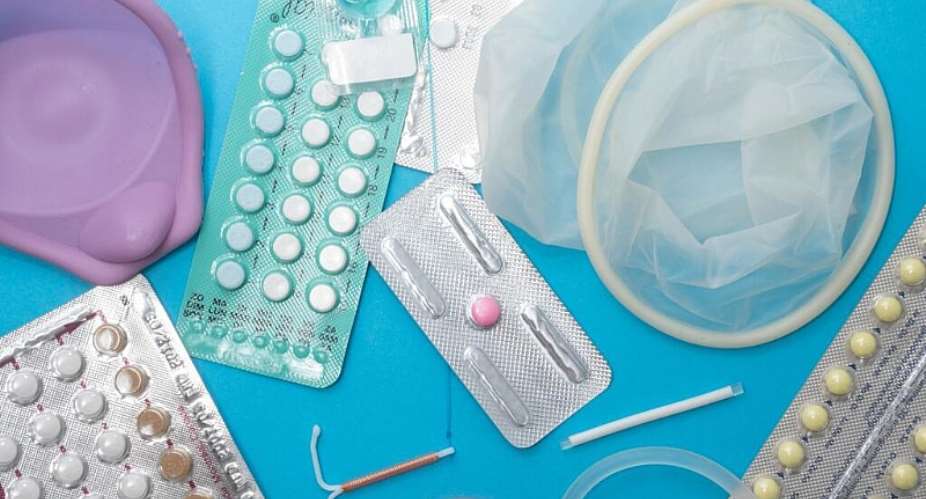
For many women it became the norm, as part of an established contraceptive pathway: condoms at the start of one's sex life, the pill once in a stable relationship and then an intrauterine device (IUD) – more commonly known as a coil – after having children.
Until recently, the pill was still the most common method of contraception for women in France.
Those days are gone. Whilst 55.8 percent of women aged 18 to 49 who used contraception were taking the pill in 2005, by 2023 this figure had fallen to 26.8 percent. The IUD has taken the lead, at 27.7 percent.
"This is a general trend," according to Caroline Moreau, a researcher at the French National Institute of Health and Medical Research (Inserm) and a professor at the Johns Hopkins Bloomberg School of Public Health in the United States.
In Germany, for example, 43 percent of women under the age of 22 were taking the pill in 2015 – compared with 22 percent in 2024. According to one survey, condoms are now the preferred method there.
This decline in popularity, notable since the mid-2000s, can be explained primarily by a generational shift, says Moreau. "Women have [now] grown up with the pill, so it is no longer seen as something liberating."
French parliament unanimously exonerates women punished for abortion
Balancing risk
For the first generation of users there were few alternatives, and the fear of an unwanted pregnancy loomed much larger at a time when abortion was by necessity clandestine. Since the advent of the pill the range of contraceptive options has widened, making side effects and constraints less acceptable to users.
The decline accelerated following a crisis surrounding third- and fourth-generation contraceptive pills in 2012, when media coverage of the increased risk of thrombosis led to a sharp drop in use. More broadly, this fuelled mistrust of hormonal contraception.
A new warning has recently added to the debate. On 10 September, the French National Agency for Medicines and Health Products Safety announced it would be sending a letter to users of desogestrel-based contraceptives to warn them of an increased risk of meningioma – tumours of the meninges, membranes that cover the brain and spinal cord.
While the absolute risk remains very low – approximately one additional case per 67,300 users of desogestrel- or etonogestrel-based contraceptives – Hassoun says: "It's understandable that people don't want to take risks for the sake of prevention. It's not the same as taking medication as part of a course of treatment."
French women face growing obstacles to abortion despite constitutional right
Jennifer Saint-Martin Denys works in Montpellier as a midwife – authorised to prescribe contraception in France since 2009 – and reports that since this latest warning, some women on hormonal contraception have come in saying they want to stop taking it.
In terms of the broader picture, she added: "Patients no longer want the pill."
Laure is in her forties and started taking the pill at the age of 14 to regulate her periods. She continued taking it for almost 15 years, "even during long periods when I wasn't in a relationship and when I could undoubtedly have done things differently," she says.
"When I think about it now, it seems a bit strange to have carried on taking hormones every day when there were other solutions."
Moreau believes presenting the pill as "a given" rather than one of several options has also paradoxically contributed to declining use.
"We put people on the pill without asking any questions," she says. While she points out that the risk-benefit ratio of the pill remains favourable for many women, she adds: "But it is the woman's choice, not the doctor's choice, and they must be informed of all the methods on offer."
'Reclaiming' the body
Social media posts too reflect a growing mistrust of hormonal contraception. In Germany, where the use of the contraceptive pill is declining sharply amongst young women, hashtags such as #pilleabsetzen ("stop taking the pill") and #hormonfrei ("hormone-free") have become common in recent years.
A study carried out in Germany and Denmark shows that shared testimonials are shifting the conversation beyond medical risks, with discussions increasingly centred on wellbeing, mood, libido and women's relationships with their bodies.
"The main priority for the majority of patients we see today is: I want to reduce my mental load," notes Saint-Martin Denys.
Free contraception extended to French women up to the age of 25
Clémence, aged 25, recalls that when she chose her first form of contraception at a family planning clinic at the age of 16, she was presented with several options: the pill, an IUD, an implant or a patch. At the time, the pill seemed the simplest solution to her – an IUD meant having to make an appointment with a gynaecologist.
But after two years on the pill, a few missed doses and the resulting pregnancy tests prompted her to make a change. A friend who had switched to an IUD – now the most widely used method of contraception in France – reassured her about the insertion, and she opted for a copper coil.
"I didn't want the mental burden of the pill any more," she explains. "And I also wanted to avoid hormones and use something more natural."
Saint-Martin Denys is hearing this request from patients more and more. Some want to get their regular menstrual cycle back, track their ovulation or simply gain a better understanding of what is happening in their bodies.
"There is a real desire to reclaim [these things]," she explains.
Kiara, aged 34, used the pill, followed by a hormonal IUD and then a copper IUD, which she found uncomfortable.
Three years ago, she decided "to stop using contraception altogether". Single at the time, she used condoms. Now in a relationship, she tracks her cycle using an app and uses condoms during her fertile periods. She knows this strategy is less reliable but says she is willing to accept that level of pregnancy risk.
For a long time, taking control of one's body meant being able to regulate one's cycle using medication, explains Thomé. Today, for some women, this sense of control now comes more from "understanding and accepting the menstrual cycle".
Why menstruation is the next frontier for French feminists
'An extraordinary revolution'
The decline in the popularity of the pill does not discredit it, however, says Moreau, who is concerned that its benefits are sometimes overlooked in favour of focusing solely on its risks, and that the warning about desogestrel might trigger a new "pill crisis".
"The pill is an extraordinary revolution," she says emphatically.
Saint-Martin Denys highlighted that some hormonal contraceptives may offer medical benefits in addition to their contraceptive effect – particularly in cases of very heavy periods, adenomyosis and endometriosis.
Additionally, hormone-free methods are not suitable for everyone. A copper IUD, for example, may be suitable for a woman who wishes to avoid hormones but may not be recommended for another who suffers from very heavy periods.
For many though, the dilemma remains seemingly insurmountable. With a family history of thrombosis and menstrual problems, Émilie has been taking Optimizette, a contraceptive pill which contains desogestrel, for several years. The warning over the risk of meningioma worries her, but the alternatives are limited.
"I'm pretty much left with no choice but to take something that's not great just to avoid other problems," she concludes.
Hassoun emphasises the individual nature of the risk-benefit ratio – and the importance as a result of healthcare professionals tailoring contraception to each woman.
Saint-Martin Denys too stresses the need to take the time to explain the benefits and risks of each option. "The best form of contraception is, after all, one a woman has chosen."
This article has been adapted from the original version in French by Aurore Lartigue.


 Mahama unveils H-Enabler platform to boost health investment and manufacturing i...
 Calm restored at Larteh Ahenase after Odwira Festival disturbances — Police
 Young woman found hanging from mango tree at Kasoa Akweley Peace Town
 Service Machinery Ghana Limited MD caged over alleged $1m fraud against employer
 Bawumia pledges support for John Boadu-led NPP leadership ahead of 2028
 Boakye Agyarko pledges support for John Boadu, calls for NPP unity after electio...
 Meet the newly elected national executives to lead NPP return to power in 2028
 'I extend my hand of friendship, partnership to contenders for ideas, experience...
 Rwandan genocide suspect 'hunter' Dafroza Gauthier dies at 72
 Brazilians begin voting in tight election between Lula and Flavio Bolsonaro


