




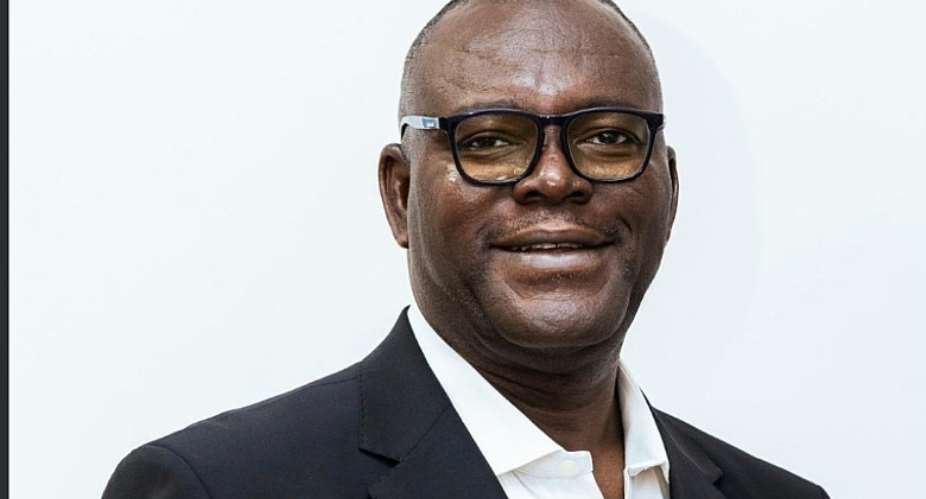
Ghana's failure to meet its 2025 non-oil tax revenue target by 4.1 percent is not merely an administrative miss but a symptom of a broken fiscal contract between state and citizen, Professor Tax Law and Policy, University of Ghana School of Law; and the Director, Ali-Nakyea & Associates PRUC, Professor Abdallah Ali-Nakyea has warned.
Prof Ali-Nakyea said despite non-oil tax revenue rising from 7.8 percent of GDP in 2024 to 8.7 percent in 2025, it still fell short of the 9.1 percent target set in the 2026 Budget Statement.
Overall tax-to-GDP improved from 12.3 percent to 14.5 percent between 2024 and 2025, yet it trails the Sub-Saharan African average of 16-17 percent and Ghana's own Medium-Term Revenue Strategy target of 18-20 percent by 2027.
Prof Ali-Nakyea stated at the second Transparency International Ghana (TI Ghana), the local chapter of the global anti-corruption movement Integrity Dialogue Series which was on theme: “Bridging Ghana’s Tax Revenue Gaps: A call for voluntary tax compliance, an accountable and fair tax system.”
The TI Ghana’s new Governance and Integrity Policy Dialogue Series (GIPDS) aimed at confronting systemic corruption and strengthening public accountability across key sectors.
GIPDS is to serve as a holistic platform and calculated step in the nation’s collective journey to strengthen integrity, transparency, and accountability in Ghana’s governance systems.
"Domestic revenue mobilisation is the most sustainable foundation for development financing," Prof. Ali-Nakyea noted, citing Luttmer and Singhal (2014), but Ghana's gap "is not simply a story of poverty, rather, it reflects how much economic activity never enters the tax net and how much owed is negotiated, evaded or lost before it reaches the Consolidated Fund."
He linked voluntary compliance directly to public trust, referencing Afrobarometer data showing lower perceived corruption increases tax morale by 4.6 percent, and warned that Ghana's Corruption Perceptions Index drop to 42/100 in 2024 has a direct negative effect on willingness to pay tax.
He commended government's shift in the 2026 Budget — removal of the COVID-19 Health Recovery Levy, decoupling of GETFund and NHIL to allow input credits, and cutting effective VAT from 21.9 percent to 20 percent — as a move from "new levies to simplification."
"Closing Ghana's tax revenue gap is not simply a Ghana Revenue Authority target; it is a shared undertaking. Enforcement without trust breeds evasion, and appeals to civic duty without accountability breed cynicism," he concluded.
Mrs Mary Awelana Addah, TI-Ghana Executive Director, in her remarks, stated GIPDS is a further demonstration of the commitment of anti-corruption bodies to promote integrity and accountability, stressing “TI-Ghana recognises the critical role of sustained civic engagement and informed policy dialogue in advancing anti-corruption reforms.”
Mrs Addah stressed that corruption, procurement fraud, and weak enforcement continue to cost the state billions in lost revenue each year; therefore, the dialogue series is designed to move from diagnosis to action.
The TI-Ghana Executive Director stressed that its expected outcomes include a more informed membership, stronger interaction with governance experts, and evidence-based contributions that will enhance the credibility and influence of TI Ghana’s advocacy.
“We invite you to engage fully, share your insights, and contribute to shaping actionable proposals that will strengthen Ghana’s governance landscape.
“Together, let us make this maiden dialogue series a catalyst for reforms that uphold transparency, accountability, and integrity in public life,” she stated.
Mrs Addah said the year-long programme will combine both routine policy roundtables and virtual meetings, each focused on a high-risk sector.
The GIPDS serves as a platform for rigorous, evidence-based discussions to translate governance research, policy ideas and analysis into actionable reform proposals.
The Dialogue Series has been designed to provide a structured, evidence‑based forum where diverse perspectives converge to generate practical policy solutions.
TI-Ghana members, civil society organisations devoted to the fight against corruption, governance institutions, faith-based organisations, and distinguished personalities participated in the dialogue.
 EOCO drags Manhyia South MP to former law firm, residence for search
 BNI investigates Yaw Ampofo Ankrah over alleged World Cup visa facilitation sche...
 EOCO arrests three over drone flights at headquarters during arrest, probe of Ma...
 NPP’s removal of NACOC from routine checks made Ghana’s borders porous – Dr. Sam...
 Police arrest three suspected kidnappers over Yendi abduction
 Ghana’s older population projected to hit 5.7m by 2050 – Gender Ministry
 4,405 teachers to be placed on Director II rank this year – GES
 Gov’t procurement must prioritise local farmers for school feeding – Dr. Ato For...
 Prof Emmanuel Osei Sarpong appointed Acting NSA Director-General
 NSA Boss Yaw Ampofo Ankrah suspended over US$623,000 World Cup visa allegations


