




Ghanaian science researchers are playing a leading role in an international effort to expand the use of a prescription medicine for treating parasitic and worm infections among children under five.
Ivermectin is a highly effective drug used for the treatment of multiple diseases, including Neglected Tropical Diseases (NTDs), but its use currently does not apply to children under five.
The research, being led by the Kumasi Centre for Collaborative Research in Tropical Medicine (KCCR) of the Kwame Nkrumah University of Science and Technology (KNUST), seeks to develop new formulations of ivermectin that can be safely used by children weighing less than 15 kilogrammes, broadly corresponding to children under five, who are currently excluded from the use of the drug.
The formulation is currently ready for trials, but the researchers are preparing the necessary documentation for submission to the Food and Drugs Authority (FDA) and ethics committees to obtain approvals for the trials to begin, hopefully early next year, 2027.
KCCR has received the partnership of scientists from some other African and European countries.
The project, IVM-KIDS, is being funded by the European Union's Horizon Europe Research and Innovation programme through the Global Health EDCTP3 Joint Undertaking.
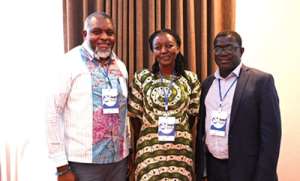
Last Wednesday, September 23, representatives of the project's eight partner organisations met in Accra for the consortium's first in-person meeting, which brought together researchers, clinicians, pharmaceutical experts and public health specialists from Ghana, Kenya, Tanzania, the Democratic Republic of Congo, the United Kingdom, Spain and Switzerland to coordinate the four-year clinical research programme aimed at generating evidence that could enable young children to be included in parasite control programmes. ivermectin
Speaking to journalists at the meeting, a Senior Researcher at KCCR/KNUST and Scientific Project Leader of IVM-KIDS, Professor John Amuasi, said ivermectin was considered a wonderful drug because it had been used to address many health issues, particularly NTDs.
Originally discovered for use in animals and found to actually have several other potential indications, he pointed out that it had been modified several times for use in humans to address all kinds of diseases.
“If you remember, even during COVID-19, at some point, ivermectin was being trialled as a potential drug for COVID. It's been trialled as a potential drug against malaria, for soil-transmitted helminths (STH) and several other diseases which affect sub-Saharan Africa,” he explained.
However, he said children weighing less than 15 kg had not been included in ivermectin-based public health programmes because there was insufficient safety evidence to support its use among them.
The IVM-KIDS project, he added, was established to help close that gap.
Prof. Amuasi said if the study was successful, the researchers hoped ivermectin could be used to treat soil-transmitted helminths (STH), commonly known as worms, and scabies, locally known as 'krolosso'.
He explained that although other drugs were available for treating the conditions in children, ivermectin was highly effective against multiple types of worms and scabies.
Additionally, it was not expensive, and access was not a problem.
“The aim is not simply to establish whether ivermectin can be safely used in younger children, but to generate evidence strong enough to inform regulators, the World Health Organisation and national neglected tropical disease programmes can extend its indication to include children under 15 kg,” he said. Child-friendly formulation
A Senior Research Fellow of KCCR/KNUST, Dr Michael Frimpong, citing a recent survey that was done in several small communities in the Agogo area in the Asante Akyem North District, said that a lot of children had scabies, and added that the study revealed some communities within the district had as high as 40 per cent prevalence.
The Principal Research Scientist at the Kenya Medical Research Institute (KEMRI) and a member of the IVM-KIDS clinical research team, Dr Stella Kepha, said, “Young children live in the same families and communities affected by these parasitic infections, but current ivermectin programmes cannot include them. Our studies are designed to answer questions needed to change that: whether ivermectin can be used safely in these children and how a child-friendly formulation can work in real-world settings.”
The Principal Investigator of IVM-KIDS, who is also at the London School of Hygiene and Tropical Medicine (LSHTM), Professor Michael Marks, said: “Ivermectin has transformed the control of several parasitic diseases, but the youngest children are still left out because we do not yet have the evidence needed to routinely treat them.
IVM-KIDS is designed to address that gap by generating the safety, dosing, efficacy and acceptability data that regulators and policy-makers need.”
— Graphic Online

 Abronye loses again as Court of Appeal dismisses bid to halt Samson Anyenini’s d...
 Over 30 women feared trapped in prostitution in Savannah as GIS arrests traffick...
 Govt pays GH¢24.8bn to statutory funds since January — Ato Forson
 Seven missing Axim fishing canoe crew located in Togo’s waters — Western Regiona...
 Health Ministry assures Ghanaians of readiness to manage Ebola cases
 FDA shuts down Arcan Bitters factory again over illegal production in Ashanti Re...
 PAC chair praises NPA CEO Edudzi Tameklo’s performance at committee hearing
 Ghanaian jailed nine months in US for using relative’s social security number to...
 Ukraine war: I'm going to Russia to convince President Putin to ceasefire — Maha...
 'Prof. Jane Naana is Vice President of Ghana; not for women and girls' — Victori...


