




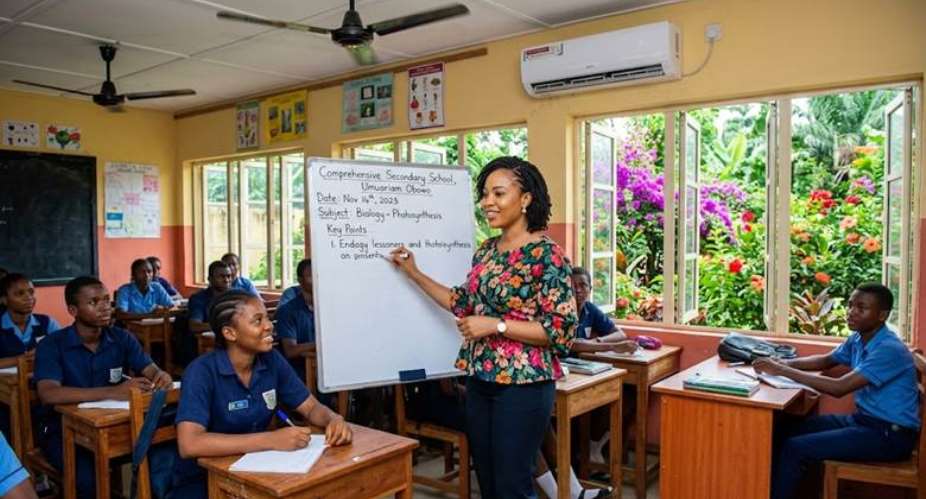
Education in Nigeria is undergoing significant shifts as the nation navigates the intersection of technological advancement, economic pressures, and evolving global demands. Across classrooms, university lecture halls, and virtual learning platforms, the traditional paradigms of teaching and learning are being fundamentally reshaped. From the bustling urban centres of Lagos and Abuja to more remote rural communities of the nation, stakeholders in the educational sector are recognizing that academic degrees alone are no longer sufficient to guarantee economic security or national development. This realization has sparked a profound transformation characterized by the integration of practical tech and vocational skills, the explosion of educational technology, a renewed focus on science and innovation, and the widespread pursuit of micro-credentials. However, while these developments offer promising prospects for the future of the Nigerian youth, they also lay bare persistent challenges that threaten to widen inequality and stall progress if left unaddressed.
One of the most notable prospects in this changing landscape is the decisive pivot toward technical and vocational education and training. For decades, the Nigerian educational system placed overwhelming emphasis on theoretical knowledge and white-collar career preparation, often at the expense of practical skills. Today, schools and tertiary institutions are actively integrating coding, data analytics, robotics, and hands-on trade skills into their core curricula. This practical orientation aims at bridging the long-standing disconnect between graduate capabilities and industry requirements, and at the same time, equipping young people with self-reliance and immediate employability in an increasingly competitive market.
Parallel to this vocational resurgence is the rapid rise of educational technology platforms tailored specifically to the Nigerian context. Mobile applications and digital tools have democratized access to quality learning resources, particularly for high-stakes national examinations such as those administered by the West African Examinations Council, the National Examinations Council, and the Joint Admissions and Matriculation Board. Powered by artificial intelligence and interactive digital content, these platforms enable personalized learning experiences, allowing students to learn at their own pace regardless of their physical location. Furthermore, the adoption of hybrid and remote learning models, which gained momentum during global disruptions and has been sustained by rising transportation costs, continues to offer flexible educational pathways for thousands of learners.
This digital shift is closely intertwined with a broader movement toward Science, Technology, Engineering, Arts, and Mathematics, collectively known as STEAM. Private institutions, non-governmental organizations, and government agencies are pouring renewed energy into fostering critical thinking, creativity, and problem-solving skills among young learners. By incorporating the arts into traditional STEM disciplines, educators are nurturing a generation of innovators capable of tackling complex local issues, from agricultural inefficiency to healthcare access. Complementing this is the rising popularity of micro-credentials and short-term online certifications. Recognizing the global demand for digital talent, university students and young graduates are proactively pairing their formal education with targeted boot camps and globally recognized certifications in software engineering, digital marketing, and product design, effectively bypassing traditional structural delays to enter the global gig economy.
Government initiatives have also begun to reflect these changing priorities, with periodic reviews of basic and secondary education curricula aimed at embedding entrepreneurship, digital literacy, and civic education deeper into the instructional fabric. These policy adjustments signal a clear institutional recognition that the future of Nigeria depends on a digitally literate and entrepreneurial populace capable of driving economic diversification. Yet, despite these inspiring prospects, the path toward a fully modernized educational system in Nigeria remains fraught with deep-seated challenges.
Foremost among these is the severe digital divide and infrastructure deficit that splits the nation along socio-economic and geographic lines. While urban, affluent students seamlessly access high-speed internet, smart devices, and private STEM academies, millions of children in rural and underserved communities lack basic electricity, functional computer laboratories, or reliable network connectivity. For these students, the promise of Edtech and remote learning remains a distant reality, threatening to exacerbate pre-existing educational inequalities.
Compounding the infrastructural deficit is the ongoing issue of inadequate funding and resource allocation across all levels of public education. Public primary schools, secondary institutions, and universities frequently suffer from dilapidated physical facilities, overcrowded classrooms, and poorly equipped laboratories. The persistent funding shortfalls lead to frequent industrial actions, disruptions in academic calendars, and a general decline in the quality of instruction. Moreover, curriculum reforms, while promising on paper, often stall during implementation due to a lack of trained personnel and modern teaching materials.
The human element of education represents another critical hurdle. Thousands of teachers across the country have not been adequately trained to deliver technology-driven or STEAM-focused instruction. Many educators remain accustomed to traditional, rote-learning methodologies and lack access to continuous professional development programmes. Without a well-trained, motivated, and adequately compensated teaching staff, even the most innovative digital tools and refined curricula will fail to achieve their intended impact. Furthermore, pervasive economic hardship places immense pressure on households, forcing many children out of school entirely to support their families, thereby perpetuating the staggering number of out-of-school children in the country.
To navigate these challenges and fully harness the bright prospects of current educational trends, the government must adopt a strategic, inclusive, and sustained way forward. First and foremost, government at all levels must prioritize substantial budgetary allocations to the education sector, approaching or meeting international benchmarks. This funding must be channeled directly into foundational infrastructure, ensuring that schools in both urban and rural areas are equipped with stable electricity, solar power alternatives, functional internet access, and modern learning facilities. Public-private partnerships should be aggressively pursued to subsidize digital devices and data access for underprivileged students, ensuring that technological advancements do not leave the most vulnerable behind.
Additionally, a comprehensive national teacher-training initiative must be launched immediately. Teachers are the backbone of educational reform, and massive investment is required to upskill educators in modern pedagogy, digital literacy, and interactive teaching techniques. Establishing mandatory, ongoing professional development programmes will ensure that teachers are fully prepared to guide students through a STEAM-centric and technology-driven environment.
By and large, policy implementation must be streamlined through transparent monitoring and evaluation frameworks. Government should work closely with industry leaders, tech hubs, and vocational institutes to continuously review educational standards, ensuring that school curricula evolve alongside global economic trends. Addressing the out-of-school children crisis through targeted social intervention programmes. By bridging the digital divide, investing heavily in teacher capacity, and aligning academic training with real-world economic opportunities, Nigeria can transform its educational landscape from one marked by stark disparities into a robust engine for national prosperity and global competitiveness


 Ghana, Panama sign MoU to deepen bilateral political consultations
 Founder’s Day: NAPO urges Ghanaians to uphold Kwame Nkrumah’s legacy
 Founder’s Day: Mahama urges Ghanaians to draw inspiration from Nkrumah’s vision
 Mahama to build 400-bed Mother and Child Block at Korle Bu – Kwakye Ofosu
 GES threatens sanctions against SHS heads imposing unauthorised charges
 Betting could destroy future of Ghana’s youth in 3–5 years – Akim Swedru MP
 Zimbabwe Suspends Journalist for One Year Over ‘Unethical’ Reporting on Chinese ...
 Third Drug Mule in 3 Weeks: R2m Heroin Found in SA Man’s Luggage at OR Tambo
 NACOC Debunks MP’s Claim as France’s €225m Cocaine Case Deepens
 Putin party retains majority in first vote since 2022 invasion of Ukraine


