




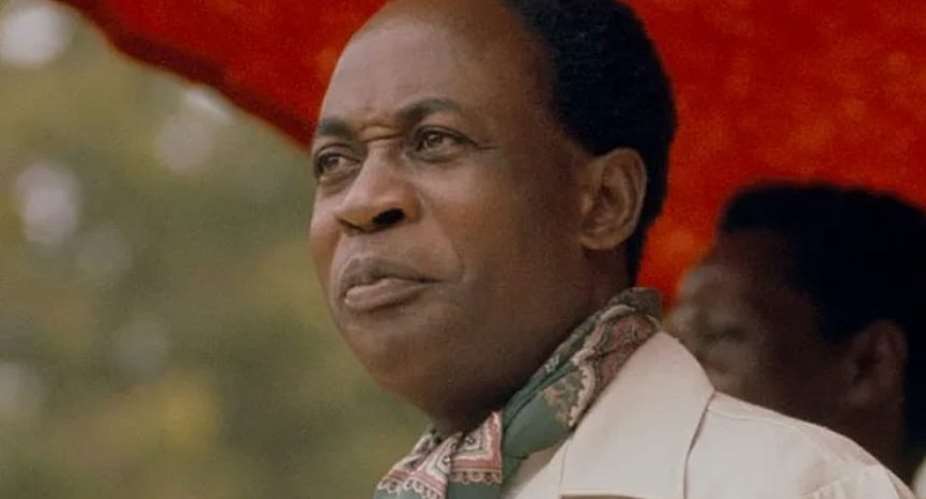
Africa has never suffered from a shortage of ideas. We have produced brilliant thinkers, visionaries, intellectuals, freedom fighters, entrepreneurs and statesmen who imagined an Africa that would stand on its own feet, determine its own destiny and command respect in the community of nations. Yet there is a question we must increasingly ask ourselves: What Have We Done with Their Ideas?
This week, at a memorial lecture organised by the Kwame Nkrumah Mausoleum, (agency under the Ministry of Tourism, Culture and Creative Arts) once again reminded Africa to pause to remember three extraordinary personalities whose lives were deeply connected to the struggle for African dignity, liberation and self-determination: Osagyefo Dr. Kwame Nkrumah, Dr. W.E.B. DuBois and George Padmore. Their names have become almost sacred in Pan-African discourse. Their photographs adorn conference halls, books are quoted at seminars. and speeches reproduced in programmes. Their statues and memorials attract visitors. Every year, we gather to remember them.
But perhaps the time has come to ask a more uncomfortable question: Are we remembering them, or merely repeating them? There is a difference. Remembering them is easy. Repeating famous quotations by them is easy. Organising memorial lectures for them is easy. Laying wreaths at their tombs is easy. The harder task is to act on the principles for which they lived.
FROM COMMEMORATION TO IMPLEMENTATION
Ghana's 2026 memorial lectures brought together as main speakers three finest Pan Africanists in the persons of the public speaker, Prof. P.L.O. Lumumba, a private legal practitioner and historian Lawyer, Dr. Yaw Anokye Frimpong and the General Secretary of the ruling party of Ghana (NDC), Mr. Fiifi Fiavi Kwetey who were incredible on the day and did justice to the topics they each handled.
These commemorations are important. History must be preserved. Young Africans must know where we came from. Our monuments, archives, museums and heritage sites matter. But history becomes truly meaningful when it changes behaviour. If Nkrumah spoke about African unity, what are we doing today to make African economic integration work? If DuBois dedicated his intellectual life to confronting racial inequality and advancing the dignity of African people, what are we doing to strengthen African knowledge, research and intellectual institutions? If Padmore devoted his life to African liberation and political organisation, what are we doing to build institutions capable of advancing African interests in today's complex global environment? These are the questions that should follow every memorial lecture.
AFRICA CANNOT CONSUME SPEECHES AND EXPORT ITS RESOURCES
For decades, Africa has remained a major source of raw materials for the global economy while importing many of the finished products made from those resources. We export cocoa and import chocolate, minerals and import manufactured products, young talent and later compete globally for the expertise we have lost. We possess enormous agricultural potential yet continue to import significant quantities of food. We are blessed with some of the world's most remarkable cultural and natural assets yet too often struggle to convert them into competitive, sustainable tourism economies. This is not simply an economic problem. It is a question of how we organise ourselves as a continent. The Africa envisioned by the Pan-Africanists was not an Africa that merely demanded sympathy from the rest of the world. It was an Africa that understood its own value and organised its political, economic, intellectual and cultural resources accordingly.
THE WORLD WILL NOT ORGANISE AFRICA FOR AFRICA
One of the most important lessons we need to confront is, Africa must engage the world. We need international partnerships, investment, technology, tourism, trade, education and diplomatic relationships. But partnership is not the same as dependence. Africa should not reject the world. Africa must learn how to negotiate with the world from a position of greater strength and not weakness. The global system is built around interests. Countries pursue their national interests. Companies pursue commercial interests. Regions pursue strategic interests. Why should Africa be different? There is nothing wrong with Africans asking: What is in Africa's interest? That question should be at the centre of our trade negotiations.
PAN-AFRICANISM MUST BECOME PRACTICAL
Perhaps the greatest mistake we have made is turning Pan-Africanism into a philosophy we celebrate rather than a system we implement. Pan-Africanism cannot simply mean saying "Africa must unite." It must mean making it easier for Africans to trade with Africans. It must mean improving movement across African borders, connecting African cities through better transport networks., building African airlines that connect African destinations efficiently, developing African financial institutions capable of financing African businesses. It must mean universities collaborating across borders, African countries buying more from one another, African tourism destinations marketing Africa collectively while competing intelligently within the global tourism marketplace and African governments deliberately creating opportunities for African entrepreneurs to scale beyond their national borders.
PAN-AFRICANISM MUST MOVE FROM THE CONFERENCE HALL TO THE MARKETPLACE.
Africa's next liberation must be economic. Not because politics is unimportant, but because political independence without sufficient economic capacity leaves countries vulnerable. We need to move from asking: "Who will invest in Africa?" to "How do we build African capital capable of investing in Africa?" Move from "Who will create jobs for Africans?" to "How do we build African enterprises capable of creating millions of African jobs?" From "How do we attract tourists?" to "How do we build competitive African tourism businesses that retain more of the value created by tourism?" And we must move from "How can Africa receive aid?" to "How can Africa build productive economies that increasingly finance their own development?" Serious development rarely begins with easy questions.
OUR YOUNG PEOPLE NEED MORE THAN INSPIRATIONAL HISTORY
There is something else we must confront. We cannot continuously tell Africa's youth about the greatness of heroes and heroines while failing to give them institutions capable of translating that greatness into opportunity. Young Africans need functioning industries, quality education, research opportunities, access to capital and technology. They need also opportunities to travel with Africa, trade and collaborate across Africa. They must see that being African is not merely an identity to be celebrated during commemorations, it must be an economic, cultural and intellectual asset. Our young people should not only know what Nkrumah said. They should have the opportunity to build what Nkrumah imagined.
AFRICA MUST BEGIN MEASURING RESULTS
Perhaps it is time to change the way we celebrate our historical heroes. Every memorial lecture should end with an action plan. Every Pan-African conference should produce measurable commitments. Every celebration should ask what will be different one year from now. If we celebrate African unity, how many new African partnerships were created? If we celebrate African entrepreneurship, how many businesses gained access to capital? If we celebrate African trade, how much additional intra-African trade was generated? If we celebrate African tourism, how many African destinations collaborated? If we celebrate African knowledge, how many research partnerships were established? how many young people acquired meaningful skills and opportunities if we celebrate African Youth? This is how we turn commemoration into transformation.
THE AFRICA WE WANT WILL NOT BE BUILT BY SPEECHES ALONE
Nkrumah, DuBois and Padmore belonged to a generation that understood something important: History does not change because people talk about changing it. History changes because people organise, sacrifice, build and act. Their generation confronted colonialism with limited resources but enormous conviction. Today, Africa has far more resources. We have a young population, natural resources, technology, universities, entrepreneurs, creative industries, enormous cultural diversity, and a huge consumer market. We also have the African Continental Free Trade Area, a global African diaspora with capital, expertise and influence.
The question is therefore not whether Africa has potential. The question is whether Africa has the collective discipline to convert its potential into power, prosperity and progress. It is time to stop celebrating the dream and start building it.
Let us continue to honour Nkrumah.
Let us continue to honour DuBois.
Let us continue to honour Padmore and others who have contributed in the past.
We must preserve their libraries, memorials, archives and historic sites. Let our children learn their stories. But let us also do something more difficult. Let us build, African businesses, industries, research institutions, tourism brands, creative industries, African universities that influence global knowledge and African cities that work. Let us build an Africa whose young people do not have to leave the continent to find dignity and opportunity. The great Pan-Africanists did not dedicate their lives merely so that generations after them could hold annual ceremonies in their honour. They wanted Africa to become free, confident, united and capable of determining her own destiny. That responsibility now belongs to us.
So, perhaps at the next commemoration, instead of asking only: "What would Nkrumah have said?" we should ask: "What would Nkrumah have expected us to do?" And instead of simply quoting DuBois, we should ask: "What African institutions are we building with the knowledge he fought to advance?" And instead of remembering Padmore's activism, we should ask: "What are we organising today to advance Africa's interests?"
Africa has talked for long enough.
We have written enough papers.
We have held enough conferences.
We have delivered enough speeches.
We have passed enough resolutions.
The next chapter of Pan-Africanism must be about execution. Because the Africa our ancestors dreamed about will not be delivered to us. We must build it ourselves. Africa must stop talking about her future and start acting in her own interest.
By Emmanuel Frimpong: Tourism Researcher | Consultant | Analyst

 Ghana, Panama sign MoU to deepen bilateral political consultations
 Founder’s Day: NAPO urges Ghanaians to uphold Kwame Nkrumah’s legacy
 Founder’s Day: Mahama urges Ghanaians to draw inspiration from Nkrumah’s vision
 Mahama to build 400-bed Mother and Child Block at Korle Bu – Kwakye Ofosu
 GES threatens sanctions against SHS heads imposing unauthorised charges
 Betting could destroy future of Ghana’s youth in 3–5 years – Akim Swedru MP
 Zimbabwe Suspends Journalist for One Year Over ‘Unethical’ Reporting on Chinese ...
 Third Drug Mule in 3 Weeks: R2m Heroin Found in SA Man’s Luggage at OR Tambo
 NACOC Debunks MP’s Claim as France’s €225m Cocaine Case Deepens
 Putin party retains majority in first vote since 2022 invasion of Ukraine


