




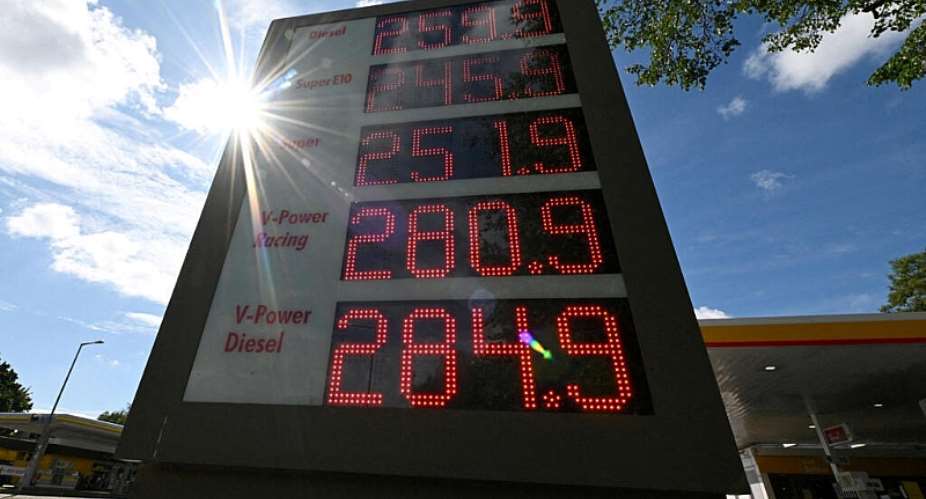
The German government has agreed to tax reductions that will cut gasoline prices by €0.17 ($0.1952) a litre in response to soaring fuel prices, people with knowledge of the matter said on Friday.
The move includes a €0.14 cut in the energy tax and an additional €0.03 cut from the sales tax, the sources, who spoke on condition of anonymity, said.
The decision came after Chancellor Friedrich Merz promised this week to offer relief to consumers hit by soaring gasoline prices. It followed extended negotiations between the federal government and state governments over how to finance the cuts.
As the Iran war has helped push benchmark oil prices over $100 a barrel, gasoline prices have become a pressing political issue for Merz, whose approval ratings have plunged to record lows. Earlier this week, the nationwide daily average price for a litre of E10 gasoline hit a record €2.286 ($10 per gallon).
On Sunday, the capital Berlin and the northeastern state of Mecklenburg-Western Pomerania, a sparsely populated and heavily rural region where many people rely on their cars for transport, both go to the polls in elections expected to see Merz's conservative Christian Democrats (CDU) heavily punished.
The results will be particularly closely watched after the far-right Alternative for Germany (AfD) party came near to winning an absolute majority in a separate election in the eastern state of Saxony-Anhalt on September 6.
In Mecklenburg-Western Pomerania, the incumbent state premier Manuela Schwesig has accused Merz's government of standing by while fuel prices surge, and called for a fuel price cap based on the Luxembourg model of a nationwide maximum.
Earlier this year, the government offered some relief to motorists by reducing the energy tax from May through June, effectively lowering petrol and diesel prices by around 17 cents per litre and there were widespread calls for the cuts to be extended.
The Bild newspaper reported that Berlin is also working on a gasoline price cap that would be contingent on the oil price, with plans subject to talks with the heads of Germany's regional states.
(FRANCE 24 with Reuters)

 Foreign Affairs Ministry requests special audit of emergency evacuations since 2...
 Germany cuts energy tax to lower petrol prices as Merz faces state key elections
 Trump says son repaid Russian oligarch who funded wedding festivities
 France calls on Moscow to reverse takeover of European assets
 Highly influential people sponsoring Ghana Jollof TikTok activities – CID
 'Ghana Jollof' case: Bawumia's condemnation of nurse's arrest is hypocritical – ...
 Ahafo Ano South West MP involved in road accident
 Constitutional Review alone will not solve Ghana’s problems – Kwesi Pratt Jnr.
 East Legon Football Academy applauds NPA Boss for supporting youth football
 Lawyer challenges two-week remand of Salomey over connection to wanted 'Ghana Jo...


