




A sunflower is more than a crop. Within the right economic environment, it can serve as the foundation of an integrated industrial value chain.
Consider a bottle of cooking oil on an African supermarket shelf. Most consumers see a single finished product. However, behind that bottle lies a potentially extensive network of farmers, processors, manufacturers, technicians, transporters, distributors and retailers.
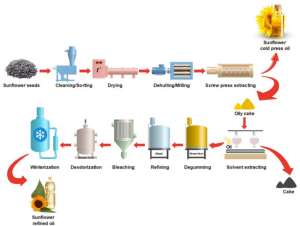
The process begins with farmers cultivating sunflower. After harvesting, the seeds must be transported, cleaned and crushed to extract the oil. The crude oil must then be refined before it is ready for consumers.
The processing plant requires machinery, which in turn creates demand for operators, technicians, engineers and maintenance services. The finished oil requires bottles, caps, labels and cartons, generating opportunities for plastics manufacturers, printing companies and packaging businesses.
Additional opportunities arise in branding, marketing, warehousing, transportation, wholesale distribution and retail.
In this way, a single sunflower field can support far more than agricultural production.
This is how Africa must begin to approach agriculture. The question should not be limited to, “What can we grow?” We must also ask, “What industries can we build around what we grow?”
The opportunity extends beyond cooking oil. Sunflower seed cake, a by-product of extraction, can be used in animal feed, creating additional business opportunities while supporting poultry and livestock production. Packaging generates another industry. Transportation generates another. Equipment maintenance, laboratory services, marketing and distribution all create further employment and enterprise opportunities.
One crop can support multiple companies. One harvest can sustain numerous livelihoods.
There is also a significant foreign-exchange benefit. African countries continue to import substantial quantities of products that could increasingly be produced domestically. When we grow, process, package and distribute competitively produced goods locally, we reduce import dependence and retain a greater share of economic value within our economies.
However, we must also ask a critical question: Who owns the value chain?
Who owns the crushing plant and refinery? Who manufactures the bottles? Who owns the brand? Who controls distribution? Who places the product on supermarket shelves? And who provides the financing required for these businesses to expand?
African banks, investors and development finance institutions must increasingly direct capital toward productive capacity rather than concentrating disproportionately on consumption and imports. Farmers need financing, but so do processors, manufacturers, packaging companies, logistics providers and emerging African brands.
Imagine more products reaching our supermarket shelves through a value chain such as this:
AFRICAN FARMER → AFRICAN PROCESSOR → AFRICAN FACTORY → AFRICAN PACKAGING → AFRICAN BRAND → AFRICAN DISTRIBUTOR → AFRICAN SUPERMARKET
Every stage completed locally means more value retained in Africa, more skills developed, more businesses established and more jobs created.
This is industrialisation that people can see—not only in policy documents, but also in factories, businesses, employment opportunities and products on supermarket shelves.
Africa's economic transformation will not come solely from producing more raw materials. It will come from building industries around them.
A farmer can produce a crop. A strong economy builds businesses, industries and ownership around that crop.
The sunflower is therefore more than a crop. It is a reminder that agriculture can be the beginning—not the end—of Africa's industrial journey.


 Open aviation fuel supply to more players to reduce airfares – Akim Swedru MP to...
 Pay my salary arrears, terminal benefits by September 11 or face court – Former ...
 Trump says he'll give Americans $5,000 each if Republicans win midterm elections
 'Govt moves to confiscate, auction containers left at Ghana’s ports for over six...
 'We are not serious Christians; bunch of selfish, greedy people' – Duncan-Willia...
 30,000 classrooms without teachers is a crisis waiting to happen – Adutwum
 How honest station loading boy handed over missing £3,000, GH¢1,000 to Police
 Upgrade one SHS in each MMDAs to first class category A school to tackle placeme...
 How frustrated parents sleep at GNAT Hall as CSSPS placement challenges enter th...
 Two men accused of land guard activities weep in court for forgiveness


