




A fresh round of inter-jihadist warfare has erupted in the Timbuktu region of Mali, with the Islamic State's Sahel affiliate claiming one of its heaviest single-battle tolls against its al-Qaeda-linked rival in years a claim JNIM disputes but does not deny outright.
What happened
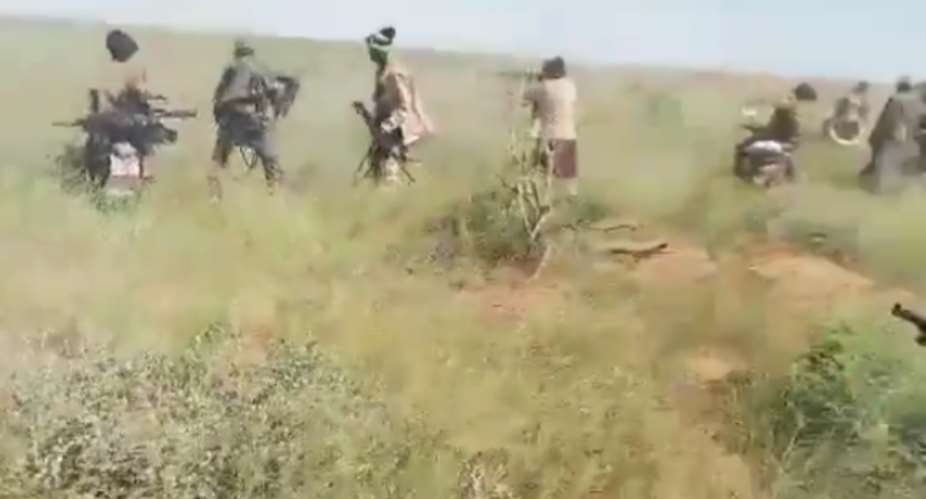
Fighting broke out on September 1, 2026, in Ekacham, near the locality of N'daki in the Timbuktu region, pitting the Islamic State in the Sahel (ISIS-Sahel, formally the Islamic State Sahel Province) against Jama'at Nusrat al-Islam wal-Muslimin (JNIM), the al-Qaeda-affiliated coalition led by Iyad Ag Ghaly.
Channels and sources close to ISIS-Sahel put JNIM's losses at more than 250 fighters killed, with dozens more wounded and several taken prisoner, including a high-ranking JNIM commander.
The Islamic State affiliate additionally claims to have seized hundreds of weapons and rounds of ammunition, several hundred motorcycles, and a number of vehicles from JNIM positions. JNIM, for its part, has acknowledged losing "several dozen" fighters in the clash while dismissing ISIS-Sahel's casualty figures as grossly inflated.
As with most reporting on inter-jihadist combat in the Sahel, both tolls originate from the belligerents themselves rather than from independent verification, and casualty claims in this rivalry have historically diverged sharply along partisan lines. What is not in dispute is that a significant engagement took place, and that N'daki sits inside a corridor that has hosted this exact rivalry before.
A recurring flashpoint, not a new front
The Gourma zone straddling the Mali-Burkina Faso border encompassing N'daki, In-Tillit, Tin-Tabakat and neighbouring localities on the Malian side, and Korfoueyouey, Arbinda and Aribinda-area positions across the border has been contested ground between JNIM and the Islamic State's Sahelian branch since at least early 2020, when their formerly cooperative relationship broke down into open warfare.
The Inland Niger Delta area around Mopti has been the conflict's other historical hotspot. Ekacham's location within that same corridor suggests September's clash is best read as the latest flare-up in a five-year-old turf war rather than a new theatre opening up.
That turf war has been extraordinarily lethal by any regional standard. The two groups have clashed hundreds of times since 2019, with the Armed Conflict Location and Event Data project (ACLED) tallying more than 2,100 deaths from the rivalry even before this year's escalation.
Earlier in 2026, the conflict crossed a new threshold when ISIS-Sahel fighters struck a JNIM position in Niger's Tillaberi region for the first time, extending a fight that had previously been confined to Mali and Burkina Faso, and claiming 35 JNIM fighters killed in that engagement alone.
ACLED's Héni Nsaibia has described the Tillaberi and Dosso corridor which rings Niamey and stretches toward the Benin and Nigeria borders as host to a rivalry that is "both ideological and territorial," noting that despite JNIM's continued dominance, the fight for that ground has grown increasingly deadly(4).
Two insurgencies, two different playbooks
Analysts who track the split point to a consistent behavioural pattern that helps explain why the rivalry keeps reigniting rather than settling into a stable partition. JNIM has generally tried to present itself to local populations as a protector and service-provider that fills gaps left by absent states, while ISSP has leaned on coercion and, per Nsaibia's assessment, "mass violence" as its primary tool of control.
Both groups compete for the same resources zakat-style taxation of civilians, cattle rustling, control of smuggling and trade routes, and the recruitment pool created by chronic state absence which keeps friction high even in periods without active fighting.
If ISIS-Sahel's account of the September 1 engagement holds up even approximately, the loss of a senior commander and hundreds of weapons, motorcycles and vehicles would represent a meaningful blow to JNIM's logistics in a region it has otherwise dominated. JNIM remains by far the larger and more lethal of the two coalitions regionally, linked to the substantial majority of militant Islamist fatalities across the Sahel over the past year.
But the Timbuktu region is also where JNIM has invested heavily in a years-long blockade of the historic city itself, and any diversion of fighters and materiel to fend off an Islamic State challenge in the Gourma corridor arrives at a moment when JNIM is simultaneously pressing offensives elsewhere in Mali and absorbing losses from its own confrontations with Malian and allied Russian forces.
Why it matters beyond the battlefield
For residents of the Timbuktu region already living under the pressures of the long-running siege and blockade dynamics that have emptied much of the city's periphery, an intensifying JNIM-ISSP contest changes very little about their exposure to violenceit simply changes who controls the checkpoints and who collects the levies on any given week.
For Malian authorities and their Russian Africa Corps partners, an ISIS-Sahel resurgence in territory JNIM has treated as its own rear base is, in narrow tactical terms, not unwelcome; a weakened or distracted JNIM is a JNIM with fewer fighters to throw at Malian and Africa Corps positions elsewhere.
But the broader lesson of the JNIM-ISSP war's spread first into Niger's Tillaberi corridor earlier this year, and now apparently intensifying again in the Timbuktu Gourma is that neither Bamako, Niamey nor Ouagadougou controls enough territory to prevent the two largest jihadist coalitions in the Sahel from fighting each other freely across their borders.
As one ACLED analyst put it regarding the rivalry's spread into Niger, the expanding contest is itself a symptom of how limited state authority remains across the region, and the competition is likely to keep fuelling recruitment and violence on both sides regardless of who wins any single battle.
Mustapha Bature Sallama
Medical/ Science Communicator,
Private Investigator, Criminal Investigation and Intelligence Analysis,
International Conflict Management and Peacebuilding. ( USIP)


 Abronye loses again as Court of Appeal dismisses bid to halt Samson Anyenini’s d...
 Over 30 women feared trapped in prostitution in Savannah as GIS arrests traffick...
 Govt pays GH¢24.8bn to statutory funds since January — Ato Forson
 Seven missing Axim fishing canoe crew located in Togo’s waters — Western Regiona...
 Health Ministry assures Ghanaians of readiness to manage Ebola cases
 FDA shuts down Arcan Bitters factory again over illegal production in Ashanti Re...
 PAC chair praises NPA CEO Edudzi Tameklo’s performance at committee hearing
 Ghanaian jailed nine months in US for using relative’s social security number to...
 Ukraine war: I'm going to Russia to convince President Putin to ceasefire — Maha...
 'Prof. Jane Naana is Vice President of Ghana; not for women and girls' — Victori...


