




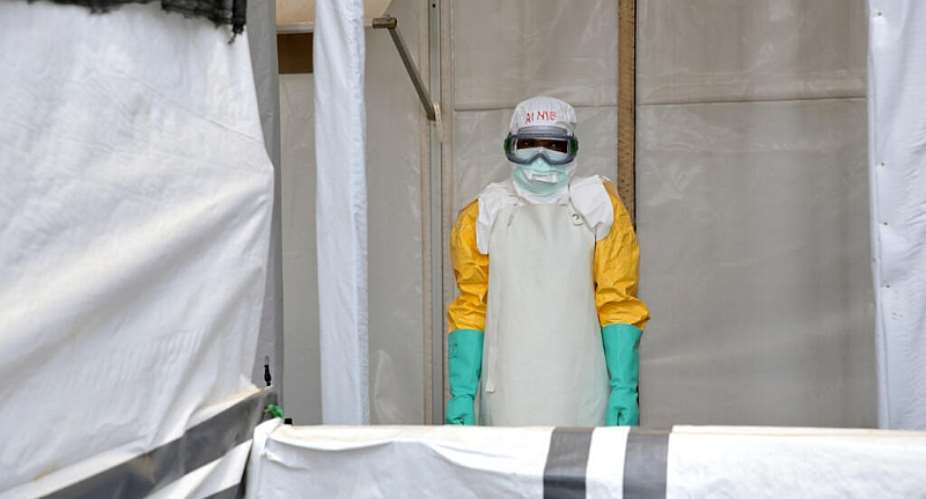
The latest official toll released by the Congolese National Institute of Public Health on Wednesday showed 6,186 confirmed cases and 3,007 deaths, making a fatality rate of 48.6%.
A total of 1,409 people have reportedly recovered.
The outbreak, which was declared on May 15 in the remote north-eastern province of Ituri, has spread to six provinces in areas where the presence of the Congolese state is weak and insecurity is widespread due to the presence of armed groups.
The health response has been overwhelmed by the number of cases, while the insecurity as well as community resistance have made it harder to identify and treat patients early.
The World Health Organisation estimates that around 60 percent of deaths happen outside treatment centres, highlighting the challenges of detecting cases before people die of the disease.
The outbreak is caused by the Bundibugyo species of Ebola, for which there are no approved vaccines or treatments. The WHO said trials of three potential vaccines should begin by October or November.
"Two new vaccines against Bundibugyo virus are now in safety trials in the UK and Canada," WHO chief Tedros Adhanom Ghebreyesus told reporters in Geneva.
The WHO has also recommended a full-scale human trial of Ervebo, a vaccine approved for use against the more common Zaire strain of Ebola, to determine if it offers any protection against Bundibugyo.
Early data suggests that Ervebo, which is made by Merck, could offer some degree of protection.
A batch of 16,250 Ervebo vaccines arrived in the DRC in July for frontline medical personnel, and vaccination began shortly afterwards in Kisangani, the capital of northeastern Tshopo province.
WHO vaccines chief Kate O'Brien said healthcare workers should receive the vaccine only as part of research into whether it is effective against the Bundibugyo strain or not.
(with newswires)

 How CCTV camera helped Police arrest five suspects over robbery, murder of gold ...
 Six arrested over deadly New Winneba clashes, single-barrel gun recovered
 Presidency gives Mahama Ayariga, Ahmed Ibrahim 14 days to submit resolution repo...
 'TMA is the highest political, administrative authority in Tema' — Presidency ru...
 Reasons behind dismissal of 9 Board Chairpersons by President Mahama revealed
 About 55,000 BECE candidates disqualified from SHS placement
 Zenator assumes office as Environment, Science And Technology Minister
 Roads linking Garu to neighbouring districts worse and immotorable — MP
 2026 BECE: Only 17% of candidates record aggregates between 6 and 18
 Growing Old: The Lessons Youth Must Learn Before Time Teaches Them

