




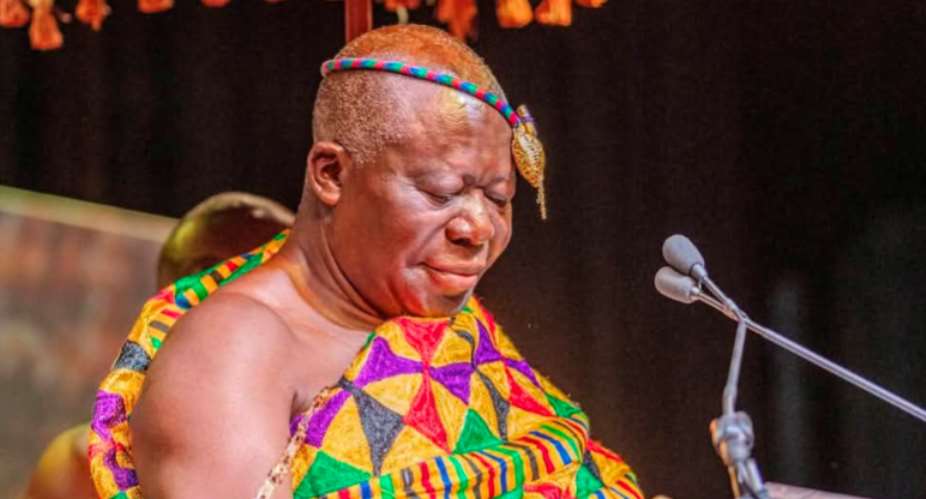
Asantehene Otumfuo Osei Tutu II has called for a transformation of traditional leadership to enable it to respond effectively to the social and economic challenges facing modern society.
He said traditional rulers must move beyond ceremonial responsibilities and play a more active role in promoting education, resolving conflicts and protecting community resources.
The Asantehene also called for reforms within traditional institutions to ensure that tradition is not used to protect injustice, corruption, exploitation or arbitrary authority.
The Asantehene made the remarks when he delivered a royal guest lecture at Howard University in Washington DC, United States, on Tuesday, August 25.
“Traditional leadership in the 21st century cannot therefore be limited to festivals and ceremonial occasions. It must be capable of responding to educational inequality, unemployment, environmental degradation, land disputes, public health emergencies, community conflict, and the anxieties of young people,” Otumfuo said.
He said chiefs who focus mainly on ceremony, privileges, titles and public recognition risk weakening the institutions they represent.
According to him, traditional rulers who listen to their people, protect community resources, promote education, mediate conflicts and support vulnerable people can strengthen both traditional institutions and society.
Otumfuo said traditional institutions must also defend the dignity of women and children and ensure that young people are given opportunities to participate in decisions affecting their communities.
He further called for persons with disabilities to be protected from marginalisation and for community resources to be managed responsibly.
The Asantehene stressed the need for transparency in land registration and integrity in succession and customary processes.
“The proper defence of tradition is therefore not an insistence that nothing should ever change, but the capacity to distinguish between enduring principles of an institution and those practices that require reconciliation,” he said.


 Obuasi SHTS alleged sexual abuse: Kwasi Kwarteng criticises Education Minister o...
 ECOWAS’ $250,000 flood relief donation arrives in Ghana – Ablakwa
 Kennedy Agyapong has not resigned from NPP – Kwasi Kwarteng
 State failure, not GoldBod, driving galamsey – Daryl Bosu
 A Rocha Ghana raises alarm over human rights abuses in mining communities
 ECOWAS, AfDB discuss ways to advance West Africa’s development priorities
 October 16: Cedi gains against dollar, sells at GHS12.25 on forex market, GHS11....
 Galamsey: Ghana’s rivers now run chocolate and milk colour — Sam Jonah
 A nation of job-seekers will always be poor — Sir Sam Jonah
 “If you attack us with pepper spray, we’ll fight back” — NDC Yakubu Tony Aidoo w...


