




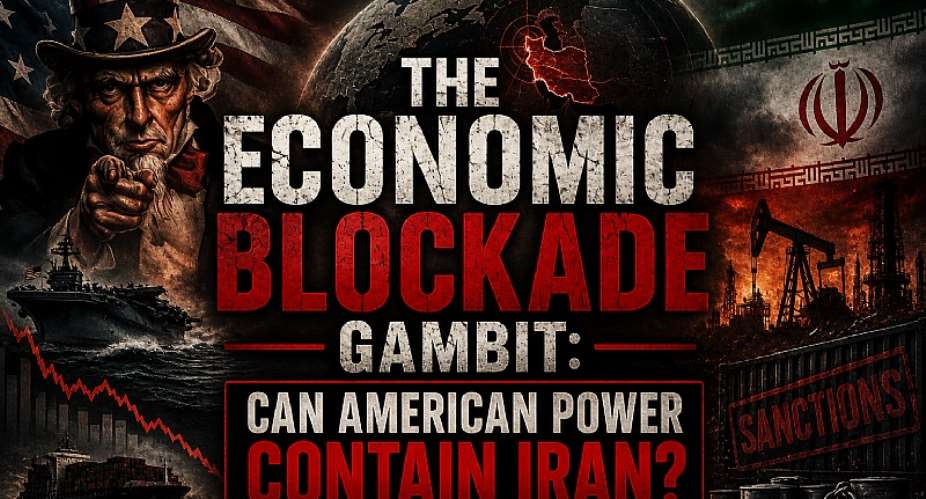
Power is a cruel instrument when its consequences damage those who are subjected to it more than those who exercise it. The greater the authority and power a state possesses, the greater its responsibility to uphold moral, ethical and equitable principles. Yet the darker side of power is that it often demands visible demonstration: the powerful want others to recognise their strength, accept their authority and ultimately bow before it. The Trump administration undoubtedly possesses enormous military and strategic capabilities, arguably greater than those of any individual state and, in several dimensions, greater than the combined capabilities of the European Union. Traditionally, American power has worked in a descending order: diplomatic talks first, followed by economic pressure and blockade, and ultimately sanctions or military action when diplomacy fails. In the present conflict, however, the topology appears to have been reversed. The sequence has become military attacks and sanctions first, naval blockade next, and diplomacy later. This reversal itself may be a clear indication of a decline in strategic decision-making and a shift from calibrated statecraft towards coercive power. The US-Iran confrontation therefore appears to be driven not only by strategic calculations but also by concerns over reputation, credibility and the perceived authority of American power. The war is increasingly becoming a contest over the limits of power itself.
Why is America geographically so powerful and difficult to contain?
The answer lies partly in geography. The United States possesses one of the most advantageous strategic locations in the world. The Atlantic and Pacific Oceans provide enormous natural buffers, making a conventional naval blockade of the American mainland extremely difficult. Even under severe external pressure, the United States has a vast internal economic structure, agricultural base, energy resources and transportation network capable of sustaining national resilience. Europe, by contrast, remains deeply dependent on international trade routes, energy supplies and external economic networks. Even relatively limited disruptions can expose the strategic vulnerabilities of European states and reinforce their dependence on NATO.
This raises an important question: would NATO's Article 5 provide the same certainty if a member such as Türkiye faced a complex regional confrontation involving Israel or another major power? The answer cannot simply be assumed. Collective defence mechanisms depend not only on treaty language but also on political will and strategic circumstances. This is precisely why a broader regional security framework appears increasingly necessary for states caught between ambition, uncertainty and strategic ambiguity.
At a recent conference, President Trump, who had already welcomed the idea of the Mecca Accord, reportedly warned countries against providing economic assistance to Iran during a blockade. Although specific countries were not publicly identified, such pressure inevitably creates questions about trust within the Gulf. If regional states decide that economic and humanitarian assistance to Iran is necessary for regional stability, attempts to prevent such assistance could deepen existing strategic divisions. Reports of humanitarian support and financial assistance from Gulf states, including the UAE, would demonstrate that regional actors may seek to preserve their own interests rather than simply follow the preferences of external powers.
How has Iran challenged America’s perception of strategic control?
Iran may have dented the perception of absolute American control not necessarily by defeating American military power, but by demonstrating that even a heavily pressured state can retain strategic options. The fear of being trapped can sometimes become more damaging than the consequences of confronting the pressure directly. Iran's internal political and military adjustments, including changes within its command structure, suggest that the country is attempting to adapt to a prolonged confrontation rather than simply surrender to external pressure.
The diplomatic track also remains significant. Abbas Araghchi and his negotiating team reportedly moved towards agreements that came close to a possible compromise with Washington. Tehran's insistence that previously negotiated commitments should be honoured reflects a broader principle: diplomatic agreements cannot remain meaningful if either side treats them as temporary instruments rather than binding political commitments. Likewise, the economic and maritime consequences of a blockade cannot simply be separated from the wider political settlement.
The involvement of regional conflicts, including Gaza and the Houthi front, has further complicated the situation. Once multiple theatres become connected, the consequences of one military action can generate political and economic ripples across the region. This is the mechanics of kinetic deterrence: one actor moves, the opponent responds, and the consequences spread through the wider strategic environment. Expecting the regional “ocean” to remain calm while multiple actors continue creating ripples is unrealistic.
A 60-day extension of the diplomatic framework could therefore provide both sides with valuable space for de-escalation, provided that it is accompanied by transparent and mutually verified weekly reporting. Each side should be able to demonstrate what commitments it has fulfilled, what actions remain outstanding and how its decisions affect the wider security environment. Verification could become the bridge between military deterrence and political negotiation.
The recent visit of Pakistan's military leadership may therefore represent another important diplomatic signal. Islamabad has the potential to contribute to de-escalation through its relations with Iran, Türkiye, Saudi Arabia and other regional actors. Pakistan could potentially combine Turkish strategic thinking with its own diplomatic channels to encourage a regional mechanism rather than another cycle of escalation.
The choice before the region is increasingly clear: either strategic power continues to be measured through blockades, military pressure and economic coercion, or regional states begin constructing a framework in which security is based on dialogue, verification and shared interests. The real test of American power is not how effectively it can impose a blockade, but whether it can use its overwhelming strength without creating the very regional resistance that ultimately limits that power.


 Police restrict concrete mixer trucks on Accra, Tema roads from August 28
 Supreme Court nominee Anthony Forson Jnr. opposes proposal to cap number of just...
 Justice Bernasko Essah explains why Supreme Court may depart from its previous d...
 Two NDC MPs whose ‘secret’ marriages have shocked Ghanaians
 All you need to know about Hon. Millicent Yeboah-Amankwa, wife of Hon. Mahama Ay...
 ‘A true trailblazer and cultural icon’ – Bawumia mourns Grace Nortey
 Vetting: 'Suspects should sue police if detained beyond 48 hours' - Supreme Cour...
 Speaker Bagbin outdoors uniforms for new parliamentary security guards
 Minority NPP boycotts vetting of three Supreme Court nominees over rushed timeta...
 Styrofoam ban is long overdue – Dr. Zanetor Agyeman-Rawlings

