




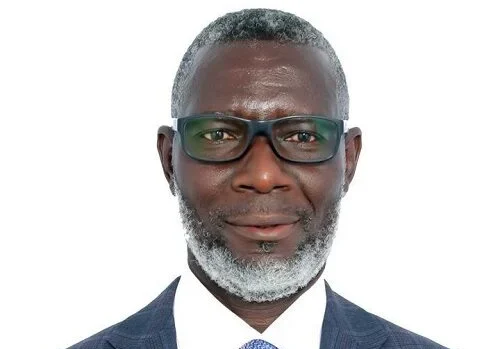
Justice Edward Amoako Asante, a Supreme Court nominee, has urged suspects detained beyond the constitutional 48-hour limit to seek redress through the courts.
He said court action would help enforce suspects' constitutional rights and deter the Police from keeping people in custody beyond the prescribed period.
Justice Asante gave the advice when he appeared before Parliament's Appointments Committee on Thursday for vetting as a nominee to the Supreme Court.
Responding to questions on the right to bail and the detention of suspects, he said the rights guaranteed under Chapter Five of the 1992 Constitution were justiciable and should be enforced through the courts.
“I have always had the notion why suspects have not sued the police for keeping them for times on end after the 48 hours,” he said.
Justice Asante said existing legislation, including the Criminal and Other Offences (Procedure) Act, 1960 (Act 30), provided an adequate legal framework for bail, making separate bail legislation unnecessary.
He said lawyers should use the existing legal provisions to challenge unlawful detention and seek appropriate remedies rather than introduce new legislation.
“If you take action and the court declares and fines and awards against those who have done so, then it will be fine,” he said, adding that such court decisions would serve as a deterrent and reinforce the principle that law enforcement authorities could not arbitrarily arrest and detain people.
On the use of Artificial Intelligence (AI) in the legal profession and the judiciary, Justice Asante said the technology could support lawyers and judges but could not replace human judgment.
He said AI could assist with legal research and information processing, but lawyers and judges had to critically assess and verify information generated by such systems before relying on it.
“It cannot replace lawyers or judges. The human thinking is unique,” he said.
Justice Asante cautioned lawyers against becoming overly dependent on AI, saying failure to independently assess AI-generated information could result in serious professional errors.
He said AI systems should ideally be tailored to specific institutions and trained with relevant laws and cases to improve their usefulness.
Justice Asante, a Court of Appeal Justice and immediate past President of the ECOWAS Court of Justice, has more than 33 years' experience in legal practice and the judiciary.
He was called to the Ghana Bar in 1991 and began his judicial career as a Circuit Court Judge in 2002. He later served as a High Court Judge before being elevated to the Court of Appeal in 2020.
Justice Asante served as President of the ECOWAS Court of Justice from 2018 to 2024 and was elected in 2025 to the Advisory Committee of the United Nations Human Rights Council.
President John Dramani Mahama nominated Justice Asante, together with Justice Sophia Rosetta Bernasko Essah and private legal practitioner Anthony Forson Jnr, for appointment to the Supreme Court.
GNA

 Justice Bernasko Essah explains why Supreme Court may depart from its previous d...
 Two NDC MPs whose ‘secret’ marriages have shocked Ghanaians
 All you need to know about Hon. Millicent Yeboah-Amankwa, wife of Hon. Mahama Ay...
 ‘A true trailblazer and cultural icon’ – Bawumia mourns Grace Nortey
 Vetting: 'Suspects should sue police if detained beyond 48 hours' - Supreme Cour...
 Speaker Bagbin outdoors uniforms for new parliamentary security guards
 Minority NPP boycotts vetting of three Supreme Court nominees over rushed timeta...
 Styrofoam ban is long overdue – Dr. Zanetor Agyeman-Rawlings
 Sustained credibility key to rebuilding Ghana’s debt market – BoG Governor
 MTN GH¢20m offer: 'Why did Ablakwa delay in announcing the rejection?' – Asafo A...

