




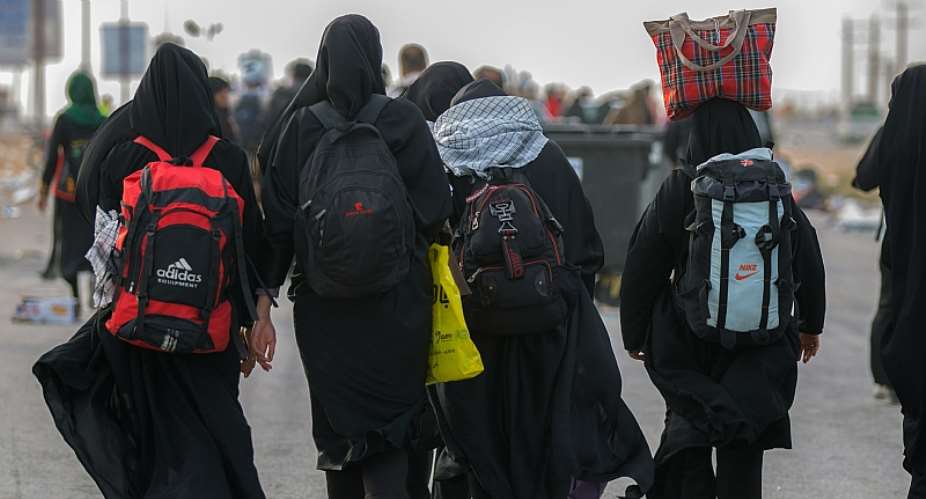
More than half of young Africans say they have considered emigrating—most in search of better work and economic opportunities—according to the latest Afrobarometer survey findings.
This reality was the focus of a #VoicesAfrica youth webinar co‑hosted Tuesday by Afrobarometer and the Nuru Trust Network to mark International Youth Day under the theme “Youth on the Move: Rethinking Migration and Opportunity in Africa.” The discussion brought together youth advocates, researchers, gender experts, and development practitioners to examine what young Africans’ migration aspirations reveal about employment, opportunity, governance, and the future they want to build.
Opening the dialogue, Mary Yvonne Ododah, Executive Director of the Nuru Trust Network, urged stakeholders to look beyond the question of whether young Africans are leaving and focus instead on what would make staying, moving, or returning a genuine choice.
“The bigger question is what would make staying a genuine choice?” Ododah said. “What would make moving a safe choice? And perhaps most importantly, what would make returning and contributing at home a very attractive choice?”
She noted that young people’s desire to emigrate is not a rejection of Africa but an affirmation of hope—as they seek jobs, education, business opportunities, and the chance to build a better future.
Afrobarometer findings presented by Kofi Otu Beecham, Monitoring, Evaluation, and Learning Officer, show that 55% of 18‑ to 35‑year‑olds across 38 African countries have thought “a little bit,” “somewhat,” or “a lot” about emigrating. Among potential emigrants, 52% cite better work opportunities as their main reason, while 18% wish to escape economic hardship.
The data also reveal that young people are not only looking outward: Job creation ranks as their top priority for government investment in youth, followed by education, skills training, and access to business loans.
A panel discussion explored the factors driving these aspirations and what governments, civil society, development partners, and regional institutions can do to expand opportunities for young Africans.
Participants highlighted weak employment prospects, skills gaps, limited access to finance, gender inequalities, low trust in institutions, and gaps in regional economic integration as key influences on young people’s choices. They cautioned against framing migration solely as a security concern for receiving countries, noting that unsafe migration routes expose youth to exploitation, trafficking, and recruitment by criminal and armed groups.
Speakers called for greater investment in Africa’s young population and more meaningful partnerships that respond to local priorities. They stressed that regional and continental frameworks must translate into tangible opportunities for the youth they are meant to serve.
The message emerging from the discussion was clear: Migration should be a choice, not an escape route. Creating the conditions for young Africans to thrive at home will require turning their aspirations into concrete opportunities.

 Bawumia eyes 3R's Japanese tech that removes mercury, cleans soil and recycles w...
 'Our borders must command respect' – Osahen Afenyo-Markin on cocaine busts
 ‘Govt deeply involved in Beirut cocaine bust’ — Kofi Bentil reveals
 Ablakwa sues Benghazi, Media General over Fantana affair, corruption allegations
 Mahama instructs Finance Ministry to pay striking JUSAG members from November
 Mahama must sign same anti-gay bill NDC backed in opposition – Osahen Afenyo-Mar...
 Romance Scam: Asante Akyem North MP's extradition hearing set for November 18
 JUSAG accuses FWSC CEO of taking unilateral decisions in salary negotiations
 Police arrest three Nigerians over alleged bank customer robberies in Kumasi
 'Next week I will show how the new economy will turn the gains we have made into...



Comments
The problem of youth unemplyment/employment in majority Sub-Sahara African (SSA) is centered around the century-old chicken-or-egg dilema question. The total number of people employed by private entities are less than the total number of people employed as public and civil servants in majority of SSA nations. It is also an undisputed fact that wages, salaries and benefit packages for middle-to-lower level public and civil service employees are lower than those who work for private companies. ...