




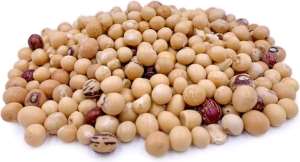
For decades, African agriculture has concentrated heavily on maize, rice, soybean and other major staples while paying far less attention to an indigenous crop remarkably suited to the continent’s climate and soils.
That crop is the Bambara groundnut, scientifically known as Vigna subterranea. In Ghana, it is widely known as aboboi, while different communities across Africa have their own names and traditional uses for it.
Bambara groundnut has been cultivated and consumed across sub-Saharan Africa for generations. Yet despite its nutritional value and ability to withstand difficult growing conditions, it remains one of the continent’s neglected and underutilised crops. That neglect deserves urgent reconsideration.
At a time when climate change is disrupting rainfall patterns, increasing temperatures and placing pressure on agricultural production, Africa needs crops capable of producing food under difficult conditions. Bambara groundnut offers precisely that advantage.
It is relatively drought-tolerant and can perform under low-input conditions and on soils where some conventional crops struggle. This makes it particularly relevant to farmers in Ghana's northern regions and other semi-arid parts of Africa, where rainfall is increasingly unpredictable.
Its value extends beyond climate resilience. Bambara groundnut is nutritionally rich, generally containing about 18 to 24 percent protein, alongside substantial carbohydrates, dietary fibre and important minerals. Its combination of protein and energy makes it particularly useful in developing affordable and nutritious foods.
Instead of depending excessively on imported ingredients for fortified foods, breakfast products and complementary foods, Ghana and other African countries could invest in developing Bambara-based alternatives.
Like other legumes, Bambara groundnut can form a symbiotic relationship with soil bacteria that allows it to fix atmospheric nitrogen. When properly incorporated into crop rotations, this can contribute to soil fertility and reduce dependence on expensive nitrogen fertilisers. For smallholder farmers facing rising production costs, that is a significant advantage.
Perhaps the greatest opportunity lies in value addition. Africa should not simply produce more Bambara groundnuts and sell them in their raw form. The crop can be processed into flour, snacks, beverages, bakery products, porridge and complementary foods. Further research and product development could create many more commercial applications.
In Ghana, aboboi is already familiar to consumers. The challenge is to move it beyond largely traditional consumption into modern food processing and retail markets.
Imagine locally produced Bambara flour packaged for supermarkets. Imagine Bambara incorporated into biscuits, breakfast cereals, school meals, instant porridge and nutritious snacks. Imagine small processing factories located close to producing communities, buying directly from farmers and creating employment for young people and women.
That is where the real economic opportunity lies.
The limited commercial development of Bambara groundnut reflects a wider problem in African agriculture. Many indigenous crops have historically received less research investment, extension support, mechanisation and private-sector attention than major commodity crops.
Consequently, farmers may face challenges such as inconsistent seed quality, relatively low yields, limited mechanisation, processing difficulties and poorly organised markets. These constraints discourage large-scale production even when the crop itself has considerable potential.
Ghana should strengthen research into improved Bambara varieties through institutions such as the Council for Scientific and Industrial Research and agricultural universities. Research should focus not only on higher yields but also on shorter cooking times, disease resistance, climate resilience, mechanised harvesting and characteristics suitable for industrial processing.
Government agricultural programmes should also give greater recognition to indigenous legumes. Farmers need access to quality seed, extension services, appropriate machinery, storage facilities and reliable markets.
Public food programmes provide another opportunity. Bambara-based products could be scientifically evaluated for inclusion in initiatives such as school feeding where they meet nutritional, food safety, cost and procurement requirements. Such an approach could simultaneously improve nutrition and create dependable markets for local farmers.
The private sector also has an important role. Small and medium-sized processors could transform Bambara groundnut into branded consumer products rather than selling it only as an unprocessed commodity. Universities, food scientists and manufacturers should collaborate on product formulation, packaging, shelf-life studies and commercialisation.
The future of African agriculture cannot simply be about producing more tonnes of raw crops. It must be about transforming agricultural production into food industries, jobs and higher-value products. Bambara groundnut fits perfectly into that vision.
As the world searches for resilient and climate-smart food crops, Africa should not overlook the agricultural resources it already possesses.
For too long, Bambara groundnut has sometimes been associated with subsistence farming or regarded as a poor man's crop. That perception must change.
Bambara groundnut is not a poor man's crop. It is a strategic African crop whose characteristics are increasingly relevant to the challenges of the 21st century.
Africa's future food security will not necessarily come from copying agricultural systems developed elsewhere. Part of the answer may already be growing quietly in African soil.
The task now is to invest in it, improve it, process it, brand it and build industries around it.
The wonder crop has been with us all along. It is time to bring Bambara groundnut from the margins to the centre of Africa's food future.


 GoldBod’s gains must be weighed against full cost to Ghana – Prof. Bokpin
 ‘Afenyo-Markin’s smear campaign against me is about extortion’ – Sammy Gyamfi
 August 22: Cedi sells at GHS12.30 on forex market, GHS11.13 on BoG interbank
 There is a deliberate smear campaign against GoldBod from Minority – Sammy Gyamf...
 ‘If GoldBod wants credit, it must accept blame for losses’ – Dr Owusu Sarkodie
 Akosombo control system to be restored next month – Energy Minister
 ‘Temporary Akosombo system not very robust’ – Energy Minister on recent power ou...
 Mike Ocquaye Jr reacts to Adwoa Safo’s reported return to NPP Dome-Kwabenya race
 Foreign Affairs Ministry urges Tijjaniya pilgrims to Senegal to travel by air ov...
 Bono Police Arrest 36‑Year‑Old in GH¢1.1M Fake Gold Deal; Hunt for Three Others ...

