




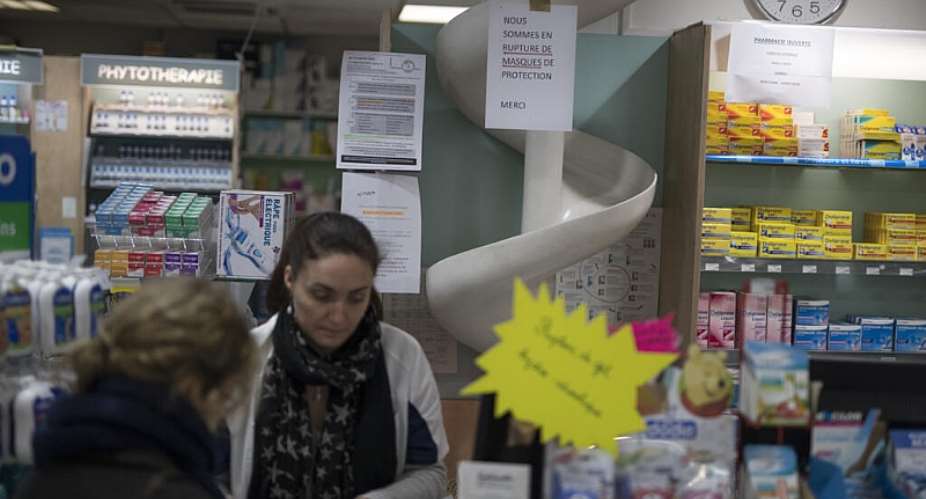
The charges, known in France as franchises médicales, apply to medicines, paramedical care, medical transport and consultations. The government announced the planned increase in July as part of efforts to curb rising health spending.
“We are now working on a fair reform, based on indexation to inflation since 2005,” Health Minister Stéphanie Rist told Le Figaro on Thursday. “The increase will therefore be significantly lower than initially planned.”
The cap has stood at €100 since 2005 and has never been adjusted. Rist said that compared with the rising cost of living, its value had effectively fallen.
Millions in France report eco-anxiety after summer of heatwaves and wildfires
Pressure from patients
The original proposal faced opposition from France Assos Santé, the country's main patient federation, as well as MG France, a doctors' union, and Convergence Infirmière, a nurses' union.
France Assos Santé called the plan “a monumental mistake”, saying it would make vulnerable people and those with multiple health conditions feel guilty for needing significant amounts of care.
Rist admitted the proposal had been difficult to understand.
“The doubling that was announced was not understood and could have appeared brutal,” she told the rightwing daily.
“We have decided to change our proposal. Associations, health professionals and patients told us that immediately doubling the cap in one go seemed excessive. We heard them.”
A full doubling would have cost less than two euros a month on average across the French population and four euros a month for patients with long-term illnesses, Rist said, but acknowledged that a change based on the cost of living was “fairer and easier to understand”.
The French news agency AFP said the Health Ministry did not specify how large the new rise would be.
Obesity rises sharply as French Polynesia faces chronic health challenges
The bigger savings picture
The revised plan comes as the government looks for savings ahead of the 2027 state and social security budgets. France's social security deficit exceeded €21 billion in 2025.
The 2026 social security budget provides for health spending to increase by 3.1 percent, or €8.2 billion.
Four decrees due to be published by the end of this week will also change reimbursement for certain medicines and medical devices whose effectiveness is judged lower by the National Authority for Health.
The most effective medicines, including innovative treatments, will continue to be covered as they are now.
People with long-term illnesses will not be affected when the medicines concerned are used to treat their condition, covering 14 million people. Those receiving France's subsidised complementary health cover will also be protected, Rist said.
France is also facing rising healthcare costs as its population ages and more people live with chronic illnesses, while innovative treatments can be highly effective but expensive.
“Fair and relevant savings” were needed to guarantee access to the best care, Rist said.
(with newswires)


 62 Ghanaians Dead, 15 Missing: Ablakwa Sounds Alarm Over Illegal Recruitment Int...
 GUTA Warns: Ghana May Miss China Zero‑Tariff Windfall Without Urgent Support for...
 Ghana’s ‘Boom Without Backbone’: New Study Says a Decade of High Growth Masked a...
 “The Warnings Were There — We Missed Them”: Ex‑BoG Deputy Gov Says Ghana’s Debt ...
 Oppong Nkrumah Mulls Supreme Court Review After Injunction Blow: “Ruling Admits ...
 Agbodza Targets ‘Inflated Compensation Cartel’; EOCO Probe Looms for Two Surveyo...
 Ghana Secures €163m Debt Deal With Belgium, Edging Closer to Full Restructuring ...
 'I did not communicate my intended position well' — Nii Lante Vanderpuye apologi...
 UN holds second informal straw poll for next leader
 GoldBod cannot escape scrutiny over $1.7bn DGPP loss — Kofi Tonto

