




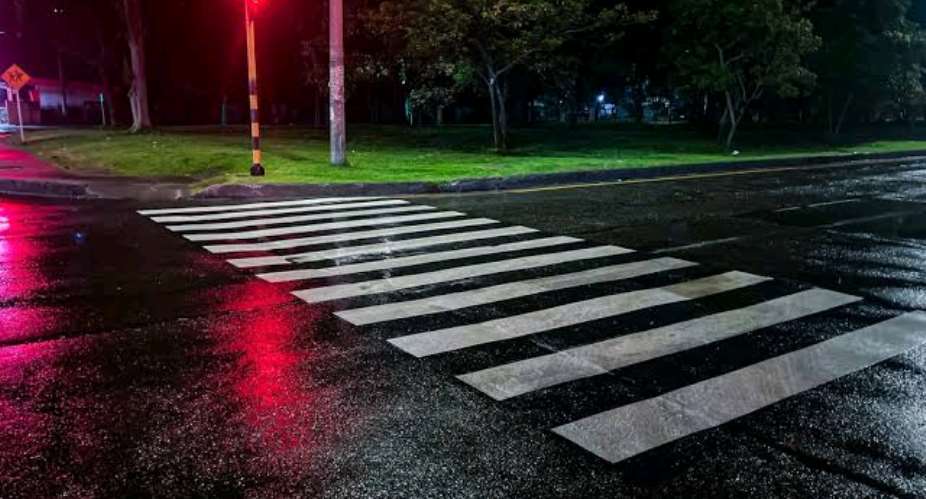
Poor lighting, faded road markings and inadequate warning signs on some roads are increasingly putting motorists and pedestrians at risk, particularly after sunset.
On poorly illuminated stretches, drivers are often forced to navigate potholes, sharp bends, pedestrians, broken-down vehicles and other hazards with limited visibility. The danger becomes even greater where vegetation has overgrown road shoulders and obscured junctions or traffic signs.
Commercial drivers and residents who regularly use such roads say travelling at night has become increasingly dangerous.
“At night, you can hardly see what is ahead. If a vehicle breaks down or somebody suddenly crosses the road, you may not have enough time to react,” one commercial driver said.
Motorcyclists, cyclists and pedestrians are particularly vulnerable because they may be difficult for approaching motorists to see, especially when they are not wearing reflective clothing.
The problem goes beyond the absence of streetlights. On many roads, lane markings and pedestrian crossings have faded to the point where they are barely visible at night. Reflective warning signs are either inadequate or absent, while bushes along some shoulders restrict drivers’ view of curves, intersections and pedestrians.
Poor visibility significantly reduces the time available for motorists to identify hazards and respond safely. When excessive speed, defective headlights, fatigue or reckless overtaking are added to the situation, the likelihood of a serious crash increases.
The condition of these roads therefore requires urgent attention from the relevant road agencies and local authorities.
Installing and maintaining streetlights on critical stretches should be a priority. Authorities must also regularly repaint lane markings and pedestrian crossings, clear vegetation along road shoulders and install reflective signs at bends, junctions, schools, markets and other high-risk locations.
Where appropriate, properly designed traffic-calming measures should also be considered to reduce speeding, particularly in communities with heavy pedestrian activity.
The economic consequences of road crashes should not be overlooked. Beyond deaths and injuries, affected families may face substantial medical expenses, loss of income and vehicle repair costs. Businesses and transport operators also suffer when dangerous roads make travelling at night more difficult and expensive.
Road safety is not simply the responsibility of motorists. Authorities responsible for designing, maintaining and managing roads also have an obligation to provide infrastructure that allows people to travel as safely as reasonably possible.
Drivers, for their part, must adjust their speed to visibility conditions, ensure their headlights are functioning properly and avoid dangerous overtaking when travelling on poorly illuminated roads.
A functioning streetlight, visible road marking or reflective warning sign may appear to be a small intervention, but on a dark road it can make the difference between detecting danger in time and a preventable tragedy.
The question should therefore not be how many more accidents must occur before action is taken. The priority must be to identify dangerous stretches early and fix them before more lives are lost.

 'I did not communicate my intended position well' — Nii Lante Vanderpuye apologi...
 Ex-Pakistan PM Imran Khan returned to jail after hospital checks
 UN holds second informal straw poll for next leader
 We are working to restore normal tax payment processing on Ghana.gov — GRA assur...
 GoldBod cannot escape scrutiny over $1.7bn DGPP loss — Kofi Tonto
 Education Ministry orders reinstatement of BOGISS student after alleged sexual a...
 Stop recording intimate moments — Malik Basintale advises Ghanaian youth
 France, Germany, UK and Italy slam Israel's 'E1' West Bank settler project

