




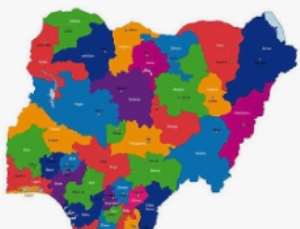
Thirty-one Nigerian states spent a combined N252 billion roughly $186.7 million at current exchange rates on security in the first six months of the year, even as killings, kidnappings, and banditry continued to plague large parts of the country, according to figures reported by The Punch. The scale of the spending, and the wide disparity in how committed individual states are to tackling insecurity, has renewed scrutiny of Nigeria's opaque "security vote" system.
The dollar picture
At the official Nigerian Foreign Exchange Market (NFEM) rate of roughly ₦1,350 to the dollar the naira's strongest level since April 2026 the N252 billion collectively spent by the 31 states converts to approximately $186.7million over the six-month period. At the parallel market rate, where the dollar was trading closer to ₦1,420 in mid-August, the same sum would be worth closer to $177.5 million, underscoring how currency volatility itself complicates any state's ability to plan long-term security procurement, much of which depends on imported equipment priced in dollars.
A sharp jump in spending, unevenly distributed
The overall figure masks significant disparities between states. Twenty-two of the 31 states saw their security bills jump by as much as 90 percent as governments moved to confront worsening insecurity, according to the report. At the other end of the spectrum, Kogi, Plateau, and Bauchi states spent only 32 percent of their allocated security budgets over the same six-month period, raising questions about why some of the state’s most affected by violence are also among the slowest to disburse the funds meant to address it.
The spending reportedly covered security equipment, personnel costs, and the discretionary "security votes" available to state governors, with experts cited in the report calling for greater deployment of technology in the fight against insecurity rather than simply increasing cash outlays.
A pattern of high spending without matching results
The N252 billion figures fits a broader pattern civil society groups have been documenting throughout 2026. A BudgIT-backed tracking platform, Open States, found that Nigerian governors collectively spent N525 billion on security over a longer reporting period, prompting analysts to warn that "money is moving, but protection is not," and to call for state Ministries of Finance to disclose payments and beneficiaries rather than treating security votes as an unaccountable slush fund.
That concern has moved from advocacy into the courts. In January 2026, the Socio-Economic Rights and Accountability Project (SERAP) sued the governors of Nigeria's 36 states and the Minister of the Federal Capital Territory, Nyesom Wike, over their failure to account for the spending of security votes since May 2023, despite more than N400 billion being budgeted annually for the purpose nationwide. SERAP's suit specifically cited the well-documented gap between rising security allocations and continued mass-casualty violence, including the Benue massacre, arguing that Nigerians have a constitutional right to know how public funds meant to protect their lives and property are actually spent.
Former Anambra State Governor Peter Obi has been among the most prominent critics of the security vote system itself, describing it as unconstitutional and "the biggest source of waste" in Nigerian governance, noting that the term does not appear in the Constitution at all what exists in law is a contingency fund that has, in his words, "become our biggest source of waste".
Why the disparity matters
The 90 percent spending jump recorded by 22 states suggests many state governments are treating rising insecurity as an urgent, escalating cost. But the fact that Kogi, Plateau, and Bauchi states that have each experienced significant violence in 2025 and 2026, from banditry and kidnapping in Kogi to militia attacks in Plateau spent only about a third of their allocated security budgets in the same window points to a deeper problem than funding levels alone. Whether the shortfall reflects bureaucratic bottlenecks, procurement delays, or a lack of political will, the pattern reinforces the argument long made by transparency advocates: without independent audits and public disclosure of how security votes are actually spent, higher budget figures alone tell Nigerians very little about whether they are safer.
Mustapha Bature Sallama.
Medical/ Science Communicator,
Private Investigator, Criminal investigation and Intelligence Analysis.
International Conflict Management and Peace Building.USIP
[email protected]
+233-555-275-880
References
Development Diaries, "Governors Spent N525billion on Security, Yet Nigerians Are Not Safer. This is a Growing Crisis Citizens Should Confront," January 14, 2026. https://developmentdiaries.com/governors-spent-n525billion-on-security-yet-nigerians-are-not-safer-this-is-a-growing-crisis-citizens-should-confront/
AllAfrica, "Nigeria: Serap Sues Govs, Wike Over Security Votes Spending," January 19, 2026. https://allafrica.com/stories/202601200580.html
Vanguard News, "Dollar to Naira exchange rate today, August 18, 2026." https://www.vanguardngr.com/2026/08/dollar-to-naira-exchange-rate-today-august-18-2026/
NairaToday, "Naira Exchange Rate Today 17 August 2026." https://nairatoday.com/
Pressreader/ThisDay, "Insecurity Vote." https://www.pressreader.com/nigeria/thisday/20170504/281779924030721

 NPP will rise again under my leadership — Boakye Agyarko
 NPP lost 2024 election due to misgovernance, not disunity — Kwame Anthony
 'Tons' of nuclear materials found at undisclosed Syrian site, IAEA chief says
 NPP will reinstate Gertrude Torkornoo as Chief Justice when we come back to powe...
 Two BOGISS watchmen accused of sexually abusing 14-year-old student as family de...
 Gabriel Agambila blasts Upper East Airport critics, says opposition reflects ‘st...
 ‘I don’t think we need a shoot-to-kill approach to solve galamsey’ — Sukparu
 GoldBod has plugged $5bn gold revenue leakage — Dr Steve Manteaw
 Bawumia can only be president of old students’ association, not Ghana — Solomon ...
 GES denies releasing 2026 SHS prospectus

