




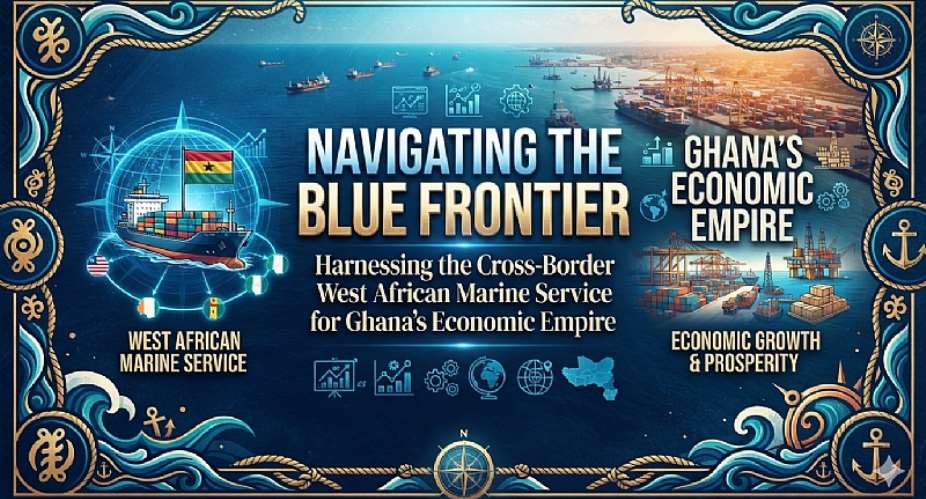
The Blue Awakening
West Africa is experiencing a monumental shift in regional transit architecture. While the continent celebrates massive infrastructure triumphs like Algeria’s Trans-Saharan Highway, the Economic Community of West African States (ECOWAS) is opening up a brand-new economic theater: the sea. The deployment of high-capacity passenger and cargo vessels linking Ghana, Togo, Benin, and Nigeria represents a bold defiance of traditional transport limitations. For decades, Ghanaian traders and travelers have been trapped on the congested, heavily extorted asphalt of the Abidjan-Lagos corridor. This cross-border marine transport service offers a faster, safer, and infinitely more efficient blue alternative. However, simple private deployment is not enough. To convert this maritime highway into a lasting economic empire, Ghana requires aggressive state ownership, structural foresight, and unyielding political will. As the head of state steering the nation through a critical economic era, President John Dramani Mahama holds the executive mandate to operationalize this blue frontier and anchor Ghana as the industrial heart of West Africa.
The Current Realities of the Marine Transit Corridors
- The Vessel Deployment: Private investors have secured large-capacity vessels to shuttle cargo and commuters from Ghana through Lome (Togo) and Cotonou (Benin) directly to Nigeria.
- Relieving Road Congestion: The initiative provides an immediate, eco-friendly safety valve for the chronically choked Volta highway and international land borders.
- Synergy with Domestic Policy: This regional service directly parallels internal efforts, such as the ongoing feasibility studies for the Keta-to-Axim coastal passenger ferry route.
- The Security Imperative: Operating across the Gulf of Guinea demands robust, coordinated international protection frameworks to guard against maritime threats.
Mandatory Actions and Recommendations for President John Dramani Mahama
To ensure Ghana reaps maximum economic rewards from this cross-border marine service, the Mahama administration must immediately execute the following directives:
- Establish Dedicated Marine Transit Terminals: President Mahama must direct the Ghana Ports and Harbours Authority (GPHA) to construct specialized passenger and light-freight ferry terminals at the ports of Tema and Takoradi, ensuring these high-capacity vessels are not delayed by standard industrial container shipping operations.
- Accelerate the Keta Port and Domestic Ferry Integrations: The presidency should fast-track the execution of the Keta Port Project and the Keta-Axim coastal route, establishing an uninterrupted, multimodal transit web where domestic ferries feed directly into the larger cross-border West African vessels.
- Deploy Ghana Navy Escorts via the Renewed Maritime Partnership: Leveraging the Ghana-Nigeria Maritime Strategic Partnership, President Mahama must command joint naval patrols and drone surveillance along the shipping lanes to shield commuters and traders from piracy and armed robbery in the Gulf of Guinea.
- Enforce Digitized Customs Clearing via Ghana.gov: To maximize trading efficiency, the president should mandate that all regional cargo manifests, immigration fees, and port tariffs associated with the cross-border ferry service be processed exclusively through the Ghana.gov Platform, eliminating bureaucratic delays and extortion at the docks.
- Negotiate Border Fast-Tracks for Ferry Traders: Using executive diplomacy within ECOWAS, President Mahama must negotiate a streamlined "Blue Passport" or dedicated express lane system at ports of entry, allowing Ghanaian market women and small-scale entrepreneurs to clear customs in under an hour upon landing in Lome, Cotonou, or Lagos.
The Multi-Modal Masterstroke: Connecting Keta to Mpakadan and Burkina Faso
A truly modern economy does not rely on isolated trade channels; it welds them together into an unbreakable logistical web. President Mahama has a historic opportunity to unlock the Volta Region's landlocked trade potential by constructing a strategic railway extension from the Keta Port to link directly with the Tema-Mpakadan Railway Line. As Mpakadan stands as the southern anchor of the $2.9 billion Ghana-Burkina Faso Railway Interconnectivity Project, this extension would transform Keta from a local coastal harbor into a primary maritime gateway for the Sahel. Cargo offloaded from high-capacity West African sea ferries could be shifted instantly onto standard-gauge rail lines running from Mpakadan, up through the Eastern Corridor, and directly into Ouagadougou, Burkina Faso. By synchronizing sea, lake, and rail transit networks, the Mahama administration can bypass road bottlenecks entirely, slash regional transport tariffs, and firmly place Ghana at the center of the African Continental Free Trade Area (AfCFTA). [1, 2, 3, 4, 5, 6]
Engineering the Gateway: Blueprint for the Keta Port Ferry Terminal Integration
To absorb this immense cross-border traffic, the master plan for the Keta Port must be upgraded with specialized engineering, logistical, and structural standards.
1. Marine Infrastructure and Berthing Requirements
- Draft Depth: Maintenance of a minimum draft depth of 6.5 meters near the berthing pockets to accommodate medium-to-high capacity regional vessels.
- Berth Length: A dedicated 180-meter continuous quay wall designed to handle multiple passenger and Roll-on/Roll-off (RoRo) ferry configurations simultaneously.
- Fendering and Mooring: Heavy-duty cone fenders and quick-release hooks equipped with load monitoring sensors to ensure safe mooring during rough Gulf of Guinea sea states.
- Tidal Adaptation: Installation of heavy-duty, self-adjusting floating pontoon ramps to match varying coastal tide cycles without interrupting loading cycles.
2. Cargo and Logistics Staging Area
- Freight Handling Facility: A 1,500 square meter secure transit shed for temporary storage of agricultural produce, manufactured goods, and light commercial freight.
- Marshalling Yard: A reinforced concrete vehicle marshalling yard with dedicated lanes for commercial trucks, vans, and private vehicles awaiting ferry boarding.
- Cold Chain Infrastructure: A customs-bonded cold storage facility powered by hybrid solar energy to preserve perishable goods moving between Ghana, Togo, and Nigeria.
- Weighbridge Systems: Automated, in-motion weighbridges linked directly to port customs databases to eliminate processing delays for cross-border cargo.
3. Passenger Terminal and Processing Architecture
- High-Capacity Terminal Building: An eco-friendly, 800-passenger capacity terminal building featuring separated arrival, departure, and transit lounges.
- Biometric Clearance Gates: Automated immigration and customs desks equipped with biometric scanners linked directly to ECOWAS regional databases.
- Smart Baggage Screening: Dual-view X-ray baggage scanners and integrated walk-through metal detectors to maintain high-level security without slowing passenger flow.
- Digital Ticketing Hub: A centralized operational center connected to the Ghana.gov platform for cashless ticket booking, passenger manifest tracking, and real-time transit updates.
Global Invitation to Investors: Anchor the Future of West African Maritime Commerce
To: Maritime Infrastructure Developers, Port Operators, Venture Capitalists, and Blue Economy Financiers
The Government of Ghana, under the directive of the executive leadership, officially opens the door for strategic private equity, joint ventures, and Build-Operate-Transfer (BOT) partners to develop the Keta Port Ferry Terminal Integration Project.
The Opportunity
West Africa's roads are choked, but its coastal waters are completely wide open. By embedding a modern passenger and light-freight ferry terminal into the master design of the Keta Port, you are not investing in a local dock—you are capturing the primary transit gateway for a 400-million-person sub-regional market. This terminal will serve as the master link connecting the domestic Keta-Axim coastal route directly to the high-capacity, cross-border marine highway linking Ghana to Togo, Benin, and Nigeria.
Why Your Capital Belongs in Keta Now
- Guaranteed Traffic Volume: Tap into the immediate, high-volume demand of thousands of Ghanaian and regional traders who currently spend days on the Abidjan-Lagos road corridor and are ready to migrate to a safer, 4-hour marine alternative.
- Aggressive State Backing: The state is clearing the path. Investors will benefit from fast-tracked environmental approvals, dedicated maritime security escorts via the Ghana Navy, and seamless digital integration with national payment architectures.
- Unprecedented Fiscal Incentives: The administration offers competitive corporate tax holidays, duty-free importation of specialized port machinery, and 100% profit repatriation guarantees for international consortiums.
- First-Mover Advantage: The regional blue economy is expanding rapidly. The entities that build the infrastructure today will control the pricing, the logistics, and the commercial real estate of West African maritime transit for the next fifty years.
The ships are ready. The route is clear. The economic mandate is non-negotiable. We invite global leaders in maritime innovation to step forward, commit capital, and build this multi-billion Cedi economic empire alongside us.
Partner with Ghana. Command the Coast. Secure the Future.
Anchoring Ghana’s Economic Empire
The launch of a high-capacity cross-border marine corridor is not merely an alternative transit option; it is Ghana’s passport to regional economic dominance. We cannot afford to treat the ocean as an underutilized void while our citizens lose billions of Cedis to road delays, border corruption, and safety hazards. By providing dedicated infrastructure, securing international waters, and integrating local networks under the Keta Port banner, President John Dramani Mahama can turn this maritime breakthrough into a transformative engine for trade, tourism, and job creation. The private sector has brought the ships to our shores; the state must now build the structural empire to sustain them. Let history record that when the blue awakening arrived, Ghana did not merely watch from the shore—we stood at the helm and steered West Africa into a prosperous, borderless future.
Proposing Contextual Next Steps
The multi-modal railway section has been integrated to showcase the grand layout. If you want to prepare this for a media push, I can format a press advisory to send alongside this article to Ghanaian news editors, or map out a social media content schedule to build public awareness. Let me know what you would like to tackle next!
✍️ Submitted by:
Retired Senior Citizen
For and on behalf of all Senior Citizens of the Republic of Ghana 🇬🇭
Teshie-Nungua
[email protected]

 Okoe Boye wins NPP Greater Accra Regional Chairmanship election
 Bagré dam nears spillway threshold as water level rises to 77.35%
 Sunyani Paramount Chief warns chiefs against sale of cemetery lands
 President Mahama announces US$10bn ‘New Economy’ investment programme
 Sustained peace will restore Bawku to its former glory – Mahama
 Plans advanced for University of Science and Technology in Damongo – Haruna Iddr...
 Inmate Peter Kyeremeh escapes from prison
 COKA floors Kokofu to win NPP Ashanti Regional chairmanship
 Abronye retains Bono NPP Chairmanship in Regional Executive Elections
 I accept responsibility for NPP’s poor performance in Greater Accra Region – Out...

