




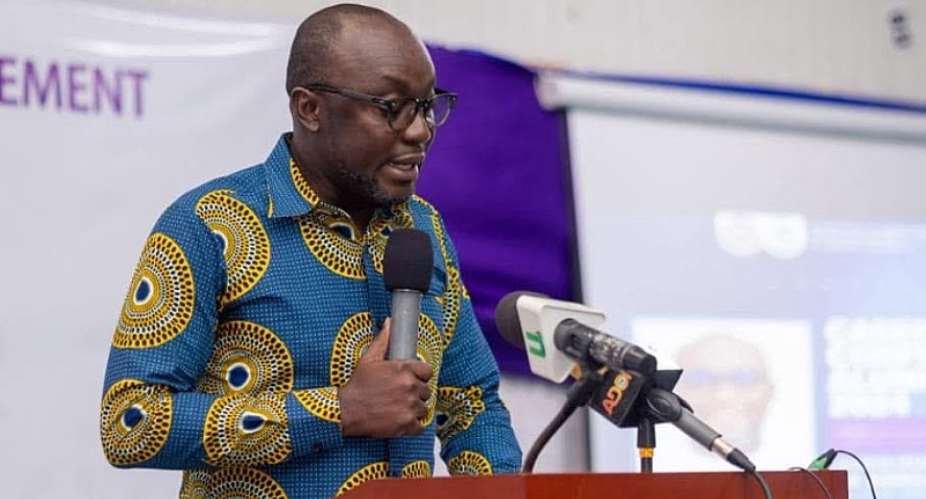
Ghana cannot afford to treat the controversy surrounding the Ghana Scholarship Secretariat as merely another political quarrel.
At the heart of this matter is taxpayers’ money, the future of Ghanaian students and the credibility of a public institution established to expand educational opportunity.
The question is no longer whether Dr. Kingsley Agyemang, former Registrar of the Ghana Scholarship Secretariat and Member of Parliament for Abuakwa South, was the subject of an investigation.
He was.
On May 5, 2026, reports emerged that the National Intelligence Bureau (NIB), now Bureau of National Investigation (BNI), was probing allegations concerning scholarship administration during Dr. Agyemang’s tenure. The reports initially generated controversy after some publications and social-media posts described him as having been arrested.
Dr. Agyemang rejected the arrest narrative. He said he had not been arrested or held in lawful detention. However, subsequent reporting established the more important distinction: he had been invited by the security agency, honoured the invitation and engaged with investigators.
That distinction should be respected.
An invitation is not an arrest. Questioning is not conviction. Investigation is not proof of guilt.
But neither should the distinction be abused to obscure the fact that a state investigation into alleged wrongdoing did take place.
Indeed, the latest development makes that point even clearer.
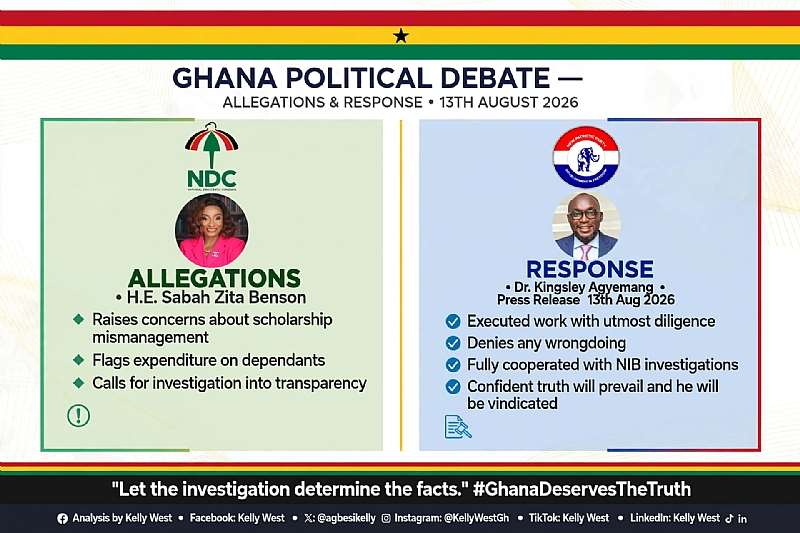
On August 13, 2026, Dr. Agyemang’s lawyers issued a statement acknowledging that investigations into allegations of corruption surrounding scholarship awards had already been initiated by state security and investigative agencies. They said their client had made himself available to the agencies and had “fully cooperated” with investigators. They further stated that Dr. Agyemang believes the investigations will ultimately clear his name.
This is significant.
The public is therefore entitled to move beyond the misleading debate over whether Dr. Agyemang was “arrested” and concentrate on the substantive question: what exactly are investigators examining, and what have they found so far?
The investigation reportedly followed concerns over the administration of scholarships during the previous administration, including allegations of irregular or opaque awards. As far back as April 2024, investigative reporting had raised concerns about scholarships allegedly going to persons with political connections, prompting calls for an audit and investigation of the Secretariat.
Those concerns did not suddenly appear on May 5, 2026.
They have formed part of a wider debate about how public scholarships were awarded, who benefited and whether the system sufficiently protected the public purse.
This is precisely why the intervention of Ghana’s High Commissioner to the United Kingdom and Ireland, Sabah Zita Benson, cannot simply be dismissed as political rhetoric.
Benson has repeatedly raised concerns about the management of scholarship funds under the previous administration. In her latest public intervention, she questioned expenditure on dependants accompanying scholarship beneficiaries and argued that excessive spending contributed to the financial pressures now confronting Ghana’s scholarship programme. Reports put the accumulated UK scholarship liabilities at tens of millions of pounds, although the precise figure has varied across reports, ranging from 35 to 37 millions in pounds.
Her central question is one that Ghanaian taxpayers have every right to ask:
What happened to the money that the State invested in these students?
Benson’s position is that there was wrongdoing and mismanagement at the Scholarship Secretariat that contributed to the present crisis. She has pointed specifically to cases where spouses and children of scholarship beneficiaries allegedly received substantial financial support, arguing that such expenditure deserves scrutiny.
Her position, however, remains an allegation until investigators establish the facts.
And this is where the state must now demonstrate seriousness.
If BNI, EOCO or any other competent investigative institution is examining the operations of the Scholarship Secretariat, Ghanaians should not have to rely indefinitely on competing political narratives to understand what happened.
The investigation must establish whether scholarship awards complied with the applicable rules; whether beneficiaries were properly qualified; whether politically connected individuals received preferential treatment; whether public funds were improperly disbursed; whether expenditure on dependants was authorised and justified; and whether any public official or beneficiary personally benefited improperly.
These are factual questions.
They should be answered by documentary evidence, financial records, scholarship databases, audit trails, procurement records, correspondence and witness testimony—not by political speeches.
There is also a broader institutional question.
If irregularities occurred at the Scholarship Secretariat, responsibility cannot automatically be reduced to one individual. A public institution operates through systems, committees, authorisations and financial controls. Investigators must therefore examine the entire decision-making architecture rather than simply looking for a convenient political scapegoat.
But accountability must also be individual where evidence establishes individual responsibility.
Dr. Agyemang’s latest position is clear: he denies wrongdoing, says he performed his duties with “utmost diligence” and believes the ongoing investigations will vindicate him. His lawyers have also criticised the High Commissioner’s public comments while investigations remain pending.
He is entitled to that defence.
He is equally entitled to the presumption of innocence.
But the Ghanaian taxpayer is entitled to something else: the truth.
And that truth should not depend on whether the person under investigation belongs to the governing party or the opposition.
The scholarship controversy is particularly serious because its consequences extend beyond politics.
Ghanaian students abroad have faced delayed tuition and stipend payments, while the State continues to confront substantial scholarship liabilities. At the same time, allegations of excessive or questionable awards raise legitimate concerns about whether scarce educational resources were allocated in accordance with fairness, merit and public-interest principles.
The students who legitimately received scholarships must not become victims of an institutional failure for which they are not responsible.
Nor should legitimate scholarship beneficiaries be used as a shield against scrutiny of the system that awarded those scholarships.
The answer is not to attack the students.
The answer is to investigate the system.
The latest position from Dr. Agyemang’s lawyers should therefore be welcomed for one reason: it confirms that the investigation is real and ongoing.
That is exactly what citizens should have wanted from the beginning.
Zita Benson’s insistence that there was wrongdoing should now be tested against the evidence. Dr. Agyemang’s insistence that he did nothing wrong should likewise be tested against the evidence.
Neither political accusation nor political defence should determine the outcome.
Only the facts should.
The investigation should therefore be expedited, conducted independently and concluded transparently. If no wrongdoing is established, Dr. Agyemang should be cleared without ambiguity. If wrongdoing is established, those responsible must face the appropriate legal and administrative consequences.
Ghana cannot have one standard for political opponents and another for political allies.
The Scholarship Secretariat controversy is ultimately bigger than Kingsley Agyemang, Zita Benson, the NPP or the NDC.
It is about whether public money intended to educate Ghanaian citizens was properly managed.
It is about whether deserving students received opportunities fairly.
It is about whether public officials understand that stewardship of taxpayer resources carries a duty of accountability.
And it is about whether Ghana’s investigative institutions can finally answer difficult questions without fear or favour.
The public does not need another political shouting match.
Ghanaians need the investigation completed, the evidence disclosed where legally permissible, the findings explained and accountability enforced.
If Dr. Agyemang is innocent, let the investigation vindicate him.
If the allegations against the Scholarship Secretariat are substantiated, let those responsible answer for them.
But Ghana cannot afford to allow a matter involving public money to remain permanently trapped between allegation and counter-allegation.
The Scholarship Secretariat must answer. The investigators must answer. And ultimately, the evidence must answer the question of whether wrongdoing occurred.
Either way, Ghana deserves the truth.
Does Ghana deserves the truth?
#GhanaFirst #KW
Michael Agbesi Kelly


 Ghana’s economy grows 5.1% aas services drive expansion while agriculture slows
 Ato Forson officially hands over Defence Ministry to Kenneth Gilbert Adjei
 COKA’s win will restore love for NPP in Ashanti Region—Keskine Owusu Poku
 Gov't finalises 20% allowance for teachers in deprived areas
 Cocoa marketers urge Mahama to sign COCOBOD Bill without delay
 Police arrest Nigerian, kill two suspects in foiled Labone bank robbery
 Energy Minister gives encroachers under power pylons one month to vacate
 OSP must take charge of probe into Berko bribery scandal; we can't trust AG — NP...
 Broken-down ‘aboboyaa’ may have caused deadly Ofankor crash – NRSA
 IFS flags GH¢712.43m discrepancy in 2026 Mid-Year Budget revenue figures

