




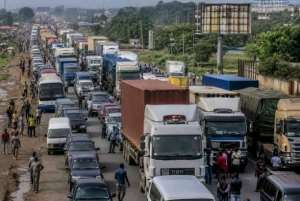
The Accra–Kumasi Highway is more than a road. It is one of Ghana’s most important economic and social arteries, carrying thousands of passengers and tonnes of goods between the national capital, the Ashanti Region and communities farther north every day.
Families, traders, students, health workers, tourists, commercial drivers and business executives all depend on the corridor. Yet for many travellers, what should be a routine journey has increasingly become an exhausting test of patience and, at times, a frightening encounter with danger.
Under favourable conditions, the journey between Accra and Kumasi can be completed in about four to five hours. But heavy traffic, construction works, bottlenecks, breakdowns and crashes can significantly extend travelling time.
On particularly difficult days, motorists may spend eight hours or more on the road, affecting productivity, business schedules and the movement of goods and services.
For commercial operators, every additional hour means higher fuel consumption, increased operating costs and delayed deliveries. For ordinary passengers, it means fatigue, missed appointments and uncertainty about when they will reach their destinations.
The problem, however, goes beyond inconvenience. Serious crashes along the corridor continue to raise concerns about road safety.
Fatal incidents involving buses, trucks, private vehicles and other road users have repeatedly brought national attention to the dangers associated with the highway. Each tragedy leaves behind grieving families and renewed calls for authorities to make the corridor safer.
The causes are often complex. Speeding, dangerous overtaking, driver fatigue, poor vehicle maintenance, inadequate adherence to traffic regulations and deficiencies in some sections of the road can combine to produce deadly consequences.
These crashes should not simply be accepted as an unavoidable price of travelling between Ghana’s two largest cities.
The strategic importance of the Accra–Kumasi corridor cannot be overstated. It connects Accra, the country's administrative and commercial centre, with Kumasi, a major trading and industrial hub. It also serves as an important gateway for traffic heading towards northern Ghana and neighbouring Sahelian countries.
Delays on this highway therefore have consequences far beyond individual motorists.
Agricultural produce, manufactured goods, petroleum products and other commodities move along the corridor daily. When traffic comes to a standstill for hours, businesses lose productive time, transport costs increase and the wider economy ultimately bears part of the burden.
Successive governments have invested in road improvements, interchange projects and the dualisation of sections of the corridor. Proposals for a modern Accra–Kumasi expressway have also reinforced recognition of the route's strategic national importance.
But growing traffic volumes demand greater urgency.
A new expressway may provide a long-term solution, but lives must be protected while the country waits for major infrastructure improvements to be completed.
Authorities should strengthen enforcement of speed limits and regulations against dangerous overtaking, while accelerating work on critical sections of the highway.
Highway patrols should also be intensified, particularly at identified crash-prone locations. Emergency response is equally important. Strategically positioned ambulances, fire service personnel, police and rescue teams could significantly reduce response times when serious crashes occur.
Road safety education must also remain a priority. Drivers need constant reminders about fatigue, speeding, overtaking and vehicle maintenance, while passengers should feel empowered to challenge reckless behaviour by commercial drivers.
Behind every road fatality is a family that may never fully recover from its loss. Behind every prolonged traffic jam are workers, businesses and families losing valuable hours.
Ghana cannot afford to treat the difficulties on the Accra–Kumasi Highway as normal.
The country needs the long-term solution of a modern, efficient expressway, but it also needs immediate measures to make the existing corridor safer and more reliable.
The Accra–Kumasi Highway should be a route connecting people to opportunities — not a corridor associated with fear, preventable deaths and lost productive hours.
Until substantial improvements are achieved, every serious crash should serve as another reminder that upgrading and securing this vital national corridor is not merely a transportation issue.
It is an economic priority and, above all, a matter of saving lives.


 Legal vacation does not mean lawyers can halt court proceedings – Deputy Attorne...
 Forensic audit reveals how Ghana’s Embassy in the U.S. extorted $19.3 million fr...
 EVIDENCE: How Ghana’s Washington Embassy staff shared money extorted from visa a...
 Ghana's energy sector lost $1.4 billion in 2025 despite 40% electricity tariff h...
 [VIDEO] 'You have disgraced us' – ZITO’s blistering charge against Akufo-Addo ap...
 Parts of Tema to experience 6-hour power outage today over emergency maintenance...
 'Decision not to appoint me as Minister after 2020 was an error of judgement, bi...
 CEMSE demands full disclosure, review of 2013 PPAs after former TOR MD’s convict...
 NAPO cautions against rising culture of insults in Ghana's political discourse
 GoldBod must strengthen gold traceability to aid galamsey fight — Dr Manteaw

