




The Centre for Environmental Management and Sustainable Energy (CEMSE) is calling for greater transparency in Ghana’s power sector, including the publication and review of all Power Purchase Agreements (PPAs) signed since 2013, particularly those negotiated during periods of emergency power supply.
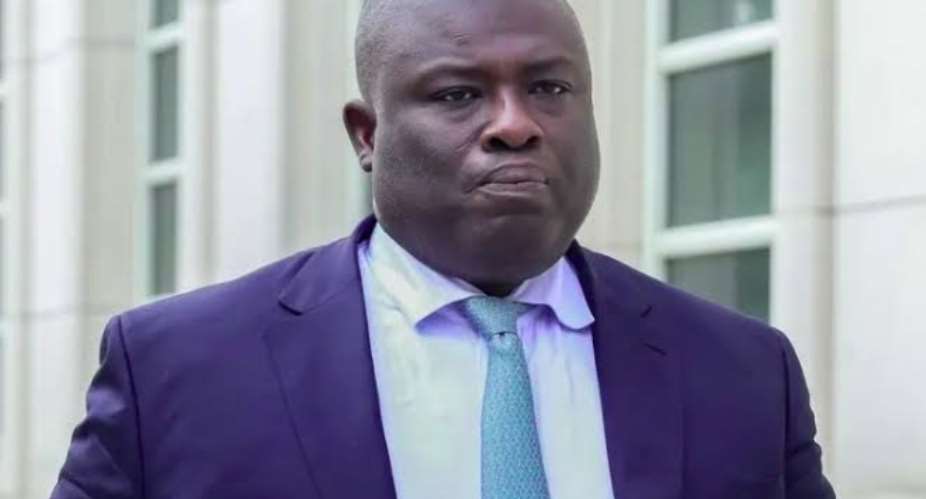
The call follows the conviction in the United States of former Tema Oil Refinery (TOR) Managing Director Asante Kwako Berko over a bribery scheme linked to a power plant project in Ghana.
CEMSE Executive Director Benjamin Nsiah, speaking to Citi Business News, said making the agreements public would enable civil society organisations and other stakeholders to scrutinise their terms and identify any potential irregularities.
“I think government must disclose all power purchase agreements from 2013, especially during the emergency periods. We need to disclose them because disclosure allows assessment and then affirmation of certain illegal dealings or not from the CSO perspective,” he said.
Mr Nsiah also called for existing agreements to be subjected to further scrutiny, with renegotiation pursued where necessary to ensure that Ghana derives value for money from the contracts.
“Beyond that, I think the contract has already been signed, but we also interrogate the contract further and if the need be, we should renegotiate for new terms,” he added.
He further suggested that individuals involved in negotiating the agreements should be questioned as part of the review process to provide clarity on how some of the contractual terms were reached.
“If we could also interrogate persons involved in negotiation, it would also help us unravel some of the ambiguous deals in some of these contracts,” Mr Nsiah said.
CEMSE proposes permanent PPA disclosure
Beyond the immediate review of existing agreements, CEMSE is advocating a permanent disclosure framework under which all PPAs would be made publicly available from the time they are signed until they expire.
Mr Nsiah said the Energy Commission, the Public Utilities Regulatory Commission (PURC) and the ministry responsible for energy should publish the agreements on their respective websites.
“I think that going forward, all power purchase agreements from their start to end must be published on the Energy Commission’s website as well as the PURC’s website,” he said.
“The Ministry themselves must also publish some of these agreements on their website. Disclosure is key to ensuring transparency and accountability in the power sector,” he added.
Berko conviction and power plant deal
The call comes against the backdrop of the US case involving Mr Berko, which centred on a bribery scheme connected to the development and financing of a power plant in Ghana under an agreement between the Government of Ghana and Turkish energy company Aksa Enerji Uretim A.S., a client of Goldman Sachs.
According to US court documents and evidence presented during the trial, Mr Berko conspired to pay more than $1 million in bribes to several Ghanaian government officials to facilitate the power plant project, which was expected to generate hundreds of millions of dollars in revenue.
Mr Berko, a former Executive Director in Goldman Sachs’ Investment Banking Division, became involved in the transaction in December 2014, when he was responsible for securing and managing the deal between Aksa Enerji and the Government of Ghana for the construction and financing of a power plant amid a national energy crisis.
Prosecutors said Mr Berko and his co-conspirators paid or agreed to pay bribes to individuals at various levels of the Ghanaian government to influence the approval of Aksa Enerji’s bid to construct and operate the plant.
In April 2015, Mr Berko and his alleged co-conspirators discussed a plan to pay $1 million to the then Minister of Power, who was responsible for securing key government approvals required for the project.
The prosecution also presented evidence that five Ghanaian officials received $5,000 each during an all-expenses-paid trip to Turkey to inspect equipment for the proposed power plant.
After Ghana’s Parliament ratified the power plant agreement in July 2015, Mr Berko and his co-conspirators allegedly continued discussions about the bribe payments.
CEMSE believes the case highlights the need for stronger transparency mechanisms in Ghana’s power sector to enable public scrutiny of major energy contracts and safeguard the country’s financial interests.

 Ghana's energy sector lost $1.4 billion in 2025 despite 40% electricity tariff h...
 [VIDEO] 'You have disgraced us' – ZITO’s blistering charge against Akufo-Addo ap...
 Parts of Tema to experience 6-hour power outage today over emergency maintenance...
 KMA gives shop owners 14 days to remove unauthorized frontage canopies
 'Decision not to appoint me as Minister after 2020 was an error of judgement, bi...
 CEMSE demands full disclosure, review of 2013 PPAs after former TOR MD’s convict...
 NAPO cautions against rising culture of insults in Ghana's political discourse
 Reversing oil production decline top priority for gov’t — Energy Minister
 GoldBod must strengthen gold traceability to aid galamsey fight — Dr Manteaw
 Kayayei phenomenon must be addressed through migration, inequality and developme...

