




Nigeria’s greatest challenge may not simply be bad leadership, corruption, insecurity or economic hardship. Beneath many of these problems lies a deeper structural issue: Nigeria is attempting to govern an extraordinarily diverse country through a system that often treats fundamentally different regions and people as though they share identical needs, values, priorities and social realities. This is why the renewed conversation about autonomous regional government deserves serious national attention.
Nigeria is not merely a geographical expression created by political boundaries. It is a country of diverse people with different histories, cultures, traditions, economic structures, religious influences, social expectations and conceptions of authority.
The Yoruba of the Southwest, the Igbo of the Southeast and the Hausa-Fulani and other people of the North have developed distinctive cultural identities over generations. These differences influence how people understand education, family, leadership, religion, enterprise, community and social responsibility. Ignoring or perhaps undermining these differences in the structure of government has over the years contributed to some of Nigeria’s persistent political and developmental difficulties.
Whether we like it or not, culture matters in governance. Culture is often overlooked in discussions about Nigeria's political restructuring. Yet culture profoundly influences how societies respond to government policies. What is considered normal, respectful or desirable in one Nigerian community may be viewed differently elsewhere.
For instance, within traditional Yoruba society, respect for elders is deeply embedded in social life. A child may prostrate or kneel when greeting a parent or elder. For many Yoruba families, this is not humiliation; it is a cultural expression of respect, upbringing and recognition of age and authority.
Someone raised in a different cultural environment may find such a practice unusual or difficult to understand. Likewise, attitudes towards education have historically differed across Nigeria. In parts of Northern Nigeria, traditional Islamic education has had enormous cultural and religious influence, while Western-style education developed under a different historical trajectory. The term boko became associated with Western or non-Islamic learning, and the extremist organisation Boko Haram subsequently became internationally notorious for its violent opposition to Western education. However, it would be wrong to suggest that the entire Northern Nigeria rejects Western education. Millions of Northerners embrace modern education and contribute significantly to Nigerian society. The point is that Nigeria's different regions have experienced education, religion and modernity through different historical and cultural lenses, which has overtime defined their individual sectional perception to life.
The same principle applies to the Southeast, where Igbo traditions have historically placed considerable emphasis on entrepreneurship, commerce, personal achievement and community advancement. The Southwest has its own distinctive history of education, public administration, intellectual development and commercial activity. These differences should not be regarded as weaknesses. They are part of Nigeria's strength. The problem is that our political structure has often failed to convert this diversity into an advantage.
The Problem With One-Size-Fits-All Governance
Nigeria's federal system remains highly centralised, with enormous political, financial and administrative power concentrated at the centre. This creates a situation where decisions made in Abuja can have very different consequences for communities thousands of kilometres away.
The economic priorities of Lagos and Ogun cannot necessarily be identical to those of Anambra, Imo, Kano, Katsina or Borno state. The developmental challenges of the Southeast cannot be treated as identical realities of the Niger Delta or the middle-belt. Yet the current structure frequently attempts to manage these different realities through largely uniform national policies.
This is where regional autonomy becomes compelling. Autonomous regional governments would allow regions to develop policies that respond more directly to their own circumstances while maintaining Nigeria as one sovereign nation.
Regional Autonomy Does Not Mean Break-Up
One of the greatest misunderstandings surrounding regional autonomy is the assumption that it is synonymous with separation. It is not. Regional autonomy can exist within a strong federation. The objective would not necessarily be to create independent countries, but to redistribute political, economic and administrative responsibilities between the federal government and the regions. The federal government could retain responsibility for matters such as defence, foreign affairs, currency, national monetary policy and other genuinely national functions, while regions would have greater control over education, infrastructure, state policing, economic development, agriculture, transportation and other areas where local knowledge is essential.
This would allow different regions to experiment with policies suited to their particular realities. This is so because different problems require different solutions. The Southwest has enormous commercial potential, a powerful retail entrepreneurial culture, agricultural land, mineral resources, a highly urbanised population and a long tradition of educational and administrative development. The Southeast also has a powerful entrepreneurial culture, mineral resources, agricultural land, and extensive commercial networks that could be better supported through regionally tailored economic policies. The North possesses enormous agricultural land, mineral resources and a young population, but also faces distinctive challenges involving education, poverty, insecurity, infrastructure and human capital development. The Niger Delta on the other hand has its own unique environmental, economic and developmental challenges. Why should all these regions necessarily be expected to follow the same central developmental template? My dad will often say, a diverse country requires flexibility, not uniformity. Regional governments could identify their own priorities, mobilise resources more effectively and be held directly accountable by the people they govern.
Autonomy Encourages Healthy Competition
Regional autonomy could introduce an important element currently lacking in Nigeria's political system: competitive federalism. If regions had greater control over their resources and policies, Nigerians could compare their performance.
Which region provides better schools?
Which has the most efficient healthcare system?
Which creates the best environment for businesses?
Which attracts the most investment?
Which manages agriculture most effectively?
Which provides the safest environment for its citizens?
Such competition could encourage innovation and accountability. Instead of waiting for Abuja to solve every problem, regions would have stronger incentives to develop solutions themselves.
Tinubu and the Opportunity for Structural Reform
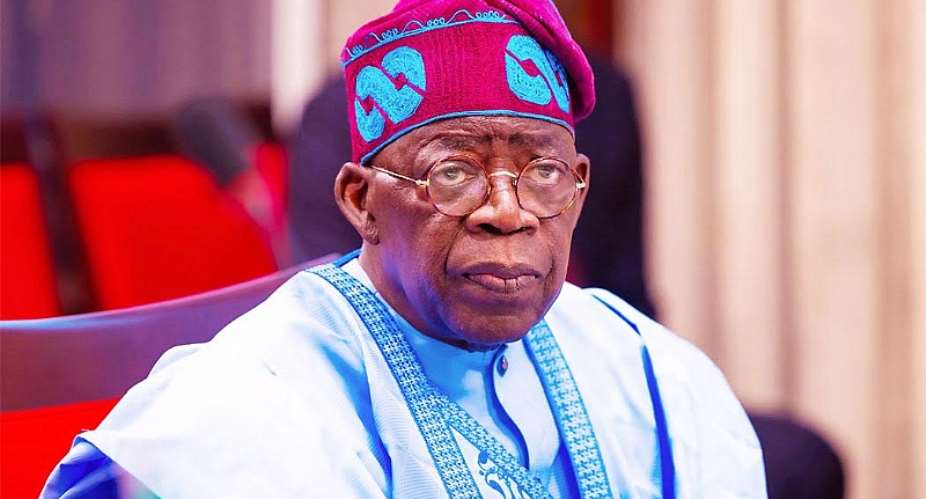
President Bola Ahmed Tinubu's administration has already demonstrated a willingness to undertake difficult economic reforms, particularly through policies designed to reduce longstanding distortions in the Nigerian economy. But economic reform alone may not be sufficient. Nigeria's structural political problems require equally serious consideration. The President therefore has an opportunity to place political restructuring and genuine federalism at the centre of the national conversation. The debate should not be reduced to whether Nigeria should remain one country. Nigerians overwhelmingly understand the importance of national unity.
The more important question is: What kind of federal structure can make Nigeria's unity work better? A federation in which the centre controls too much can produce resentment, dependency and political competition for access to federal power. A federation in which regions possess meaningful autonomy can encourage responsibility, innovation and accountability. Unity through accommodation, not uniformity. Nigeria does not have to erase its cultural differences to achieve national unity.
The Yoruba do not have to become Hausa.
The Hausa do not have to become Igbo.
The Igbo do not have to adopt Yoruba traditions.
Nigerians can maintain their cultural identities while sharing a common national identity. Indeed, true national unity should be capable of accommodating difference. The mistake is to assume that national integration requires cultural uniformity. It does not. Nigeria's diversity should be treated as an asset that can be managed through an intelligent constitutional arrangement.
A New Nigerian Federalism
The question facing Nigeria is therefore bigger than the next election or the next political party. It is about whether the country is prepared to rethink the structure of its federation. Autonomous regional government could provide an opportunity to bring government closer to the people, recognise cultural and economic differences, encourage regional innovation and reduce the unhealthy struggle for control of the federal centre.
It could also give Nigerians greater ownership of their development. Instead of constantly asking, “What is Abuja doing for us?”, citizens could increasingly ask, “What is our region doing with the powers and resources entrusted to it?” That shift in mentality could be transformative.
Nigeria does not need to become less Nigerian. Rather it needs a political structure that understands what being Nigerian actually means: different peoples, different histories, different cultures and different aspirations, bound together by a common national destiny. Therefore the future of Nigeria may depend not on forcing its diversity into a single mould, but on creating a federation capable of allowing that diversity to flourish. Regional autonomy should not be viewed as a threat to Nigeria's unity. If properly designed, it could be the very mechanism that makes Nigerian unity more sustainable.
Georges Macnobleson-Idowu, a UK-based Nigerian veteran journalist writes in from Birmingham.

 Houthi rebels kill dozens of Saudi-backed Yemeni government forces
 “Democracy Under Attack” demo: ‘We will seek God’s direction, not vengeance’ — H...
 ‘I have not seen anything from EOCO’ - Miracles Aboagye reacts to his ‘frozen as...
 Democracy Under Attack demo: We must end the 'you do me, I do you' politics — Af...
 'Democracy under attack': NPP presents petitions to Supreme Court, Presidency
 “Democracy Under Attack” demo: Nominating presidential staffer to receive our pe...
 'Don't underestimate NPP's comeback power' — Anthony Karbo tells NDC
 Bono REGSEC seizes galamsey equipment
 'We remain grateful for the enduring legacies they left behind' — Families of he...
 ‘The street is for Bawumia now’ - Aggrieved Ghanaians join NPP 'Democracy Under ...

