




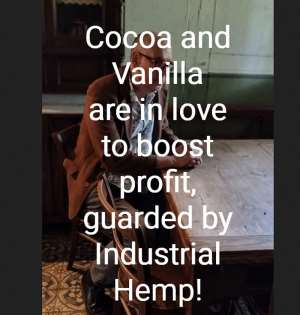
The new Cocobod Bill reads like a formal declaration of defeat in Ghana’s long, painful fight against galamsey—illegal gold mining. For years, even with military support, successive NDC and NPP governments failed to find a lasting solution. Practical interventions were ignored while party actors quietly benefited from the destruction of rivers, forests and entire cocoa belts. Rural communities were left hungry, their cocoa farms poisoned by mercury from mining pits. Cocoa farming was never a path to wealth, but it was a dignified, dependable livelihood for smallholders who took pride in their work.
Ghana urgently needs a national framework that makes cocoa farming attractive, profitable and competitive. Instead, the new bill tightens the chains of poverty around farmers. Cocobod—now steered by a journalist—has eased the pressure to confront galamsey head‑on, shifting the burden onto farmers through new restrictive regulations.
Germany offers a useful contrast. Historic buildings of public interest are tightly regulated: owners cannot renovate or demolish without approval from the Historic Building Commission. Yet the state compensates them for costly works. These are private homes, but the public interest is protected through a balanced system of regulation and support.
Cocoa plantations, too, are national assets. Yet the price of cocoa is dictated solely by Cocobod. The new bill reduces farmers to puppets on a string, denying them the freedom to innovate, invest or negotiate. Ghana and Cocobod have consistently failed to maximise the value of the cocoa sector.
Investment thrives only when individuals can manage their affairs in a profit‑driven environment—legally, strategically and socially. President John Dramani Mahama studied Communication in Moscow, a system familiar with state‑controlled economic models. Russia, like Ghana, is rich in minerals; now both countries appear to share similar economic instincts.
But Ghana could transform cocoa if it simply embraced what works: organic farming, cocoa‑vanilla intercropping—the “love affair” that yields high returns—and bold branding. A Chocolate City. A Chocolate Queen. A Chocolate Trail. A Chocolate Parade. Chocolate is not just food; it is culture, communication, friendship. Coca‑Cola, Red Bull and Apple understand the spirit behind their products. Ghana does not. The country produces low‑quality chocolate while pumping $12–14 million annually into subsidies for CPC in Tema—over $168–186 million wasted since 2012.
If the sector were profitable, innovative and exciting, many Ghanaians would leave their secure jobs and venture into cocoa farming—even under strict regulation.
Instead, Ghana has conceded defeat. A nation surviving on hope for a better tomorrow, rather than building better facts today.


 Health Ministry sets up committee to investigate unrest at Techiman-Krobo Nursin...
 NACOC arrests 10 KTU students over alleged trafficking of cannabis-infused drink...
 Bank of Ghana warns public against 20 unlicensed digital loan apps
 'We have not lost GH¢200 million to Dominic Bonsu Ventures' — GoldBod
 'Gender equality is key to building stronger ECOWAS institutions' — Amb Gana
 Cameroon government says President Biya's prolonged absence no cause for concern
 Another video surfaces showing moment coffin was moved from pickup truck during ...
 You are ineffective, inefficient and incompetent – Solomon Owusu fires Godfred D...
 Stop harassing opposition MPs for simply holding different views — Minority Lead...
 High Court freezes five bank accounts, four properties of NPP's Miracles Aboagye...

