




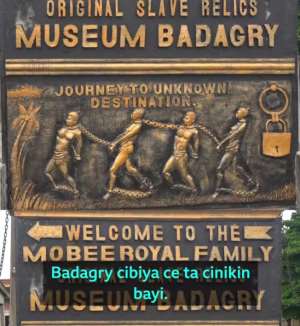
Do you know the history of the slave trade in Africa? In Badagry, a lagoonside town in Lagos State, captives were once held in cramped pens known as baracoons before being marched to the "Point of No Return," from where they were shipped across the Atlantic to a new world most of them would never leave. That history is now at the centre of a question Nigeria has been slower than some of its neighbors to confront directly: does Nigeria, too, have claims to reparations for the transatlantic slave trade?
Badagry's Place In The Trade
Badagry's slave trading history stretches back to the early sixteenth century and peaked in the 1720s, drawing prominent slave merchants both local and Portuguese who built the town's fortunes on human trafficking. By the town's own historical record, roughly 300 captives were sold on each market day, adding up to an estimated 17,000 people trafficked through Badagry every year across a trade that lasted some 400 years, making it one of West Africa's largest slave ports. Slavery in Badagry only formally ended in 1886, decades after Britain's own involvement in the trade officially stopped in 1833 a gap that itself speaks to how unevenly abolition was applied across the colonial world.
Today, the Badagry Heritage Museum and sites like the Seriki Faremi Williams Abass Slave Museum a preserved nineteenth-century baracoon keep that history visible, drawing schoolchildren and tourists who come to see the shackles and holding rooms firsthand, and to reckon with what Nigerians endured on their own soil before ever reaching the coast.
The UN Resolution And Renewed Debate
The question of reparations gained fresh global attention following a United Nations General Assembly resolution declaring the transatlantic slave trade "the most serious crime against humanity." Though not legally binding, the resolution reignited debate over compensation and historical accountability, and drew renewed attention to sites like Badagry as physical evidence of the trade's scale.
Some historians have voiced skepticism about what the resolution will actually deliver, questioning whether recognition alone will translate into meaningful reparations for African countries, or whether as with past international gestures the practical benefits will bypass ordinary Africans.
Why Nigeria's Case Is Different And Why It Still Matters
Nigeria's position in the reparations conversation is complicated by a truth many are reluctant to state plainly: the trade at Badagry and elsewhere along the Nigerian coast could not have functioned at that scale without the active participation of local rulers, merchants and intermediary networks who captured, held and sold their fellow Africans to European traders waiting offshore.
That internal complicity does not erase the case for reparations the demand for compensation, in Ghana's framing and in the African Union's, has always rested principally on the European and American nations and companies that financed, shipped, and profited from the trade on an industrial scale, and on the colonial and post-colonial structures that followed it.
But it does mean Nigeria's own reckoning has to hold two things at once: pressing outward for accountability from those who built empires on the trade, while being honest inward about the local hands that made Badagry's baracoons profitable in the first place.
Ghana has already positioned itself at the forefront of Africa's reparatory justice push, hosting a High-Level Conference on the subject and framing reparations as a continental, not merely national, cause. Nigeria with a slave port whose scale rivaled or exceeded many of the more internationally recognized sites has comparatively less to show for it in terms of formal reparations advocacy on the continental stage, despite Badagry's museums preserving the physical memory in painstaking detail.
The Honest Answer
Yes, Nigeria has a legitimate claim in the reparations conversation Badagry's scale alone makes that hard to dispute. But a claim is not the same as a campaign, and Nigeria has yet to convert its historical weight into the kind of sustained continental and diplomatic push that countries like Ghana have mounted. Whether those changes will depend less on UN resolutions, which carry symbolic weight but no binding obligation, and more on whether Abuja decides to treat Badagry as a foreign-policy priority rather than only a heritage tourism site.
Mustapha Bature Sallama.
Medical/ Science Communicator,
Private Investigator, Criminal investigation and Intelligence Analysis.
International Conflict Management and Peace Building.USIP
[email protected]
+233-555-275-880
References
Big News Network / CGTN, "UN resolution revives focus on slavery legacy in Nigeria's Badagry," April 2026, https://www.bignewsnetwork.com/news/278972930/un-resolution-revives-focus-on-slavery-legacy-in-nigeria-badagry
African Economic History, "Slavery, Remembrance, and Sites of Historical Memory," https://aeh.uwpress.org/content/49/1/104
"Nigeria: Badagry Museum, a Sobering Reminder of Nigeria's Long Slave Trade History," https://allafrica.com/stories/202204110018.html
Global Press Journal, "History of Atlantic Slave Trade Chronicled By Museums, Monuments in Badagry, Nigeria," https://globalpressjournal.com/africa/nigeria/history-atlantic-slave-trade-chronicled-museums-monuments-badagry-nigeria/


 Cameroon government says President Biya's prolonged absence no cause for concern
 'Every Ghanaian must reject attempts to make presidential tenure five years' — E...
 'The economy is naked again after IMF programme' — Gideon Boako
 Ghana Embassy in Tokyo issues safety advisory as Typhoon Dolphin approaches Japa...
 High Court approves EOCO order freezing Dennis Miracles Aboagye’s assets
 GH¢2 diesel price cut demonstrates Mahama's care for ordinary Ghanaians — Edudzi...
 Mahama orders GH¢2 cut in diesel price to avert transport fare hikes
 August 3: Cedi sells at GHS12.30 on forex market, GHS11.68 on BoG interbank
 Ejisu Assembly Members suspend no-confidence vote against MCE after Mahama's int...

