




Morocco made World Cup history in 2026 by fielding a starting lineup composed entirely of players born outside the country — 19 of the squad's 26 players were raised in Spain, France, the Netherlands, Belgium, and Canada. It is worth sitting with that fact: a national team's success built substantially on a diaspora, not on the systems back home.
The tournament offered a second, quieter version of the same lesson. Cape Verde's goalkeeper delivered a string of impressive saves before the run finally ended. Ghana's goalkeeper, with no prior international tournament experience, produced fine saves that kept the hopes of millions alive. Both showed that raw talent runs deep on this continent — and both showed how far talent alone can carry a team before the gaps in the system around it start to matter.
This is the argument worth making: talent is not enough. According to Diario AS, one of Spain's major sports dailies, a May 2026 piece drew a distinction between two title-winning Spanish squads. The 2010 team — a golden generation built around Iniesta, Xavi, and a young Sergio Busquets — averaged around 26–27 years old. Spain's 2026 squad, which beat Argentina 1-0 in extra time to win the tournament, averaged roughly 26.2 years, one of the youngest winning squads in recent history. Young talent won both tournaments, sixteen years apart, for the same country — but in each case that talent was developed inside the right systems, with the right support.
Now that the World Cup is over, there is a lesson here for African governments and leaders who want to nurture talent and build the continent we want. It comes down to five things.
1.Opportunity and Accumulated Advantage
Every generation arrives with its own defining opportunity, and every era creates space for a few people to seize it. The age of oil and steel produced giants like John D. Rockefeller and Andrew Carnegie. The personal computing and internet era produced Bill Gates. Space exploration and electric vehicles produced Elon Musk.
Today, it is artificial intelligence. The era a person is born into shapes, to a large degree, the scale of what they are able to contribute.
Africa today has the youngest population in its history. The question is not whether we have the numbers — we do — but what structures and measures are being put in place to convert that advantage into something durable. We live on a continent that the West and Asia are constantly calculating how to donate to, while we rarely ask what we are creating and offering the world beyond raw materials and natural resources.
Compare this with China and India. Forbes reports that between 2021 and 2025, Chinese universities cut roughly 12,200 undergraduate programs — many in the humanities, foreign languages, and other traditional fields — and added about 10,200 new ones, with a heavy focus on AI, robotics, semiconductors, embodied intelligence, and advanced manufacturing. India, meanwhile, has become a global IT hub through its Indian Institutes of Technology, where policy was deliberately shaped to develop tech-driven graduates who could go on to create value anywhere in the world — the reflection of that conscious choice includes CEOs of Google, Microsoft, and other top companies.
Malcolm Gladwell's 10,000-hour rule is often cited to explain this kind of mastery, but the rule is inseparable from opportunity: reaching 10,000 hours of deliberate practice requires resources, support systems, and the freedom to dedicate time to a craft, usually before adulthood.
Technical and vocational education (TVET) is gaining momentum in Ghana, which is a start. But momentum alone is not a structure. The real question is how we build a system that gives young people a genuine, safe space to practice their craft for the country's benefit — the way China is doing, by producing, creating, and fixing rather than merely consuming. Our story can be different if we get serious about fixing the roots that keep us dependent and consumption-driven. Government must provide the resources, support systems, and freedom for individuals to dedicate themselves to a craft that feeds directly into the country's development strategy. Those who build Ghana can only be Ghanaians.
2. Exceptional Governance and Leadership
For a practical comparison, look at Singapore. Ghana's independence is often linked to Singapore's because the two happened in the same year, yet the two countries' paths have since diverged sharply. We cannot avoid the conclusion that leadership and governance were the deciding factor. Singapore's founding Prime Minister, Lee Kuan Yew, and the People's Action Party provided pragmatic, long-term vision from 1959 to 1990, built on meritocracy, multiracialism, and strict anti-corruption measures — harsh penalties alongside high civil service pay designed to remove the incentive for bribery. That vision compounded into the country Singapore is today.
Ghana's picture looks different. The BTI Transformation Index Report 2026 on Ghana highlights why the country continues to struggle to shed corruption and weak enforcement, both of which have eroded public trust and discouraged investment — including, painfully, the investment people would otherwise make in themselves. The consequences are visible: the ongoing galamsey crisis and the environmental destruction it causes, students dropping out of school for economic alternatives, revenue lost to tax evasion, and cocoa farms cleared in the search for gold.
The numbers reinforce the point. The 2022 Human Development Index ranked Ghana 145th out of 191 countries, with a score of 0.602, placing it in the “medium human development” category; Singapore ranked 9th out of the same 191 countries. Poverty in Ghana remains widespread — after a sharp decline between 1990 and 2010, during which the country reached lower-middle-income status under the World Bank's classification, progress on poverty reduction and living standards has since slowed.
None of this erases Singapore's own hard work, and there is no shortcut to matching it. But it does mean that where leadership is concerned, Ghana needs to adjust radically rather than incrementally. Without the right people, we cannot even develop the right environment to build solid foundations for the country's development.
3. Restructuring Public Administration
Ghana's public administration continues to suffer from bureaucratic delays and limited professionalism. The system remains heavily politicized, with little accountability and almost no genuine performance-based layoffs. Partisan politics has crept into the day-to-day running of government affairs, contributing to the misallocation of funds and resources, and leaving little enthusiasm for service delivery. Every change in government tends to trigger a wholesale reshuffle of management, regardless of competence or continuity.
For a country to function well over the long term, appointments need to be based on performance rather than party loyalty. The current government is leaning on infrastructure as a multiplier — roads, reliable energy, irrigation — to lower the barriers to commerce and practice, while also targeting historically deprived regions to reduce inequality. These are genuinely promising initiatives. But they remain vulnerable to being abandoned or reversed the moment a different party wins an election. The public sector should instead be treated as a hub for national development, staffed by people who serve the country's interest first, not their party's.
Politicians and political parties need to be reformed regardless of who is in charge — but they are also, today, the very constraint we have to work within. Given that our near-term political reality is likely to involve coalition governments, the real question is how we make coalition government work for the people, rather than waiting for an election to deliver a change that no single election can guarantee. The poor performance of most ministries owes a great deal to partisan politics; even in an arena as unifying as sports, we remain unpopular and inconsistent on the world stage. How far could we go if our institutions reflected the desire of millions of Ghanaians hungry for national glory? That will require sustained national dialogue, not another election cycle.
4. The Role of Women
According to a 2023 report by Euromonitor International and Kore Global, Pathways to Gender-Inclusive Economic Development in Sub-Saharan Africa, roughly 70% of Ghanaians depend directly or indirectly on agriculture and forestry, and women produce 70% of the nation's subsistence crops. The same report notes that women own 80% of small businesses in the informal sector.
United Nations data put Ghana's population at 35.2 million as of October 2025, with women making up 50.1% of that population and men 49.9%. Given that women are not only the majority but also central to agriculture and informal enterprise, it is worth asking how the country expects to develop without building in genuine inclusiveness.
During his campaign, President Mahama promised a cabinet that would be 30% women. In practice, only 2 of 19 cabinet appointees are women; including the vice president brings the total to 3, or roughly 13.6%. The idea that only men can lead us forward is increasingly exposed as a failure — not just in Ghana, but globally. History has shown, repeatedly, that poor leadership by men is a large part of why so many countries remain where they are.
No society reaches its potential by relying on half its population while sidelining the other half; it is like trying to walk on one leg. Government, and society more broadly, must give women a genuine seat at the table.
5. Re-Engineering Our Education
Practical education produces practical transformation. The world is changing dramatically, and while some countries are adapting quickly, others are still waiting for change to arrive on its own.
Ghana's education system needs a genuine overhaul — one that builds practical intelligence and a meaningful, value-creating work mindset from the outset, and that focuses squarely on what we, as a country, are equipped to produce and contribute. As noted above, Chinese universities cut roughly 12,200 undergraduate programs between 2021 and 2025 and introduced about 10,200 new ones, most oriented toward AI, robotics, semiconductors, and advanced manufacturing. If a country as far along in its development as China is still willing to restructure its education system to match global demand, Ghana has every reason to tailor its own education to the needs of the country and deliberately develop the people who can meet them.
Every nation's success is a product of its people — the quality of its people and the quality of its leadership. Education is the foundation underneath both. No nation succeeds by default; the higher the quality of the people and their leadership, the higher the odds of winning.
The Real Final
The World Cup is over, and the biggest prize went to the country that built the systems and gave its young people the chance to grow inside them. Africa does not lack the talent — the goalkeepers of Cape Verde and Ghana proved that under the brightest lights on earth. What we lack is the machinery to turn that talent into something that compounds: honest institutions, a public service that outlasts elections, an education system built for what the world now demands, and room at the table for the women who already carry the economy on their backs.
Spain did not win in 2026 because its players were more talented than Africa's. It won because it built the same kind of team twice, twenty years apart, and trusted the system in between. That is the tournament we are actually being invited to enter — and it is the one still open for Ghana to win.
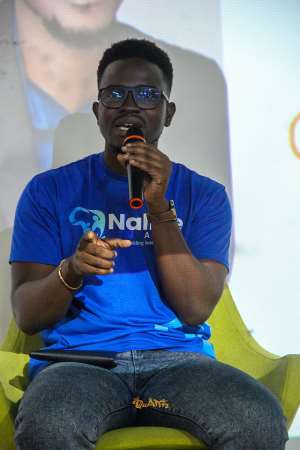
Tsifodze Ernest is the founder of Nalike Africa and a leadership facilitator whose work sits at the intersection of human potential, organizational growth, and purposeful impact. A published author of three titles — Life Beyond the Ordinary, Minerals for the Mind, and Until I Touch the Sky — he brings both depth and lived experience to every room he enters. He serves as a start-up mentor and board advisor, and holds academic grounding from Kwame Nkrumah University of Science and Technology (Ghana), Anant National University (India), and Harvard Business School, where he completed a certificate in Power and Influence for Positive Impact.
Email: [email protected]


 Obuasi SHTS alleged sexual abuse: Kwasi Kwarteng criticises Education Minister o...
 ECOWAS’ $250,000 flood relief donation arrives in Ghana – Ablakwa
 Kennedy Agyapong has not resigned from NPP – Kwasi Kwarteng
 State failure, not GoldBod, driving galamsey – Daryl Bosu
 A Rocha Ghana raises alarm over human rights abuses in mining communities
 ECOWAS, AfDB discuss ways to advance West Africa’s development priorities
 October 16: Cedi gains against dollar, sells at GHS12.25 on forex market, GHS11....
 Galamsey: Ghana’s rivers now run chocolate and milk colour — Sam Jonah
 A nation of job-seekers will always be poor — Sir Sam Jonah
 “If you attack us with pepper spray, we’ll fight back” — NDC Yakubu Tony Aidoo w...



Comments
This is such a great write up brother.