




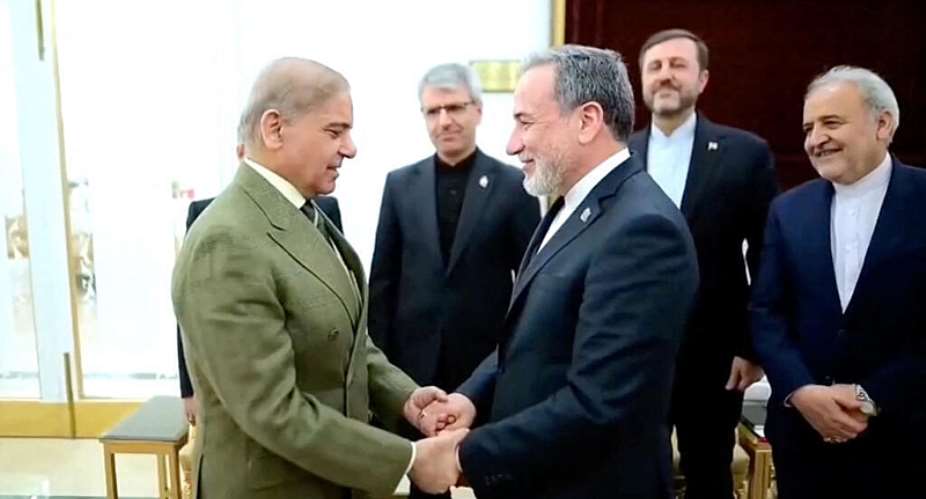
The ongoing Iran–Israel confrontation is no longer confined to the Middle East; it is gradually expanding into a broader geopolitical chessboard where Pakistan’s name is increasingly being drawn into the equation. The question is not merely how this conflict began, but how it has evolved into a scenario where Pakistan could potentially find itself entangled in a war that is neither its own nor in its long-term interest.
At the heart of this narrative lies the controversial role of Donald Trump, portrayed by critics as a leader susceptible to influence during a period marked by emotional and strategic volatility. It is argued that pro-Israel lobbying circles capitalized on this vulnerability, framing the conflict as an existential battle. The result was a show of military aggression aimed not only at Iran but also at sending a message to the broader developing world: defiance would come at a cost.
However, the anticipated swift outcome did not materialize. Iran proved resilient, absorbing initial shocks and maintaining strategic depth. Meanwhile, Israel remained shielded, and the burden of escalation appeared to shift disproportionately onto the United States. As internal and global criticism mounted, Washington reportedly sought support from NATO, only to encounter reluctance from key European stakeholders wary of a war lacking clear justification.
It is within this vacuum that Pakistan’s role begins to surface. Under the leadership of Asim Munir, the country is perceived by some analysts as a potential auxiliary partner, capable of providing logistical or even military support. This raises a critical concern: is Pakistan preparing, consciously or otherwise, for “preventive participation” in a conflict driven by external powers?
The argument in favor of such alignment often revolves around tangible gains. These include access to financial lifelines from institutions such as the IMF, support from the Asian Development Bank, and increased bilateral aid from Western allies. Military cooperation could also bring advanced weaponry and strategic leverage. For a country grappling with economic instability, these incentives may appear compelling.
Yet, the costs could be far greater and far more enduring. Entering a conflict against a neighboring country like Iran risks eroding Pakistan’s already fragile sovereignty. It may inflame sectarian sensitivities domestically, strain relations with regional partners, and deepen perceptions of Pakistan as a proxy state rather than an independent actor. The label of an “American colony,” whether fair or not, could gain further traction in both domestic and international discourse.
Regional dynamics further complicate the picture. Turkey, under Recep Tayyip Erdoğan, has attempted to position itself as a mediator, but its influence is constrained by competing power centers within the Muslim world. Leaders like Mohammed bin Salman represent a different strategic vision, one that does not necessarily align with Ankara’s ambitions of a parallel Islamic bloc.
The Gulf Cooperation Council itself appears divided, with underlying tensions surfacing over the handling of Iran. Any overt support for military escalation risks deepening these fractures. Meanwhile, Iran’s demonstrated resilience suggests that it cannot be easily subdued, making any attempt at forced regime change both risky and potentially destabilizing for the entire region.
India, led diplomatically by Subrahmanyam Jaishankar, finds itself navigating a delicate balance. While maintaining ties with Israel, it cannot afford to alienate Iran entirely, given its strategic and economic interests. This balancing act reflects a broader reality: no major regional player can rely on a single axis without risking long-term consequences.
On the global stage, China and Russia are carefully recalibrating their positions. The possibility of China stepping in as a mediator signals a shift toward a multipolar world order, one where American dominance is no longer absolute. Should the United States itself seek mediation, it would mark a significant moment in the redefinition of global power structures.
For Pakistan, the path forward demands clarity and restraint. History offers numerous examples of states that entered wars for short-term gains only to suffer long-term strategic losses. Preventive participation in a conflict shaped by external agendas may yield immediate economic relief, but it risks compromising national autonomy and regional stability.
In the end, the real question is not whether Pakistan can participate—but whether it should.
By Saqlain Abid, Political Commentator

 NAIMOS arrests 19 in Mpohor Fiase anti-galamsey operation
 ECOWAS, partners reaffirm commitment to advancing gender equality and women’s em...
 Court of Appeal acquits and discharges former MASLOC CEO Sedina Tamakloe, overtu...
 WAEC releases BECE 2026 results, cancels entire results of 105 candidates
 Infantino defends FIFA investment plan amid mounting backlash
 US carries out 'powerful' strikes on Iran after attacks on bases and regional al...
 Ayariga Hails Supreme Court Ruling on Delegate System… But Warns of Rising ‘Mone...
 Government must come clean on VALCO's future — Minority
 Supreme Court ruling abolishing delegate system creates more problems than it so...
 “End of the cocoa season pandemic” — Barker-Vormawor hails SC ruling on delegate...

