




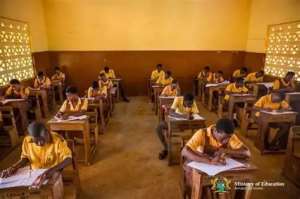
Every year, examination results dominate conversations about education in Ghana.
Parents compare schools based on pass rates. Schools proudly display the number of distinctions they achieved. Social media becomes filled with congratulatory messages and colourful banners.
There is nothing wrong with celebrating academic success.
The problem begins when examination results become the only measure of educational quality.
A good education should prepare children for more than examinations. It should help them become confident readers, thoughtful problem solvers, respectful citizens and independent learners.
Many employers today are looking for people who can communicate clearly, work in teams, solve problems and adapt to change. These skills are not developed by memorising answers alone.
This is why school leaders must pay close attention to what happens inside classrooms every day.
Are pupils encouraged to ask questions?
Do teachers use practical examples that make learning meaningful?
Are struggling learners identified early and supported before they fall behind?
Is reading given the attention it deserves from the lower primary years?
Parents also have a responsibility.
Choosing a school should involve more than looking at examination rankings.
Visit classrooms.
Observe how teachers interact with learners.
Look at pupils' exercise books.
Ask children what they enjoy learning.
Notice whether pupils speak with confidence and curiosity.
Schools should also rethink how they define success.
A school should celebrate improved reading levels, stronger attendance, better behaviour, increased confidence and teacher development just as much as examination performance.
None of this suggests that examinations are unimportant.
Assessment remains an essential part of education.
However, examinations should confirm learning rather than become the purpose of learning.
If Ghana wants an education system that prepares young people for university, employment and responsible citizenship, then our definition of a successful school must become broader than a list of examination grades.
When schools focus on developing the whole child instead of chasing results alone, everyone benefits. Learners become more capable, teachers become more fulfilled and parents gain confidence that their children are being prepared not only for the next examination, but also for life.
About the Author
Alpha Osei Amoako is the Head of Alpha Pathway Educational Consult, an educational consult in Ghana. He is an educational leader, school administrator and education columnist based in Accra, Ghana. He writes regularly on education, society and public affairs for modernghana.com, one of Ghana's leading online platforms for commentary and analysis. He also engages a wide Ghanaian audience through social commentary on Facebook, where he addresses issues at the intersection of education, culture and national development.
[email protected] // +233208007439


 Brazil's President Lula da Silva beats Flavio Bolsonaro to win re-election
 Nurse rescues mother and baby after unplanned delivery in bush
 McCarthy-Mallam road rehabilitation begins amid commuters’ complaints of heavy t...
 TOR briefs IMF on recovery efforts, inherited debt and sustainability plans
 Aseidu Nketia urges NDC contestants to unite after constituency elections
 EC yet to announce Dormaa Central NDC constituency results
 Baaba Cann questions Obuasi SHTS handling of sexual misconduct allegations again...
 Obuasi SHS headmaster case: “It is better to pay for sex with prostitute than ra...
 NDC not worried about NPP’s Kojo Bamba, he is small boy – Azorka
 Resource exploitation fuelling Africa’s conflicts – Mahama



Comments
But why should students perform poorly in exams? Perhaps that also deserves to be investigated because the reasons matter. Varsities also base admissions on grades. Exams at the tertiary level are even more challenging. Assessments are globally conducted via exams. However, schools should also encourage creative and innovative thinking. Ideally, schools should be rated based on academic performance AND creative activities like robotics, physical computing, and science fairs.