




The ruling
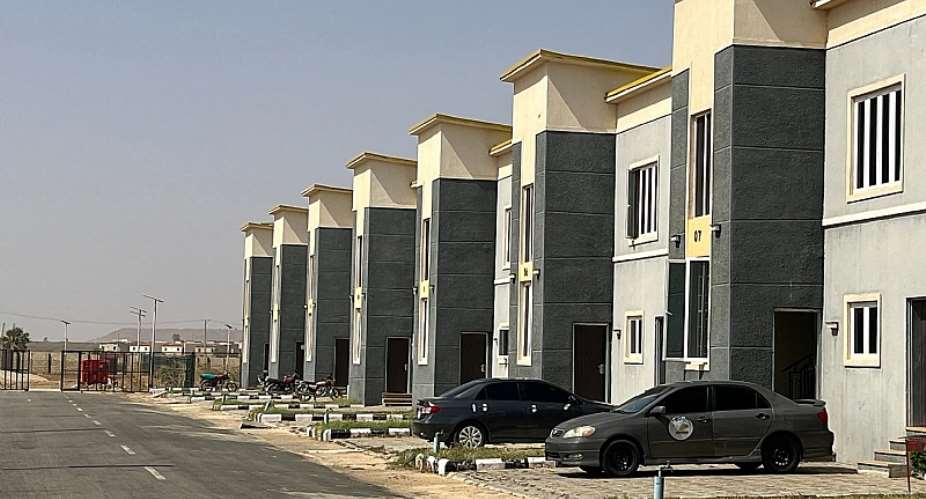
Justice Joyce Abdulmalik of the Federal High Court in Abuja on Wednesday ordered the final forfeiture of 48 properties linked to Abubakar Malami, Nigeria's former Attorney-General of the Federation and Minister of Justice, in a case brought by the Economic and Financial Crimes Commission (EFCC). The judgment brought to a close months of legal skirmishing over assets valued at more than ₦212.8 billion, spread across Abuja, Kano, Kebbi and Kaduna states.
Before delivering the substantive judgment, the judge dismissed a series of applications, motions on notice and objections filed by Malami, his family members and companies claiming ownership of the disputed properties, describing them as lacking merit. She held that the central legal question was not who owned the property, but how legitimate the funds used to acquire them were.
The court found that the respondents had failed to dislodge the reasonable suspicion that the assets were acquired through unlawful activity, relying principally on Section 17 of Nigeria's Advance Fee Fraud and Other Fraud Related Offences Act.
Of the 57 properties the EFCC originally sought to forfeit, the court accepted that nine had credible evidence of genuine ownership and excluded them from the final order, vacating the interim forfeiture in respect of those assets.
A case built over months
The proceedings trace back to January 6, 2026, when a vacation judge granted an interim forfeiture order after the EFCC filed civil forfeiture proceedings alleging the properties were proceeds of unlawful activity connected to Malami's tenure.
Following the mandatory newspaper publication of that order, Malami, his wife Nana Hadiza Malami, his son Abdulaziz Abubakar Malami, and several linked companies filed objections seeking to show cause why the assets should not be permanently forfeited.
EFCC counsel Jibrin Okutepa (SAN) built the commission's case on a 47-paragraph affidavit backed by 46 exhibits, arguing the respondents had failed to satisfactorily explain the legitimate sources of the assets. Malami's lead counsel, Adedayo Adedeji (SAN), countered with a 109-paragraph affidavit deposed to personally by the former minister, insisting the properties were declared assets acquired lawfully and that the EFCC's case rested on suspicion rather than admissible evidence. Adedeji had argued the commission relied on extrajudicial material better suited to cross-examination in the parallel criminal trial, where Malami, his son and one of his wives face a 16-count charge alleging conspiracy, concealment and laundering of roughly ₦8.71 billion to ₦9 billion in public funds.
The judgment itself was delayed twice past its original July 6 date, first to July 10 and then to today, without the court giving public reasons for either postponement a pattern that had drawn quiet scrutiny from courtroom observers tracking the case.
Wider implications
The ruling lands as one of the most significant non-conviction-based forfeiture outcomes involving a former Nigerian Attorney-General, a figure who was once the country's chief law officer overseeing the same anti-corruption architecture now used against him. It reinforces the EFCC's growing reliance on civil forfeiture which requires only a showing of reasonable suspicion rather than proof beyond reasonable doubt as a faster route to asset recovery than protracted criminal trials.
For Ghana and the wider West African region, the case offers a live test of how far anti-graft institutions in influential neighbouring states are willing to pursue former senior officials, at a moment when governance accountability, illicit financial flows and asset recovery cooperation remain priorities for regional bodies such as ECOWAS and the AU's advisory board against corruption. Ghanaian anti-corruption advocates have periodically pointed to EFCC forfeiture actions as a benchmark against which the Office of the Special Prosecutor's own asset-recovery record is measured.
The final forfeiture order does not equate to a criminal conviction; the underlying money laundering trial against Malami and his co-defendants continues separately.
References
Channels Television, "[UPDATED] Court Orders Final Forfeiture Of Over 40 Properties Linked To Malami," July 15, 2026. https://www.channelstv.com/2026/07/15/court-orders-final-forfeiture-of-over-40-properties-linked-to-malami/
Daily Post Nigeria, "Court orders final forfeiture of 48 properties linked to Malami," July 15, 2026. https://dailypost.ng/2026/07/15/court-orders-final-forfeiture-of-48-properties-linked-to-malami/
Vanguard News, "Alleged Money Laundering: Court orders final forfeiture of Malami's 48 properties," July 15, 2026. https://www.vanguardngr.com/2026/07/alleged-money-laundering-court-orders-final-forfeiture-of-malamis-48-properties/
Vanguard News, "Again, court adjourns judgment in forfeiture case against Malami's properties," July 10, 2026. https://www.vanguardngr.com/2026/07/again-court-adjourns-judgment-in-forfeiture-case-against-malamis-properties/
Lawyard, "Federal High Court Adjourns Judgment in EFCC's Bid to Forfeit 57 Properties Linked to Malami," July 2026. https://www.lawyard.org/news/court-adjourns-judgment-in-efccs-bid-to-forfeit-57-properties-allegedly-linked-to-malami/


 DGPP was Bawumia’s idea, helped grow gold reserves to 30.53 tonnes by December 2...
 Niger coup attempt: 'Russians saved the day' analyst tells RFI
 IGP decorates officer promoted for saving lives during Aboso fire
 Kumasi Inner Ring Road to close for six hours on September 6 for GRIDCo power tr...
 Eastern region: Seven killed in galamsey pit collapse at Asamang Tamfoe
 Anti-corruption fight has so far yielded positive results – PTAAM-Africa
 I've not done anything to embarrass myself, family or NPP – Afenyo-Markin reject...
 ‘Complete falsehood’ – Dr Srem-Sai rejects OSP claim of AG collaboration snub
 AU welcomes Sudanese-Sudanese dialogue initiative to end conflict
 ‘I was alone when it mattered most’ – Victoria Hamah opens up on painful past

